Spiders in South Carolina
South Carolina has 121 spider species on record, each with at least 10 GBIF records in the state, and 2,385 licensed records in all. The most recorded are the American golden orb weaver, the Joro spider and the black-and-yellow argiope. Medically significant: the southern black widow, the brown widow and the northern black widow.
Widow spiders in South Carolina
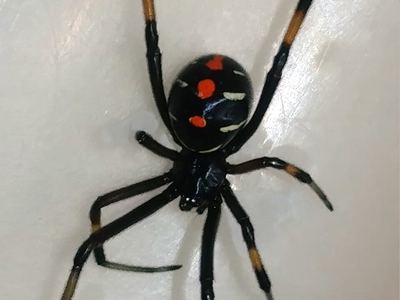
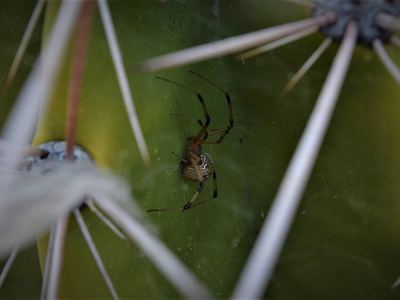
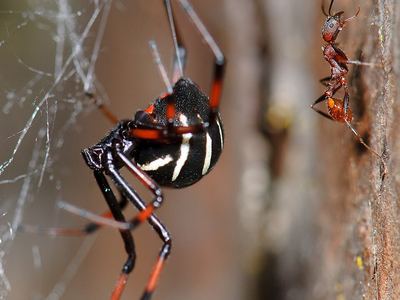
Widow spiders are a small part of the spider record here: three species with 2% of records between them. The most recorded is the southern black widow (26), ahead of the brown widow (14).
Jumping spiders in South Carolina
Jumping spiders: 28 species are listed for South Carolina, with 407 records (17% of the state's spider records). The most recorded is the twin-flagged jumping spider (97), ahead of the magnolia green jumper (85).
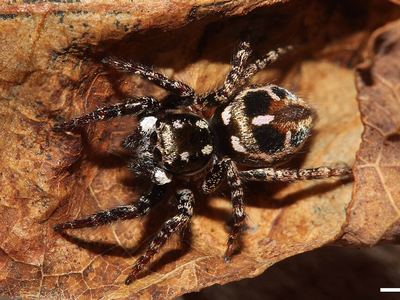
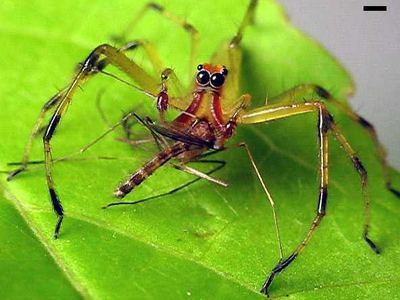
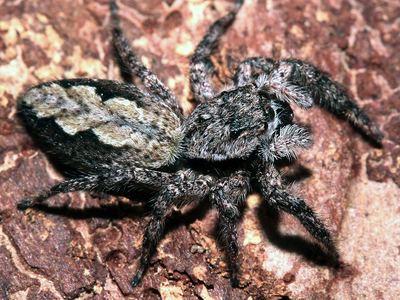
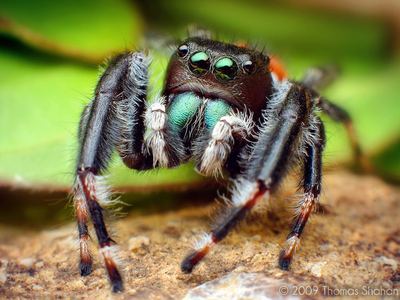
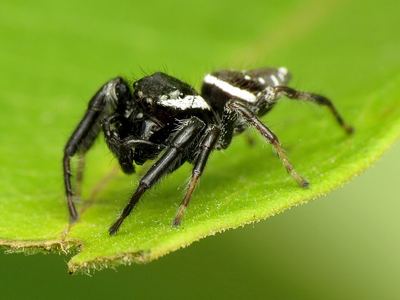
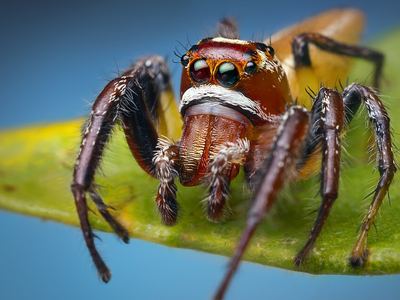
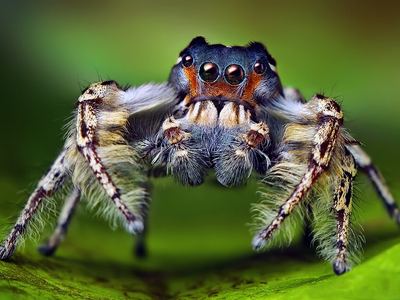
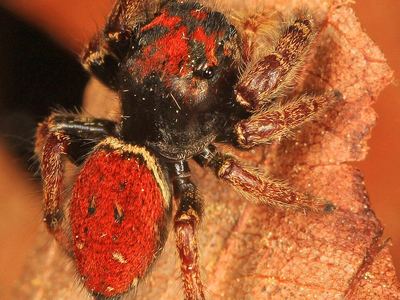
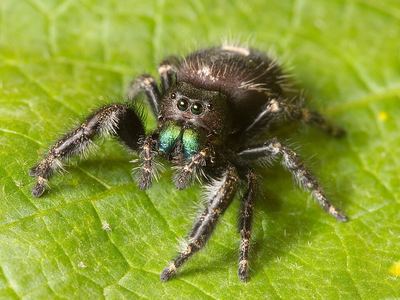
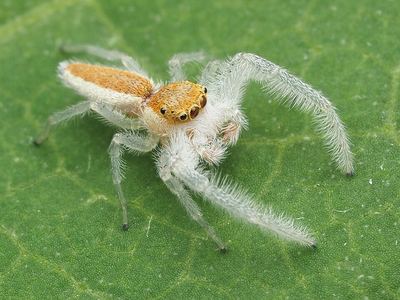
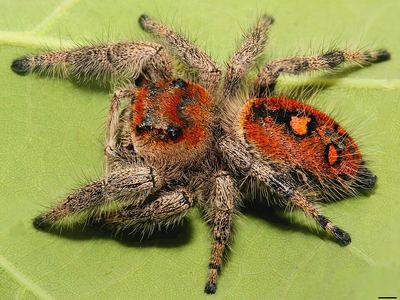
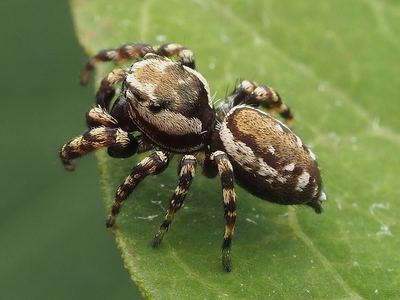
Plus 16: Canopy jumping spider, Common Hentz jumping spider, Dimorphic jumper, Grayish jumping spider, Habronattus coecatus, Ribbon jumping spider, Sarinda hentzi, Bronze jumper, Flea jumping spider, Pantropical jumper, Sassacus papenhoei, Metacyrba floridana, Eris floridana, Four-lined slender jumping spider, Gray wall jumper, Slender ant mimicking jumping spider.
Observation records of the twin-flagged jumping spider in South Carolina run mostly March through November, peaking in April; most licensed records come from Richland County, Lexington County and Charleston County. Observation records of the magnolia green jumper in South Carolina run mostly November through July, peaking in November; most licensed records come from Spartanburg County, Richland County and Greenville County. Observation records of the familiar jumping spider in South Carolina run mostly February through September, peaking in April; most licensed records come from Greenville County, Lexington County and Richland County.
Wolf spiders in South Carolina
Wolf spiders: ten species are listed for South Carolina, with 147 records (6% of the state's spider records). The most recorded is the Georgia wolf spider (36), ahead of the rabid wolf spider (33).
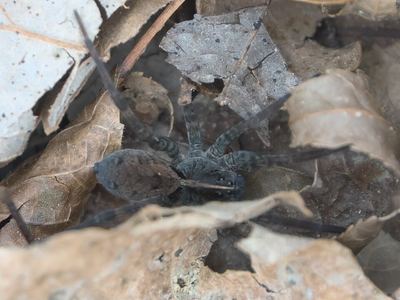
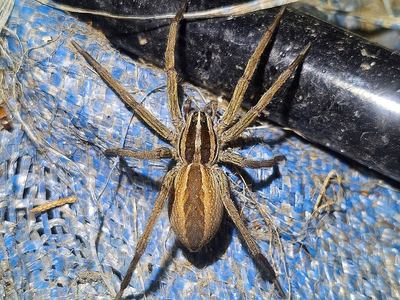
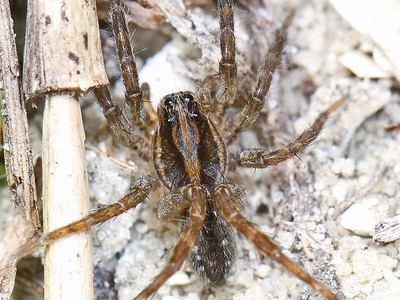
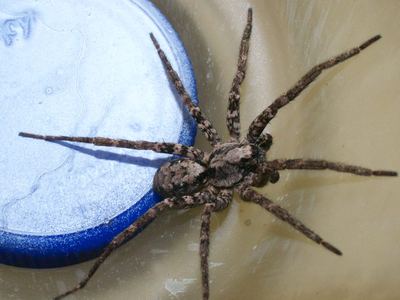
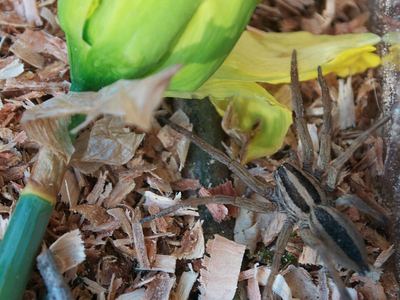
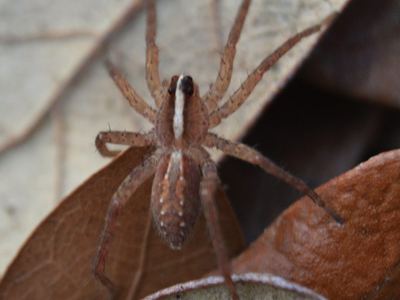
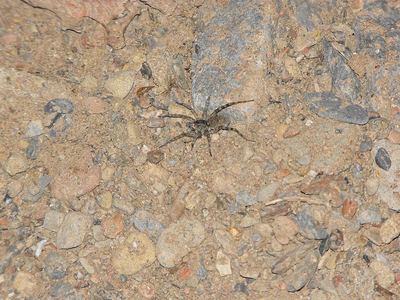
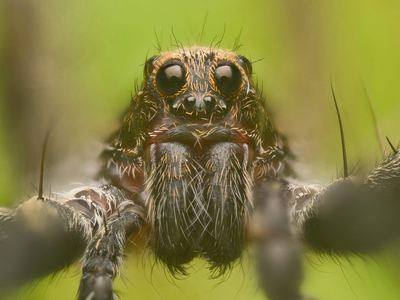
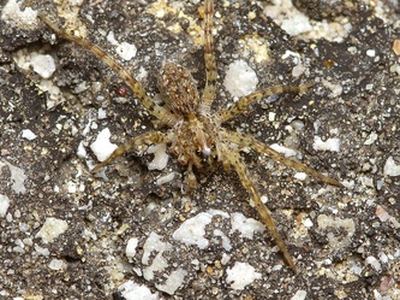
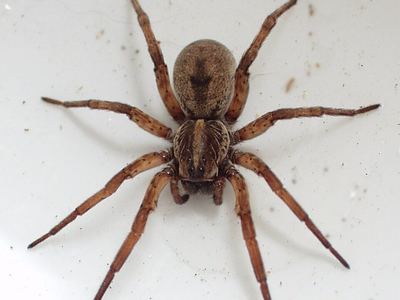
Observation records of the Georgia wolf spider in South Carolina run mostly March through November, peaking in April; most licensed records come from Richland County, Charleston County and Abbeville County. Observation records of the rabid wolf spider in South Carolina run mostly March through October, peaking in August; most licensed records come from Abbeville County, Horry County and Lexington County.
Orb weavers in South Carolina
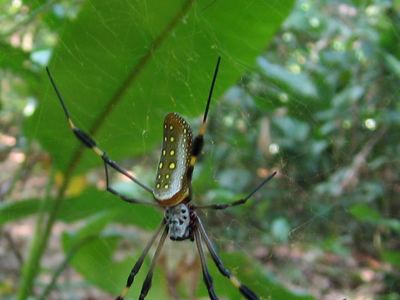
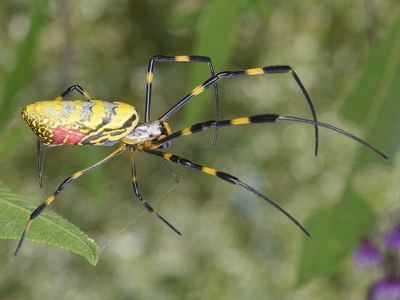
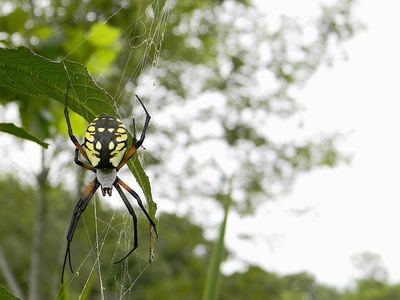
Orb weavers dominate the spider record of South Carolina: 29 species and 40% of all records. The most recorded is the American golden orb weaver (183), ahead of the Joro spider (173).
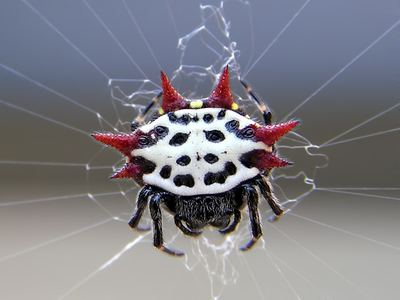
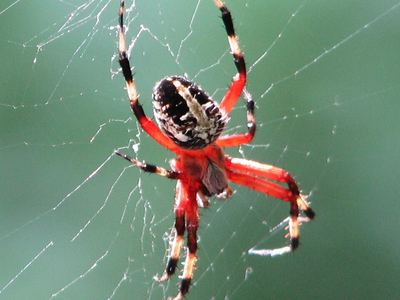
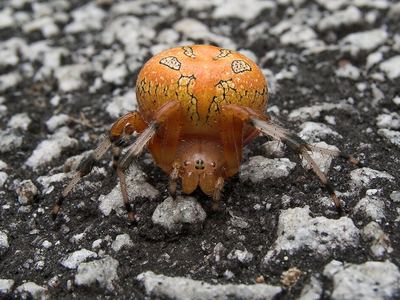
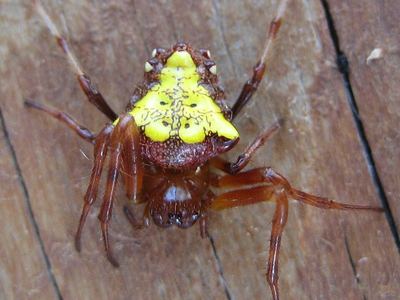
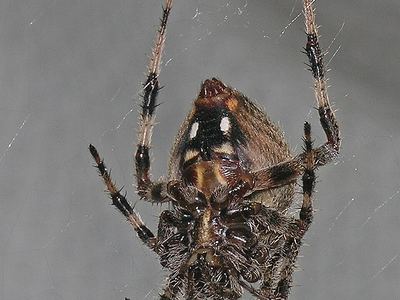
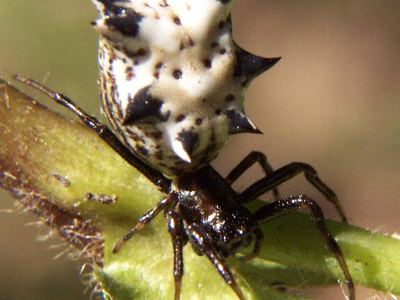
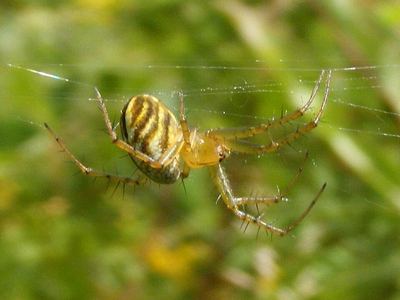
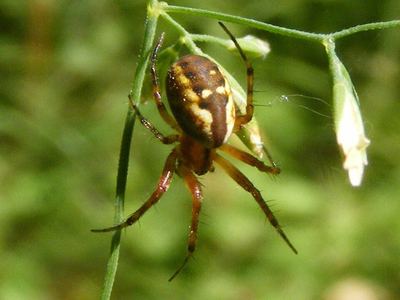
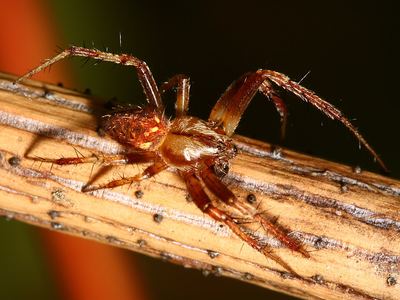
Plus 17: Basilica orbweaver, Giant lichen orbweaver, Arrowshaped micrathena, Cyclosa turbinata, Banded garden spider, Humpbacked orbweaver, White micrathena, Florida garden spider, Labyrinth orbweaver, Heptagonal orbweaver, Cyclosa caroli, Tropical orb weaver, Furrow orbweaver, Butterfly orbweaver, Starbellied orbweaver, Araneus alboventris, Difoliate orbweaver.
Observation records of the American golden orb weaver in South Carolina run mostly May through October, peaking in July; most licensed records come from Richland County, Charleston County and Georgetown County. Observation records of the Joro spider in South Carolina run mostly August through November, peaking in October; most licensed records come from Greenville County, Spartanburg County and Pickens County. Observation records of the black-and-yellow argiope in South Carolina run mostly June through November, peaking in August; most licensed records come from Charleston County, Richland County and Lexington County.
Long-jawed orb weavers in South Carolina
Long-jawed orb weavers: four species are listed for South Carolina, with 117 records (5% of the state's spider records). The most recorded is Leucauge argyrobapta (53), ahead of the orchard orbweaver (45).
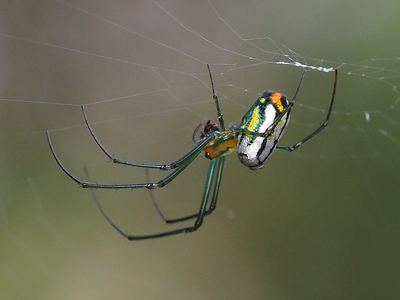
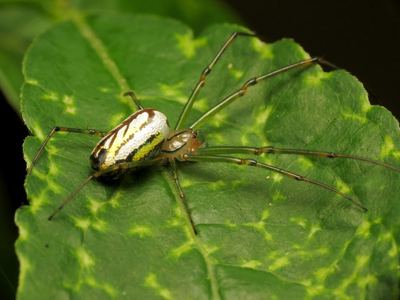
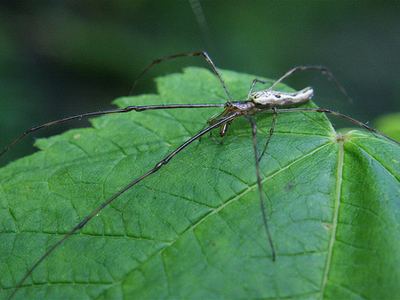
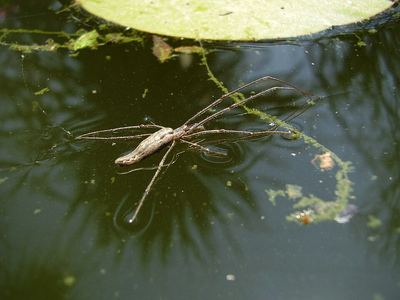
Observation records of Leucauge argyrobapta in South Carolina run mostly April through November, peaking in June; most licensed records come from Charleston County, Georgetown County and Aiken County. Observation records of the orchard orbweaver in South Carolina run mostly March through August, peaking in April; most licensed records come from Lexington County, Greenville County and Spartanburg County.
Fishing and nursery web spiders in South Carolina
Fishing and nursery web spiders: nine species are listed for South Carolina, with 165 records (7% of the state's spider records). The most recorded is the white-banded fishing spider (44), ahead of the nursery web spider (35).
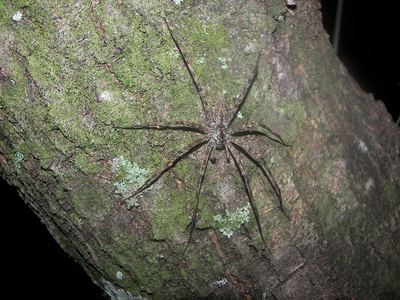
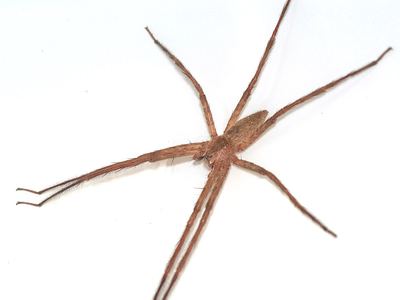
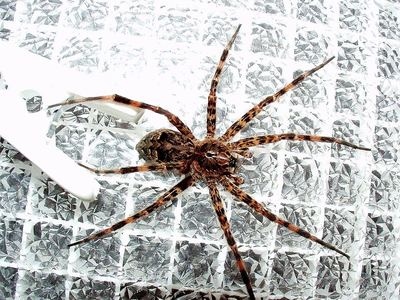
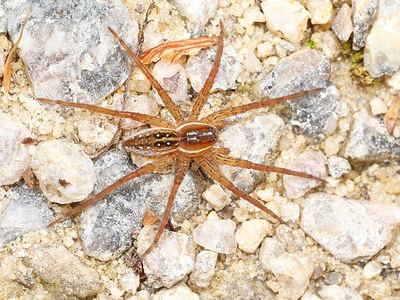
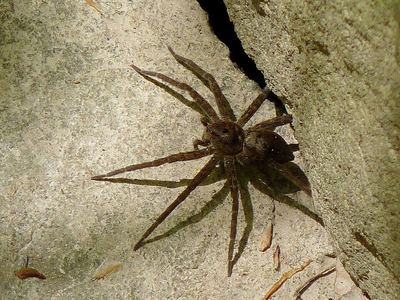
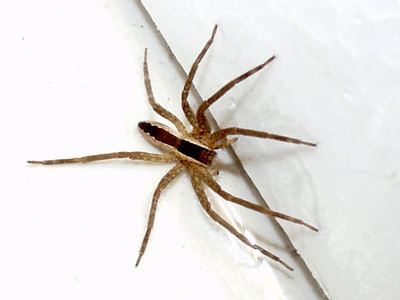
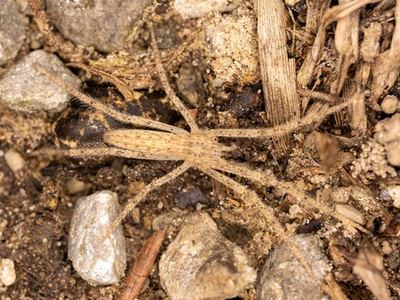
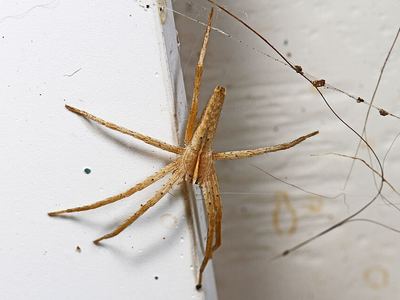
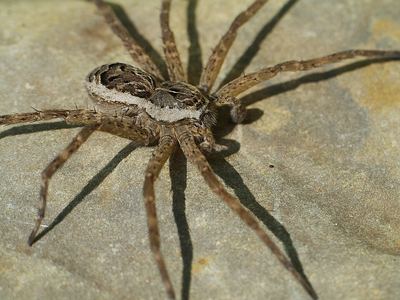
Observation records of the white-banded fishing spider in South Carolina run mostly February through October, peaking in July; most licensed records come from Richland County, Charleston County and Oconee County. Observation records of the nursery web spider in South Carolina run through most of the year, peaking in March; most licensed records come from Greenville County, Chesterfield County and Richland County. Observation records of the dark fishing spider in South Carolina run mostly March through November, peaking in April; most licensed records come from Richland County, Oconee County and Charleston County.
Crab spiders in South Carolina
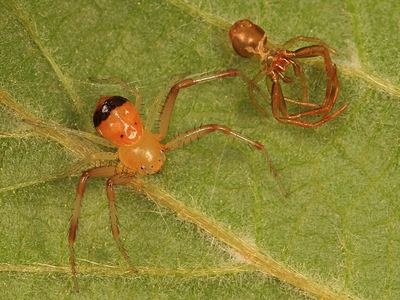
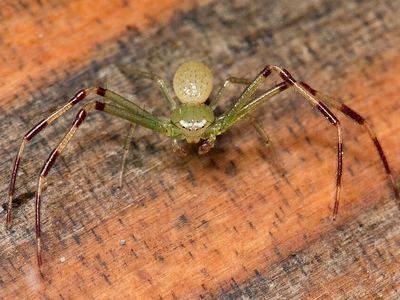
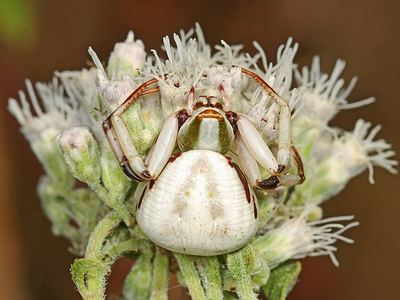
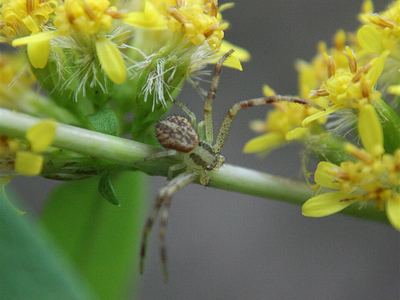
Crab spiders are a small part of the spider record here: five species with 1% of records between them. The most recorded is the black-banded crab spider (11), ahead of the American green crab spider (10).
Cobweb spiders in South Carolina
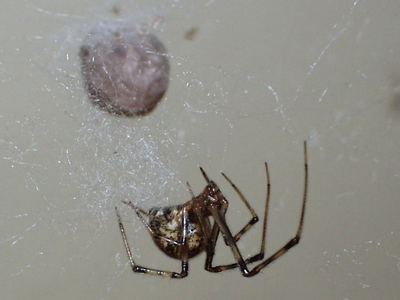
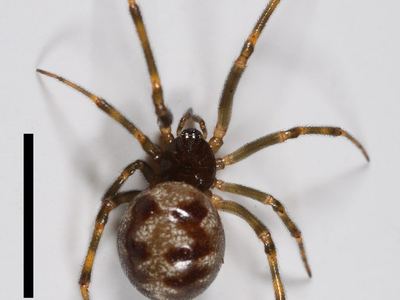
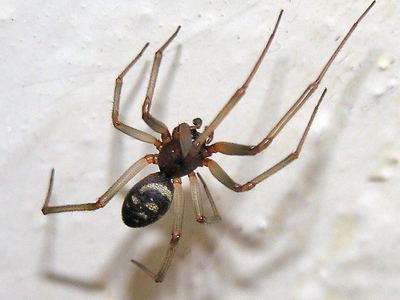
Cobweb spiders are a small part of the spider record here: four species with 1% of records between them. The most recorded is the common house spider (15), ahead of the triangulate bud spider (11).
Funnel weavers and grass spiders in South Carolina
One species of this group is listed for South Carolina: Barronopsis texana, with 2 records (0.1% of the state's spider records).
Lynx spiders in South Carolina
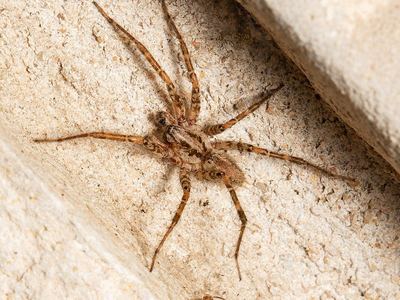
Lynx spiders are a small part of the spider record here: two species with 3% of records between them. The most recorded is the green lynx spider (63), ahead of the striped lynx spider (3).
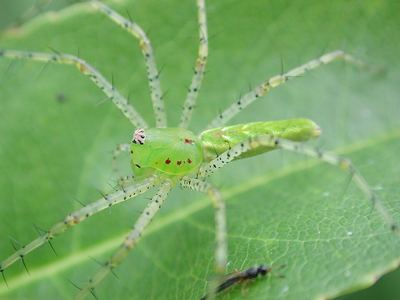
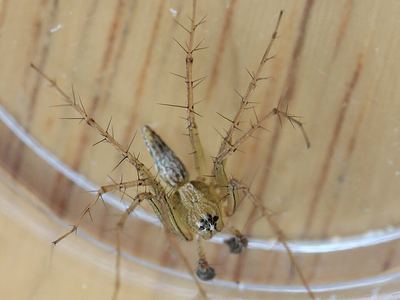
Observation records of the green lynx spider in South Carolina run mostly June through October, peaking in September; most licensed records come from Lexington County, Greenville County and Charleston County.
Sheetweb and dwarf spiders in South Carolina
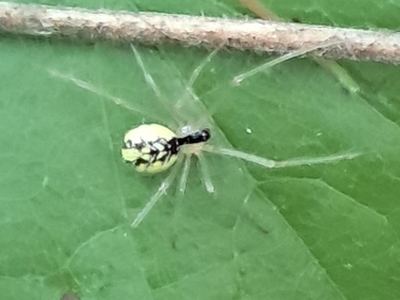
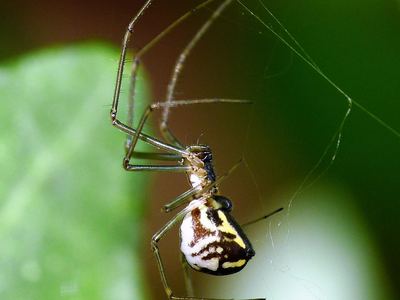
Sheetweb and dwarf spiders are a small part of the spider record here: four species with 2% of records between them. The most recorded is Epiceraticelus mandyae (20), ahead of the bowl and doily spider (11).
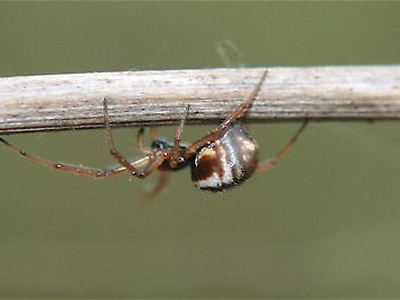 Same family (Linyphiidae): Frontinella pyramitela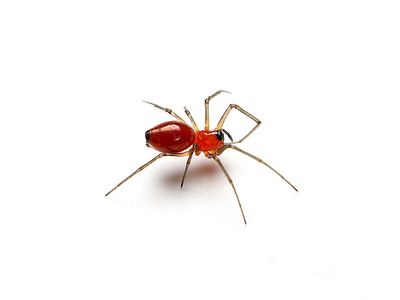
Ground and sac spiders in South Carolina
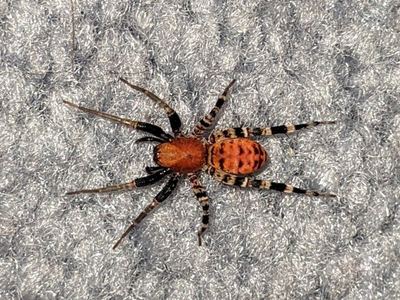
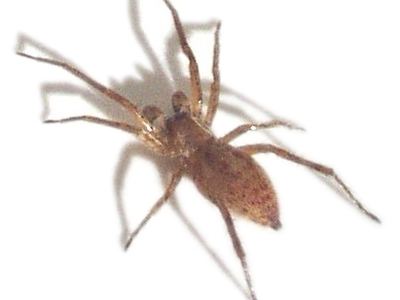
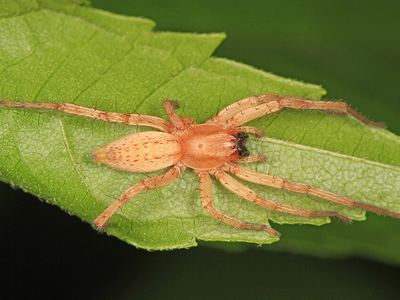
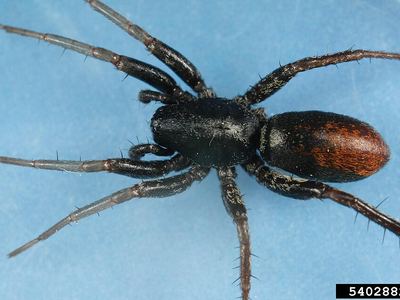
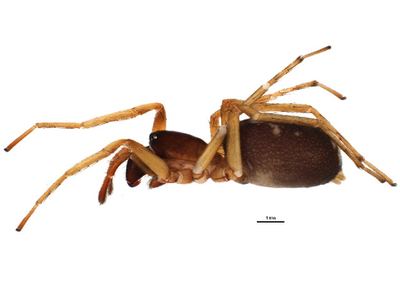
Ground and sac spiders are a small part of the spider record here: seven species with 0.4% of records between them. The most recorded is the orange ant-mimic sac spider (2), ahead of the parson spider (2).
Other spiders in South Carolina
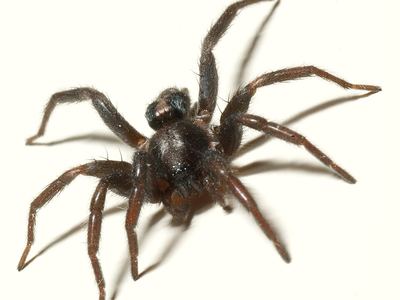
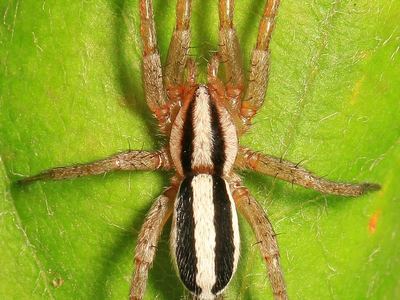
Other spiders: 15 species are listed for South Carolina, with 84 records (4% of the state's spider records). The most recorded is the southern house spider (23), ahead of the ogre-faced spider (18).
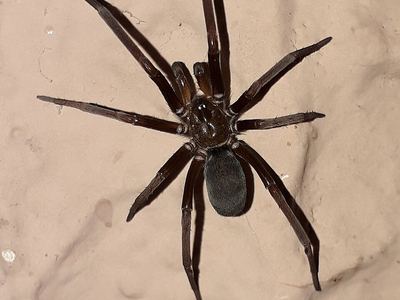
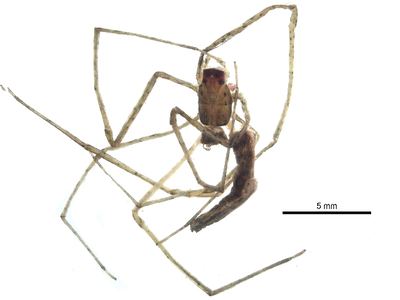
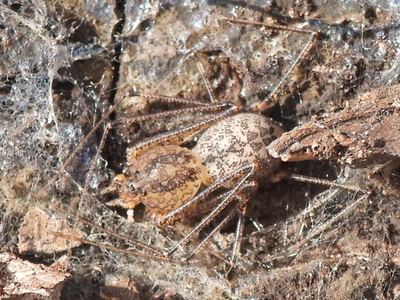
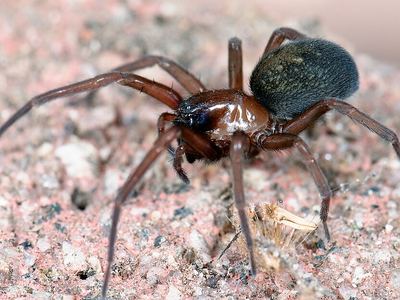
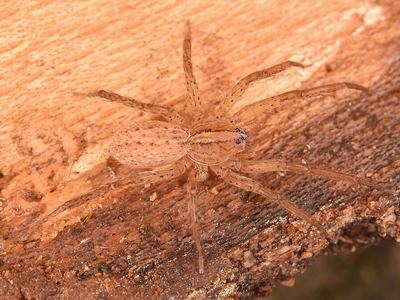
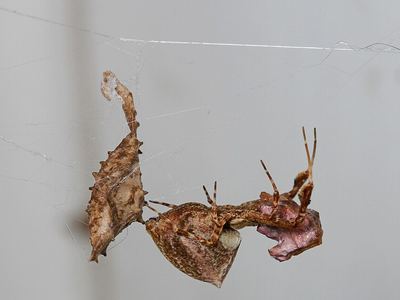
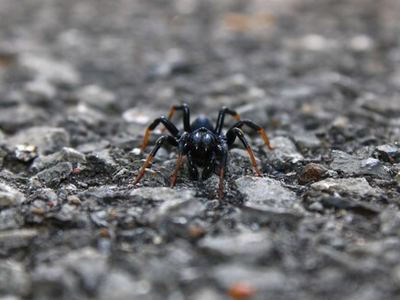
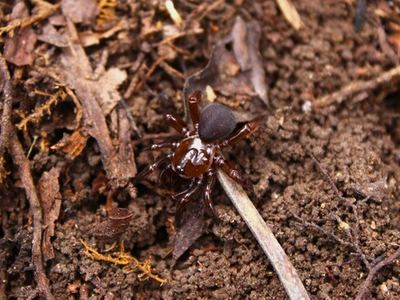
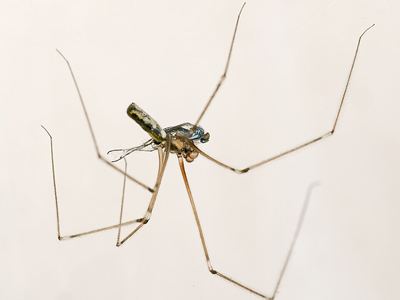
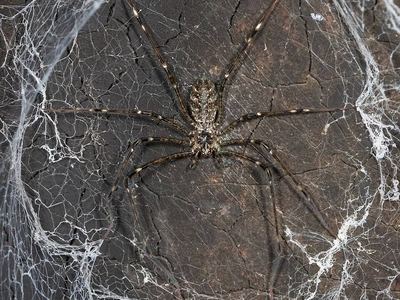
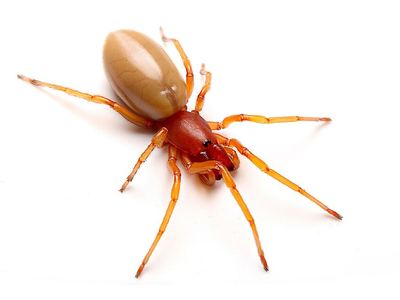
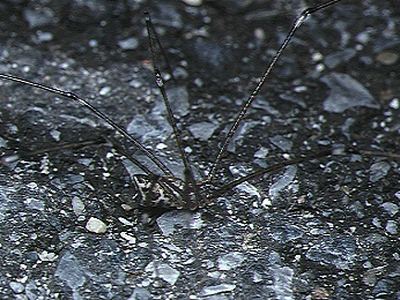
Plus three: Ummidia rongodwini, Chilean tiger spider, Red-legged purseweb spider.
Where in South Carolina are spiders recorded most?
Charleston County leads with 373 records (16%), followed by Greenville County and Lexington County; the top five counties hold 57% of the total. 43 of South Carolina's 46 counties have at least one licensed spider record.
| # | County | Records | Share |
|---|---|---|---|
| 1 | Charleston County | 373 | 15.6% |
| 2 | Greenville County | 274 | 11.5% |
| 3 | Lexington County | 273 | 11.4% |
| 4 | Richland County | 269 | 11.3% |
| 5 | Spartanburg County | 167 | 7.0% |
| 6 | Pickens County | 135 | 5.7% |
| 7 | Abbeville County | 118 | 4.9% |
| 8 | Chesterfield County | 105 | 4.4% |
| 9 | Oconee County | 102 | 4.3% |
| 10 | Horry County | 78 | 3.3% |
| 11 | Georgetown County | 75 | 3.1% |
| 12 | Beaufort County | 59 | 2.5% |
When do spiders come out in South Carolina?
Observation records of spiders in South Carolina run mostly March through November, peaking in July with 14% of them. Winter (December to February) holds 7% of the records. The sharpest rise comes from May to June.
| Jan | Feb | Mar | Apr | May | Jun | Jul | Aug | Sep | Oct | Nov | Dec |
|---|---|---|---|---|---|---|---|---|---|---|---|
| 1% | 3% | 4% | 7% | 9% | 12% | 14% | 13% | 12% | 14% | 7% | 3% |
Spiders: South Carolina compared with its neighbors
South Carolina ranks 27th of 50 states by the number of spider species listed; Texas leads with 386 species.
Every state bordering South Carolina lists more spider species (South Carolina: 121 species; Georgia 186, North Carolina 184).
What spiders are in South Carolina? All 121 species
Ranked by licensed records in South Carolina. The table shows the 60 most recorded of 121 listed spiders.
| # | Species | Family | Records | Share |
|---|---|---|---|---|
| 1 | American golden orb weaver Trichonephila clavipes | Araneidae | 183 | 7.7% |
| 2 | Joro spider Trichonephila clavata | Araneidae | 173 | 7.3% |
| 3 | Black-and-yellow argiope Argiope aurantia | Araneidae | 123 | 5.2% |
| 4 | Twin-flagged jumping spider Anasaitis canosa | Salticidae | 97 | 4.1% |
| 5 | Spiny-backed orbweaver Gasteracantha cancriformis | Araneidae | 89 | 3.7% |
| 6 | Magnolia green jumper Lyssomanes viridis | Salticidae | 85 | 3.6% |
| 7 | Green lynx spider Peucetia viridans | Oxyopidae | 63 | 2.6% |
| 8 | Leucauge argyrobapta | Tetragnathidae | 53 | 2.2% |
| 9 | Red-femured spotted orbweaver Neoscona domiciliorum | Araneidae | 51 | 2.1% |
| 10 | Marbled orbweaver Araneus marmoreus | Araneidae | 47 | 2.0% |
| 11 | Orchard orbweaver Leucauge venusta | Tetragnathidae | 45 | 1.9% |
| 12 | White-banded fishing spider Dolomedes albineus | Pisauridae | 44 | 1.8% |
| 13 | Arrowhead orbweaver Verrucosa arenata | Araneidae | 40 | 1.7% |
| 14 | Spotted orbweaver Neoscona crucifera | Araneidae | 40 | 1.7% |
| 15 | Familiar jumping spider Platycryptus undatus | Salticidae | 38 | 1.6% |
| 16 | Georgia wolf spider Tigrosa georgicola | Lycosidae | 36 | 1.5% |
| 17 | Nursery web spider Pisaurina mira | Pisauridae | 35 | 1.5% |
| 18 | Rabid wolf spider Rabidosa rabida | Lycosidae | 33 | 1.4% |
| 19 | Dark fishing spider Dolomedes tenebrosus | Pisauridae | 32 | 1.3% |
| 20 | Sixspotted fishing spider Dolomedes triton | Pisauridae | 30 | 1.3% |
| 21 | Spined micrathena Micrathena gracilis | Araneidae | 30 | 1.3% |
| 22 | Tigrosa annexa | Lycosidae | 27 | 1.1% |
| 23 | Southern black widow venomous Latrodectus mactans | Theridiidae | 26 | 1.1% |
| 24 | Southern house spider Kukulcania hibernalis | Filistatidae | 23 | 1.0% |
| 25 | Lined orbweaver Mangora gibberosa | Araneidae | 21 | 0.9% |
| 26 | Tuftlegged orbweaver Mangora placida | Araneidae | 21 | 0.9% |
| 27 | Brilliant jumping spider Phidippus clarus | Salticidae | 20 | 0.8% |
| 28 | Epiceraticelus mandyae | Linyphiidae | 20 | 0.8% |
| 29 | Arabesque orbweaver Neoscona arabesca | Araneidae | 19 | 0.8% |
| 30 | Ogre-faced spider Deinopis spinosa | Deinopidae | 18 | 0.8% |
| 31 | Gladicosa pulchra | Lycosidae | 17 | 0.7% |
| 32 | Dotted wolf spider Rabidosa punctulata | Lycosidae | 16 | 0.7% |
| 33 | Paraphidippus aurantius | Salticidae | 16 | 0.7% |
| 34 | Common house spider Parasteatoda tepidariorum | Theridiidae | 15 | 0.6% |
| 35 | Sylvan jumping spider Colonus sylvanus | Salticidae | 15 | 0.6% |
| 36 | Basilica orbweaver Mecynogea lemniscata | Araneidae | 14 | 0.6% |
| 37 | Brown widow venomous introduced Latrodectus geometricus | Theridiidae | 14 | 0.6% |
| 38 | Putnam's jumper Phidippus putnami | Salticidae | 14 | 0.6% |
| 39 | Whitman's jumping spider Phidippus whitmani | Salticidae | 14 | 0.6% |
| 40 | Banded fishing spider Dolomedes vittatus | Pisauridae | 13 | 0.5% |
| 41 | Bold jumper Phidippus audax | Salticidae | 13 | 0.5% |
| 42 | White-jawed jumping spider Hentzia mitrata | Salticidae | 13 | 0.5% |
| 43 | Giant lichen orbweaver Araneus bicentenarius | Araneidae | 12 | 0.5% |
| 44 | Regal jumper Phidippus regius | Salticidae | 12 | 0.5% |
| 45 | Arrowshaped micrathena Micrathena sagittata | Araneidae | 11 | 0.5% |
| 46 | Black-banded crab spider Synema parvulum | Thomisidae | 11 | 0.5% |
| 47 | Bowl and doily spider Frontinella pyramitela | Linyphiidae | 11 | 0.5% |
| 48 | Scytodes atlacoya | Scytodidae | 11 | 0.5% |
| 49 | Triangulate bud spider Steatoda triangulosa | Theridiidae | 11 | 0.5% |
| 50 | American green crab spider Misumessus oblongus | Thomisidae | 10 | 0.4% |
| 51 | Cyclosa turbinata | Araneidae | 10 | 0.4% |
| 52 | Elongate stilt spider Tetragnatha elongata | Tetragnathidae | 10 | 0.4% |
| 53 | Banded garden spider Argiope trifasciata | Araneidae | 9 | 0.4% |
| 54 | Long-jawed orb weaver Tetragnatha laboriosa | Tetragnathidae | 9 | 0.4% |
| 55 | Peppered jumper Pelegrina galathea | Salticidae | 9 | 0.4% |
| 56 | Canopy jumping spider Phidippus otiosus | Salticidae | 8 | 0.3% |
| 57 | Common Hentz jumping spider Hentzia palmarum | Salticidae | 8 | 0.3% |
| 58 | Humpbacked orbweaver Eustala anastera | Araneidae | 8 | 0.3% |
| 59 | White micrathena Micrathena mitrata | Araneidae | 8 | 0.3% |
| 60 | Whitebanded crab spider Misumenoides formosipes | Thomisidae | 8 | 0.3% |
Related pages
GBIF records read 2026-09-29. Listed: any license. Counted: CC0/CC BY only. How we count.