Long-jawed orb weaver (Tetragnatha laboriosa)
The long-jawed orb weaver is a spider in the family Tetragnathidae that is not dangerous to people. GBIF holds 509 licensed U.S. records of it; it reaches our listing threshold in 21 states, most of all Alaska (107), California (96) and Oklahoma (46). Its observation records peak in April.
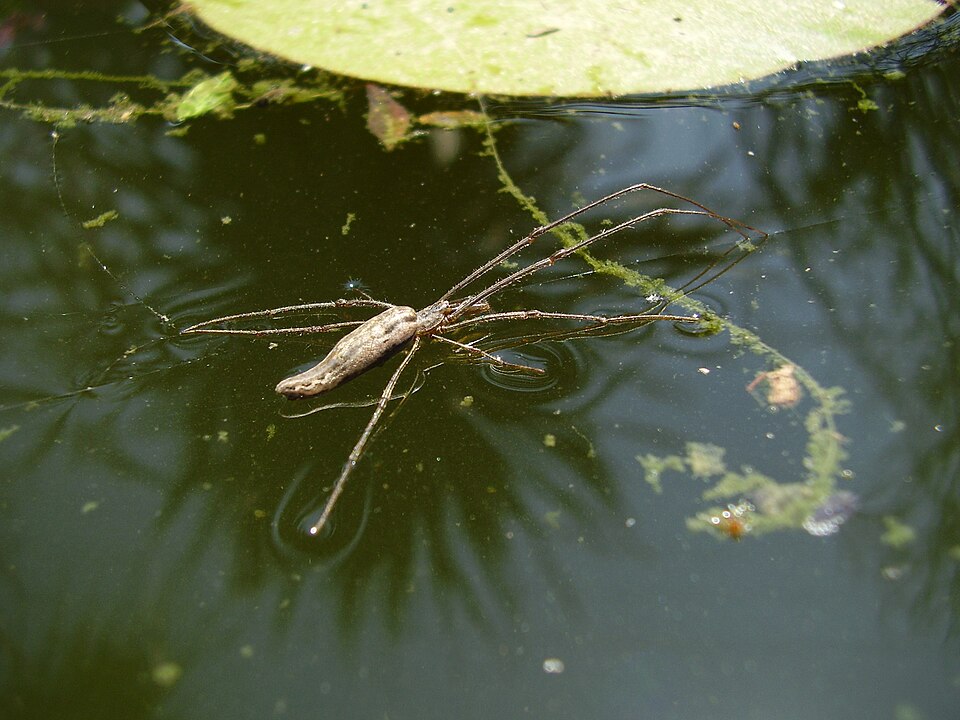
Tetragnatha laboriosa, the silver longjawed orbweaver, is a species of long-jawed orb weaver in the spider family Tetragnathidae. It is found in North and Central America. T. laboriosa goes through nine instars, including its adult stage.
From Wikipedia: Tetragnatha laboriosa, text under CC BY-SA 4.0.
Is the long-jawed orb weaver poisonous or venomous?
Not in any medically significant way. Like almost all spiders the long-jawed orb weaver (family Tetragnathidae) has venom for its prey, but it is not a widow or recluse, the two U.S. groups whose bites need medical attention.
Which states have the long-jawed orb weaver?
Records are spread over 21 states; the top three, Alaska, California and Oklahoma, hold 49% of them.
| # | State | Records | Share of state spiders | Rank in state |
|---|---|---|---|---|
| 1 | Alaska | 107 | 0.4% | 38th of 280 |
| 2 | California | 96 | 0.2% | 61st of 309 |
| 3 | Oklahoma | 46 | 0.9% | 24th of 149 |
| 4 | Nebraska | 42 | 3.3% | 3rd of 71 |
| 5 | Texas | 39 | 0.1% | 116th of 386 |
| 6 | Illinois | 31 | 0.2% | 87th of 243 |
| 7 | Indiana | 30 | 0.7% | 31st of 133 |
| 8 | Pennsylvania | 15 | 0.2% | 67th of 164 |
| 9 | Montana | 13 | 0.6% | 18th of 75 |
| 10 | Washington | 13 | 0.3% | 51st of 157 |
| 11 | Wisconsin | 13 | 0.4% | 59th of 149 |
| 12 | South Carolina | 9 | 0.4% | 53rd of 121 |
| 13 | Colorado | 6 | 0.1% | 61st of 378 |
| 14 | New Mexico | 6 | 0.2% | 76th of 247 |
| 15 | Oregon | 4 | 0.1% | 56th of 88 |
| 16 | Minnesota | 2 | 0.1% | 108th of 145 |
| 17 | Maine | 0 | — | — |
| 18 | Massachusetts | 0 | — | — |
| 19 | North Dakota | 0 | — | — |
| 20 | Ohio | 0 | — | — |
| 21 | Wyoming | 0 | — | — |
When is the long-jawed orb weaver seen?
Across the U.S., observation records of the long-jawed orb weaver run mostly March through August, peaking in April with 25% of them. Winter (December to February) holds 3% of them.
Where the long-jawed orb weaver is recorded in each state
Alaska
Alaska holds 107 licensed records, the joint 38th most recorded of 280 spiders listed there. Most of its licensed records in Alaska come from Kenai Peninsula Borough, Prince of Wales-Outer Ketchikan Census Area and Skagway-Yakutat-Angoon Census Area. Next come Wrangell-Petersburg Census Area (12) and Juneau City and Borough (8).
California
California holds 96 licensed records, the 61st most recorded of 309 spiders listed there. Most of its licensed records in California come from Mono County, Merced County and Solano County. Next come Inyo County (3) and Modoc County (2).
Oklahoma
Oklahoma holds 46 licensed records, the joint 24th most recorded of 149 spiders listed there. Most of its licensed records in Oklahoma come from Marshall County, Comanche County and McIntosh County. Next come Carter County (1) and Cleveland County (1).
Nebraska
Nebraska holds 42 licensed records, the 3rd most recorded of 71 spiders listed there. Most of its licensed records in Nebraska come from Jefferson County, Harlan County and Kearney County. Next come Richardson County (3) and Saline County (3).
Texas
Texas holds 39 licensed records, the 116th most recorded of 386 spiders listed there. Most of its licensed records in Texas come from Comal County, Dallas County and Galveston County. Next come Hidalgo County (3) and Hudspeth County (3).
Illinois
Illinois holds 31 licensed records, the joint 87th most recorded of 243 spiders listed there. Most of its licensed records in Illinois come from Jo Daviess County, Cook County and Lake County. Next come Carroll County (2) and Effingham County (1).
Indiana
Indiana holds 30 licensed records, the 31st most recorded of 133 spiders listed there. Most of its licensed records in Indiana come from Lake County, Porter County and Parke County. Next come LaPorte County (2) and Martin County (1).
Top counties in the U.S.
| # | County | State | Records | Share of U.S. |
|---|---|---|---|---|
| 1 | Mono County | California | 70 | 13.8% |
| 2 | Marshall County | Oklahoma | 38 | 7.5% |
| 3 | Kenai Peninsula Borough | Alaska | 22 | 4.3% |
| 4 | Prince of Wales-Outer Ketchikan Census Area | Alaska | 22 | 4.3% |
| 5 | Lake County | Indiana | 17 | 3.3% |
| 6 | Skagway-Yakutat-Angoon Census Area | Alaska | 16 | 3.1% |
| 7 | Wrangell-Petersburg Census Area | Alaska | 12 | 2.4% |
| 8 | Jo Daviess County | Illinois | 12 | 2.4% |
| 9 | Cook County | Illinois | 11 | 2.2% |
| 10 | Merced County | California | 9 | 1.8% |
| 11 | Juneau City and Borough | Alaska | 8 | 1.6% |
| 12 | Kodiak Island Borough | Alaska | 5 | 1.0% |
| 13 | Yukon-Koyukuk Census Area | Alaska | 5 | 1.0% |
| 14 | Porter County | Indiana | 5 | 1.0% |
| 15 | Jefferson County | Nebraska | 5 | 1.0% |
How recent are the long-jawed orb weaver records?
The long-jawed orb weaver record leans on older material: only 19% of dated U.S. records come from 2017–2026, and the median record is from 2010. The oldest dated record is from 1897; the busiest year was 2011, with 91 records.
| Decade | Records | Share |
|---|---|---|
| 1890s | 13 | 2.7% |
| 1920s | 3 | 0.6% |
| 1930s | 15 | 3.1% |
| 1940s | 8 | 1.7% |
| 1950s | 14 | 2.9% |
| 1960s | 12 | 2.5% |
| 1970s | 32 | 6.7% |
| 1980s | 31 | 6.5% |
| 1990s | 22 | 4.6% |
| 2000s | 86 | 17.9% |
| 2010s | 178 | 37.1% |
| 2020s | 66 | 13.8% |
Species recorded in the same counties
Of the 78 counties where the long-jawed orb weaver is most recorded, 28 are also top counties for the bold jumper, more than for any other spider. None of its closest neighbors is venomous.
| Species | Shared counties |
|---|---|
| Bold jumper | 28 |
| Striped lynx spider | 25 |
| Whitebanded crab spider | 21 |
| Bronze jumper | 20 |
| Peppered jumper | 20 |
| Black-and-yellow argiope | 19 |
| Familiar jumping spider | 19 |
| Banded garden spider | 18 |
Related species in the U.S.
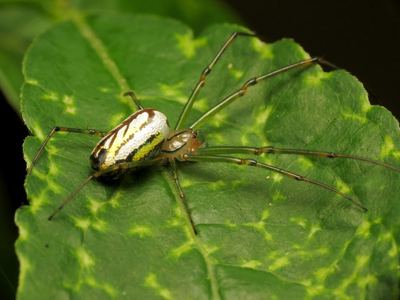
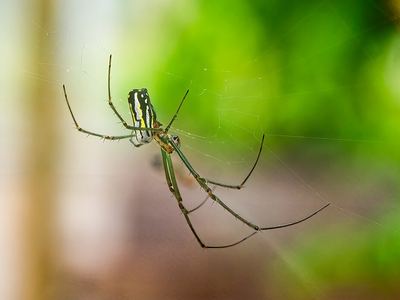
Other members of the family Tetragnathidae with profiles here: Orchard orbweaver and Greater leucauge.

GBIF records read 2026-09-29. Listed: any license. Counted: CC0/CC BY only. How we count.