Arabesque orbweaver (Neoscona arabesca)
The arabesque orbweaver is a spider in the family Araneidae that is not dangerous to people. GBIF holds 1,784 licensed U.S. records of it; it reaches our listing threshold in 41 states, most of all Texas (203), Florida (197) and Virginia (158). Its observation records peak in July.
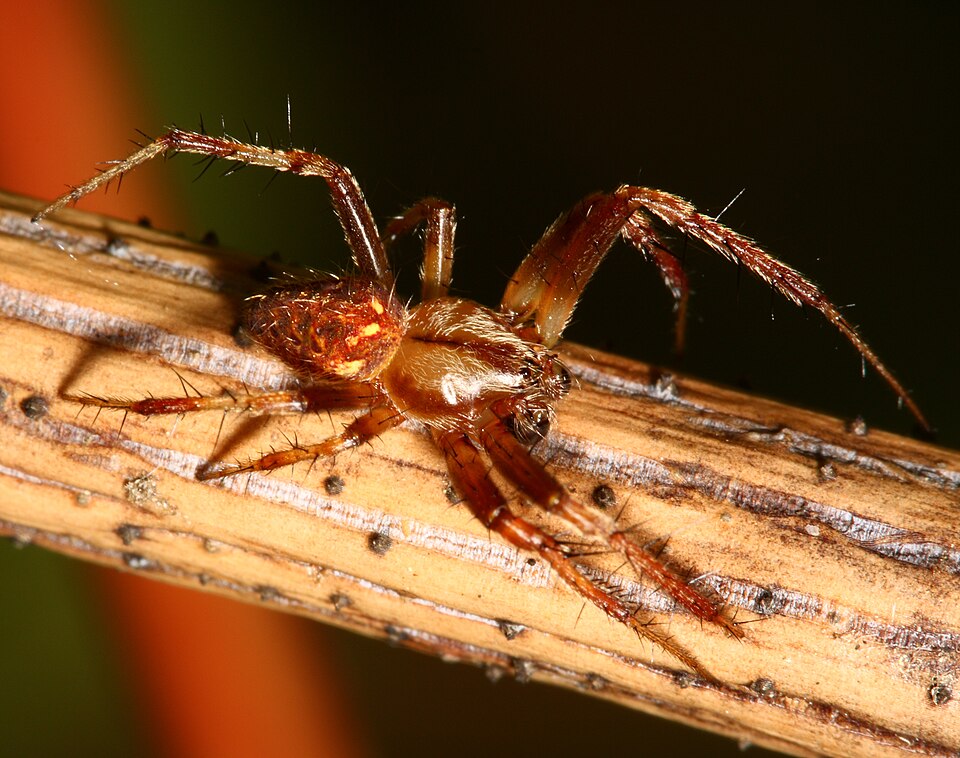

Neoscona arabesca is a common orb-weaver spider found throughout North America. Often called the arabesque orbweaver, after the cryptic, brightly colored, swirling markings on its prominent abdomen, this spider can be found in fields, forests, gardens, and on human structures. Neoscona species are among the most common and abundant orb weavers and are found on all continents.
From Wikipedia: Neoscona arabesca, text under CC BY-SA 4.0.
Is the arabesque orbweaver poisonous or venomous?
Not in any medically significant way. Like almost all spiders the arabesque orbweaver (family Araneidae) has venom for its prey, but it is not a widow or recluse, the two U.S. groups whose bites need medical attention.
Which states have the arabesque orbweaver?
Records are spread over 41 states; the top three, Texas, Florida and Virginia, hold 31% of them.
| # | State | Records | Share of state spiders | Rank in state |
|---|---|---|---|---|
| 1 | Texas | 203 | 0.7% | 26th of 386 |
| 2 | Florida | 197 | 1.6% | 12th of 237 |
| 3 | Virginia | 158 | 1.4% | 21st of 176 |
| 4 | Illinois | 133 | 0.7% | 18th of 243 |
| 5 | North Carolina | 84 | 1.0% | 26th of 184 |
| 6 | Louisiana | 81 | 2.0% | 14th of 107 |
| 7 | New York | 74 | 1.2% | 22nd of 149 |
| 8 | Maryland | 70 | 1.2% | 19th of 153 |
| 9 | Georgia | 56 | 0.8% | 28th of 186 |
| 10 | Minnesota | 53 | 1.8% | 14th of 145 |
| 11 | Delaware | 49 | 2.3% | 11th of 71 |
| 12 | Ohio | 49 | 0.7% | 37th of 332 |
| 13 | Arkansas | 46 | 2.8% | 5th of 114 |
| 14 | California | 46 | 0.1% | 98th of 309 |
| 15 | Pennsylvania | 45 | 0.6% | 32nd of 164 |
| 16 | New Hampshire | 41 | 3.0% | 8th of 72 |
| 17 | Vermont | 41 | 2.6% | 10th of 74 |
| 18 | Michigan | 31 | 1.3% | 22nd of 122 |
| 19 | Tennessee | 31 | 0.8% | 32nd of 138 |
| 20 | Maine | 29 | 3.1% | 9th of 297 |
| 21 | Wisconsin | 28 | 0.9% | 24th of 149 |
| 22 | Alabama | 24 | 0.7% | 37th of 143 |
| 23 | Indiana | 22 | 0.5% | 41st of 133 |
| 24 | New Jersey | 19 | 0.8% | 32nd of 127 |
| 25 | South Carolina | 19 | 0.8% | 29th of 121 |
| 26 | Massachusetts | 18 | 0.4% | 51st of 189 |
| 27 | Mississippi | 18 | 1.3% | 17th of 117 |
| 28 | Oklahoma | 18 | 0.3% | 59th of 149 |
| 29 | Nebraska | 16 | 1.3% | 15th of 71 |
| 30 | Missouri | 15 | 0.6% | 32nd of 117 |
| 31 | Kansas | 12 | 0.7% | 25th of 94 |
| 32 | Kentucky | 12 | 0.6% | 45th of 103 |
| 33 | Montana | 12 | 0.5% | 19th of 75 |
| 34 | West Virginia | 10 | 1.3% | 18th of 90 |
| 35 | Colorado | 7 | 0.2% | 52nd of 378 |
| 36 | Connecticut | 2 | 0.2% | 60th of 86 |
| 37 | Iowa | 2 | 0.3% | 38th of 57 |
| 38 | Oregon | 2 | 0.1% | 73rd of 88 |
| 39 | North Dakota | 1 | 1.2% | 11th of 115 |
| 40 | Washington | 1 | 0.0% | 116th of 157 |
| 41 | Wyoming | 0 | — | — |
When is the arabesque orbweaver seen?
Across the U.S., observation records of the arabesque orbweaver run mostly April through October, peaking in July with 21% of them. Winter (December to February) holds 3% of them.
Season by state
Observation records run through most of the year in Florida and Texas. Among states whose main season falls within one calendar year, it starts earliest in March (Louisiana) and latest in June (Delaware, Maryland, Minnesota, New Hampshire, New York, Ohio and 4 more). The most common peak month is September, shared by Georgia, Illinois, Maryland, North Carolina, Tennessee and Virginia.
| State | Main season | Peak month | Observation records |
|---|---|---|---|
| Texas | most of the year | April | 193 |
| Virginia | June through October | September | 158 |
| Florida | most of the year | March | 149 |
| North Carolina | May through October | September | 80 |
| Louisiana | March through October | April | 77 |
| Maryland | June through September | September | 70 |
| New York | June through August | July | 66 |
| Georgia | April through October | September | 56 |
| Minnesota | June through August | July | 53 |
| Delaware | June through October | June | 49 |
| Ohio | June through October | August | 44 |
| Pennsylvania | June through September | July | 42 |
| Illinois | May through September | September | 41 |
| New Hampshire | June through August | July | 41 |
| Vermont | June through August | July | 41 |
| Arkansas | May through October | October | 34 |
| Tennessee | June through October | September | 31 |
Where the arabesque orbweaver is recorded in each state
Texas
Texas holds 203 licensed records, the 26th most recorded of 386 spiders listed there. Its observation records in Texas run through most of the year, peaking in April; most licensed records come from Hidalgo County, Harris County and Jackson County. Next come Cameron County (13) and Dallas County (10).
Florida
Florida holds 197 licensed records, the 12th most recorded of 237 spiders listed there. Its observation records in Florida run through most of the year, peaking in March; most licensed records come from Orange County, Miami-Dade County and Broward County. Next come Okeechobee County (15) and Alachua County (12).
Virginia
Virginia holds 158 licensed records, the 21st most recorded of 176 spiders listed there. Its observation records in Virginia run mostly June through October, peaking in September; most licensed records come from Fairfax County, Prince William County and Loudoun County. Next come Virginia Beach (6) and Accomack County (5).
Illinois
Illinois holds 133 licensed records, the 18th most recorded of 243 spiders listed there. Its observation records in Illinois run mostly May through September, peaking in September; most licensed records come from Marion County, Iroquois County and Champaign County. Next come Fayette County (10) and Jo Daviess County (9).
North Carolina
North Carolina holds 84 licensed records, the joint 26th most recorded of 184 spiders listed there. Its observation records in North Carolina run mostly May through October, peaking in September; most licensed records come from Orange County, Cumberland County and Durham County. Next come Wake County (6) and Currituck County (5).
Louisiana
Louisiana holds 81 licensed records, the 14th most recorded of 107 spiders listed there. Its observation records in Louisiana run mostly March through October, peaking in April; most licensed records come from East Baton Rouge Parish, Jefferson Davis Parish and Calcasieu Parish. Next come Lafayette Parish (5) and Orleans Parish (5).
New York
New York holds 74 licensed records, the 22nd most recorded of 149 spiders listed there. Its observation records in New York run mostly June through August, peaking in July; most licensed records come from Westchester County, Tompkins County and Broome County. Next come Suffolk County (5) and Onondaga County (4).
Maryland
Maryland holds 70 licensed records, the 19th most recorded of 153 spiders listed there. Its observation records in Maryland run mostly June through September, peaking in September; most licensed records come from Montgomery County, Harford County and Anne Arundel County. Next come Frederick County (6) and Garrett County (5).
Georgia
Georgia holds 56 licensed records, the 28th most recorded of 186 spiders listed there. Its observation records in Georgia run mostly April through October, peaking in September; most licensed records come from Clarke County, Cobb County and DeKalb County. Next come Bryan County (3) and Jones County (3).
Minnesota
Minnesota holds 53 licensed records, the 14th most recorded of 145 spiders listed there. Its observation records in Minnesota run mostly June through August, peaking in July; most licensed records come from Stevens County, St. Louis County and Carlton County. Next come Dakota County (3) and Hennepin County (3).
Delaware
Delaware holds 49 licensed records, the 11th most recorded of 71 spiders listed there. Its observation records in Delaware run mostly June through October, peaking in June; most licensed records come from Sussex County and Kent County.
Ohio
Ohio holds 49 licensed records, the 37th most recorded of 332 spiders listed there. Its observation records in Ohio run mostly June through October, peaking in August; most licensed records come from Franklin County, Ottawa County and Richland County. Next come Delaware County (4) and Hamilton County (4).
Arkansas
Arkansas holds 46 licensed records, the 5th most recorded of 114 spiders listed there. Its observation records in Arkansas run mostly May through October, peaking in October; most licensed records come from Craighead County, Perry County and Poinsett County. Next come Clay County (3) and Crittenden County (3).
California
California holds 46 licensed records, the joint 98th most recorded of 309 spiders listed there. Most of its licensed records in California come from Los Angeles County, Mono County and San Diego County. Next come San Francisco County (4) and Ventura County (4).
Pennsylvania
Pennsylvania holds 45 licensed records, the 32nd most recorded of 164 spiders listed there. Its observation records in Pennsylvania run mostly June through September, peaking in July; most licensed records come from Bucks County, Westmoreland County and Armstrong County. Next come Monroe County (3) and Bedford County (3).
New Hampshire
New Hampshire holds 41 licensed records, the joint 8th most recorded of 72 spiders listed there. Its observation records in New Hampshire run mostly June through August, peaking in July; most licensed records come from Grafton County, Cheshire County and Hillsborough County. Next come Sullivan County (7) and Coos County (2).
Vermont
Vermont holds 41 licensed records, the 10th most recorded of 74 spiders listed there. Its observation records in Vermont run mostly June through August, peaking in July; most licensed records come from Windsor County, Chittenden County and Washington County. Next come Windham County (5) and Caledonia County (3).
Michigan
Michigan holds 31 licensed records, the 22nd most recorded of 122 spiders listed there. Most of its licensed records in Michigan come from Schoolcraft County, Clinton County and Leelanau County. Next come Macomb County (3) and Benzie County (2).
Tennessee
Tennessee holds 31 licensed records, the joint 32nd most recorded of 138 spiders listed there. Its observation records in Tennessee run mostly June through October, peaking in September; most licensed records come from Knox County, Shelby County and Bradley County. Next come Bedford County (2) and Jefferson County (2).
Top counties in the U.S.
| # | County | State | Records | Share of U.S. |
|---|---|---|---|---|
| 1 | Fairfax County | Virginia | 79 | 4.4% |
| 2 | Hidalgo County | Texas | 69 | 3.9% |
| 3 | Sussex County | Delaware | 46 | 2.6% |
| 4 | Orange County | Florida | 42 | 2.4% |
| 5 | Marion County | Illinois | 30 | 1.7% |
| 6 | East Baton Rouge Parish | Louisiana | 25 | 1.4% |
| 7 | Miami-Dade County | Florida | 24 | 1.3% |
| 8 | Orange County | North Carolina | 22 | 1.2% |
| 9 | Iroquois County | Illinois | 20 | 1.1% |
| 10 | Harris County | Texas | 18 | 1.0% |
| 11 | Broward County | Florida | 17 | 1.0% |
| 12 | Montgomery County | Maryland | 17 | 1.0% |
| 13 | Clarke County | Georgia | 16 | 0.9% |
| 14 | Craighead County | Arkansas | 15 | 0.8% |
| 15 | Okeechobee County | Florida | 15 | 0.8% |
How recent are the arabesque orbweaver records?
Most of what is known about the arabesque orbweaver is recent: 83% of dated U.S. records were made in 2017–2026, and half date from 2021 or later. The oldest dated record is from 1912; the busiest year was 2025, with 234 records.
| Decade | Records | Share |
|---|---|---|
| 1910s | 1 | 0.1% |
| 1920s | 1 | 0.1% |
| 1930s | 7 | 0.4% |
| 1940s | 3 | 0.2% |
| 1950s | 3 | 0.2% |
| 1960s | 5 | 0.3% |
| 1970s | 12 | 0.7% |
| 1980s | 19 | 1.0% |
| 1990s | 86 | 4.7% |
| 2000s | 21 | 1.2% |
| 2010s | 386 | 21.2% |
| 2020s | 1,275 | 70.1% |
Species recorded in the same counties
Of the 251 counties where the arabesque orbweaver is most recorded, 144 are also top counties for the bold jumper, more than for any other spider. None of its closest neighbors is venomous.
| Species | Shared counties |
|---|---|
| Bold jumper | 144 |
| Black-and-yellow argiope | 139 |
| Familiar jumping spider | 119 |
| Nursery web spider | 119 |
| Bronze jumper | 113 |
| Dark fishing spider | 107 |
| Spotted orbweaver | 106 |
| Sixspotted fishing spider | 93 |
Related species in the U.S.
Other species of the genus Neoscona with profiles here: Spotted orbweaver, Western spotted orbweaver and Red-femured spotted orbweaver.
GBIF records read 2026-09-29. Listed: any license. Counted: CC0/CC BY only. How we count.