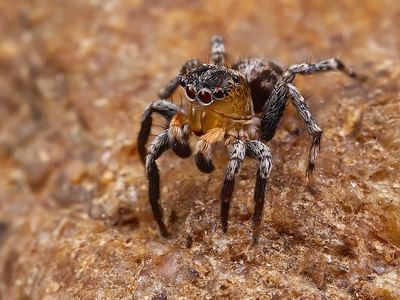
Gray wall jumper (Menemerus bivittatus)
The gray wall jumper is a spider in the family Salticidae that is not dangerous to people. GBIF holds 1,161 licensed U.S. records of it; it reaches our listing threshold in 9 states, most of all Florida (392), Texas (270) and California (216). Its observation records peak in June.
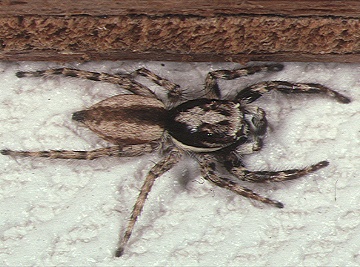

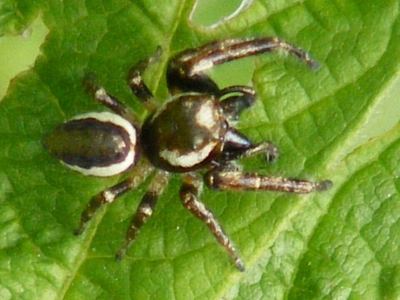
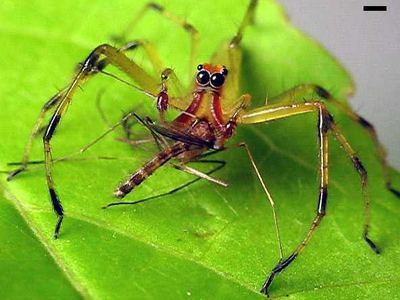
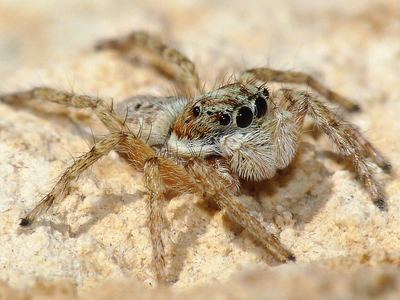
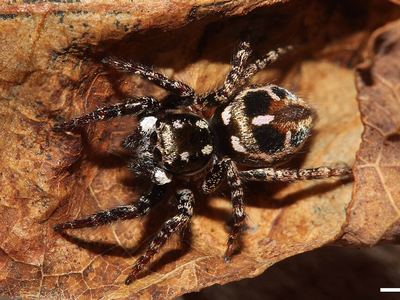
Menemerus bivittatus is a spider in the family Salticidae commonly known as the gray wall jumper. It is a pantropical species and is usually found on the walls of buildings or on tree trunks where it stalks its prey.
From Wikipedia: Menemerus bivittatus, text under CC BY-SA 4.0.
Is the gray wall jumper poisonous or venomous?
Not in any medically significant way. Like almost all spiders the gray wall jumper (family Salticidae) has venom for its prey, but it is not a widow or recluse, the two U.S. groups whose bites need medical attention.
Which states have the gray wall jumper?
Records are spread over 9 states; the top three, Florida, Texas and California, hold 76% of them.
| # | State | Records | Share of state spiders | Rank in state |
|---|---|---|---|---|
| 1 | Florida | 392 | 3.1% | 6th of 237 |
| 2 | Texas | 270 | 0.9% | 19th of 386 |
| 3 | California | 216 | 0.4% | 38th of 309 |
| 4 | Louisiana | 209 | 5.2% | 4th of 107 |
| 5 | Hawaii | 56 | 1.1% | 16th of 57 |
| 6 | Georgia | 12 | 0.2% | 86th of 186 |
| 7 | Alabama | 4 | 0.1% | 93rd of 143 |
| 8 | South Carolina | 1 | 0.0% | 104th of 121 |
| 9 | Mississippi | 0 | — | — |
When is the gray wall jumper seen?
Across the U.S., observation records of the gray wall jumper run through most of the year, peaking in June with 14% of them. Winter (December to February) holds 13% of them.
Season by state
Observation records run through most of the year in California, Florida and Hawaii. Among states whose main season falls within one calendar year, it starts earliest in March (Louisiana) and latest in April (Texas). Each of these states peaks in a different month: April in Texas, June in Louisiana, July in California, August in Florida and December in Hawaii.
| State | Main season | Peak month | Observation records |
|---|---|---|---|
| Florida | most of the year | August | 389 |
| Texas | April through December | April | 238 |
| Louisiana | March through October | June | 209 |
| California | most of the year | July | 183 |
| Hawaii | most of the year | December | 53 |
Where the gray wall jumper is recorded in each state
Florida
Florida holds 392 licensed records, the 6th most recorded of 237 spiders listed there. Its observation records in Florida run through most of the year, peaking in August; most licensed records come from Broward County, Orange County and Miami-Dade County. Next come Sarasota County (29) and Alachua County (23).
Texas
Texas holds 270 licensed records, the 19th most recorded of 386 spiders listed there. Its observation records in Texas run mostly April through December, peaking in April; most licensed records come from Hidalgo County, Harris County and Fort Bend County. Next come Nueces County (25) and Cameron County (19).
California
California holds 216 licensed records, the 38th most recorded of 309 spiders listed there. Its observation records in California run through most of the year, peaking in July; most licensed records come from Los Angeles County, Orange County and Riverside County. Next come San Diego County (8) and San Bernardino County (7).
Louisiana
Louisiana holds 209 licensed records, the 4th most recorded of 107 spiders listed there. Its observation records in Louisiana run mostly March through October, peaking in June; most licensed records come from Saint Tammany Parish, Calcasieu Parish and Tangipahoa Parish. Next come East Baton Rouge Parish (22) and Orleans Parish (16).
Hawaii
Hawaii holds 56 licensed records, the 16th most recorded of 57 spiders listed there. Its observation records in Hawaii run through most of the year, peaking in December; most licensed records come from Maui County, Honolulu County and Hawaii County. Next come Kauai County (2).
Top counties in the U.S.
| # | County | State | Records | Share of U.S. |
|---|---|---|---|---|
| 1 | Los Angeles County | California | 130 | 11.2% |
| 2 | Broward County | Florida | 97 | 8.4% |
| 3 | Saint Tammany Parish | Louisiana | 72 | 6.2% |
| 4 | Hidalgo County | Texas | 68 | 5.9% |
| 5 | Orange County | Florida | 54 | 4.7% |
| 6 | Orange County | California | 53 | 4.6% |
| 7 | Harris County | Texas | 47 | 4.0% |
| 8 | Calcasieu Parish | Louisiana | 38 | 3.3% |
| 9 | Miami-Dade County | Florida | 37 | 3.2% |
| 10 | Tangipahoa Parish | Louisiana | 35 | 3.0% |
| 11 | Sarasota County | Florida | 29 | 2.5% |
| 12 | Fort Bend County | Texas | 28 | 2.4% |
| 13 | Nueces County | Texas | 25 | 2.2% |
| 14 | Maui County | Hawaii | 24 | 2.1% |
| 15 | Alachua County | Florida | 23 | 2.0% |
How recent are the gray wall jumper records?
Most of what is known about the gray wall jumper is recent: 92% of dated U.S. records were made in 2017–2026, and half date from 2022 or later. The oldest dated record is from 1960; the busiest year was 2019, with 163 records.
| Decade | Records | Share |
|---|---|---|
| 1960s | 1 | 0.1% |
| 2000s | 35 | 2.9% |
| 2010s | 379 | 31.0% |
| 2020s | 806 | 66.0% |
Species recorded in the same counties
Of the 52 counties where the gray wall jumper is most recorded, 30 are also top counties for both Leucauge argyrobapta and the spiny-backed orbweaver; no other spider shares more. Venomous species among its neighbors: the brown widow.
| Species | Shared counties |
|---|---|
| Leucauge argyrobapta | 30 |
| Spiny-backed orbweaver | 30 |
| Arabesque orbweaver | 25 |
| Brown widow venomous | 25 |
| Pantropical jumper | 25 |
| Tropical orb weaver | 25 |
| Bold jumper | 24 |
| Tigrosa annexa | 24 |
Related species in the U.S.
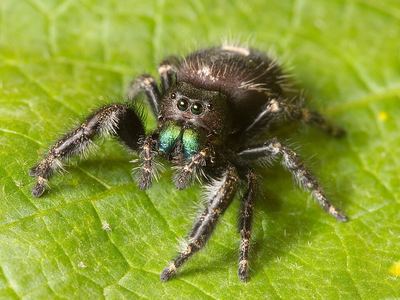
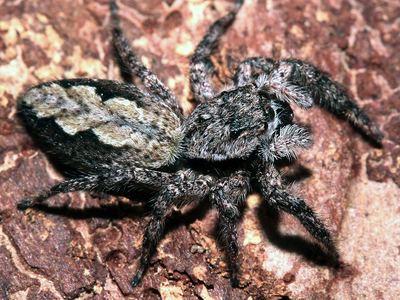
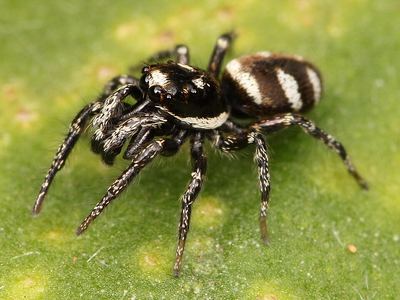
Other species of the genus Menemerus with profiles here: Half-edged wall jumping spider.
GBIF records read 2026-09-29. Listed: any license. Counted: CC0/CC BY only. How we count.