Spiders in New Mexico
New Mexico has 247 spider species on record, each with at least 10 GBIF records in the state, and 2,401 licensed records in all. The most recorded are the western black widow, the Texas brown tarantula and Phidippus carneus. Medically significant: the western black widow and the Apache recluse.
Widow spiders in New Mexico
One species of this group is listed for New Mexico: the western black widow, with 137 records (6% of the state's spider records).
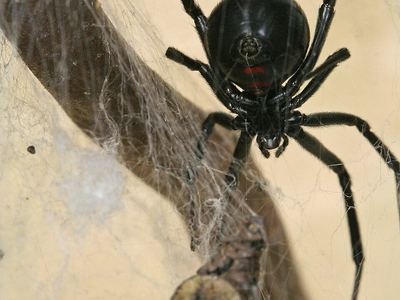
Observation records of the western black widow in New Mexico run mostly May through November, peaking in August; most licensed records come from Bernalillo County, Doña Ana County and Hidalgo County.
Recluse spiders in New Mexico
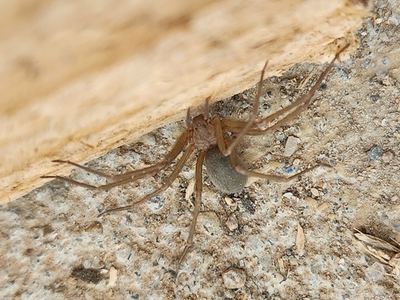
One species of this group is listed for New Mexico: the Apache recluse, with 22 records (0.9% of the state's spider records).
Jumping spiders in New Mexico
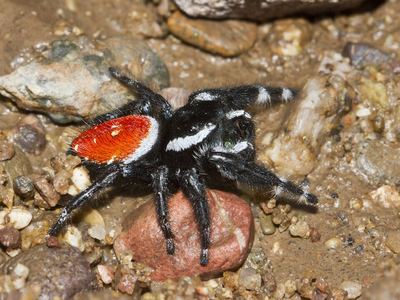
Jumping spiders: 44 species are listed for New Mexico, with 513 records (21% of the state's spider records). The most recorded is Phidippus carneus (51), ahead of the hairy tufted jumping spider (48).
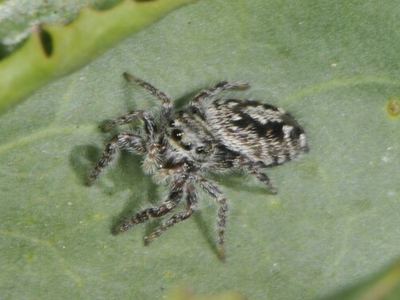
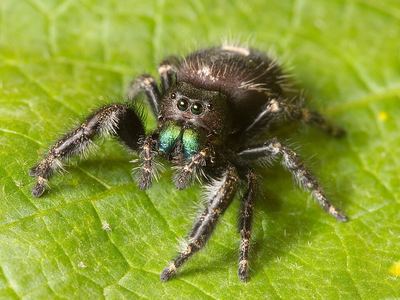
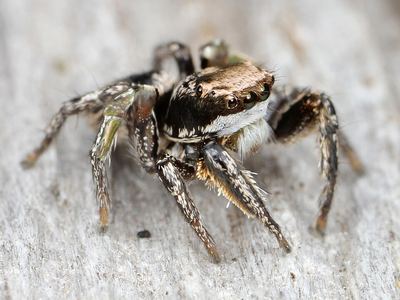
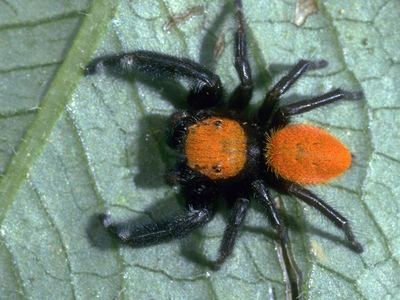
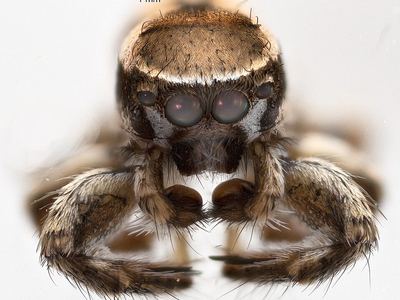
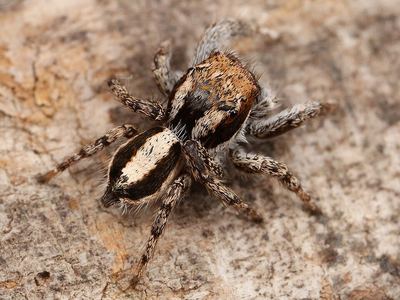
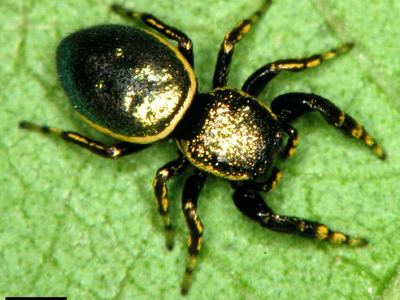
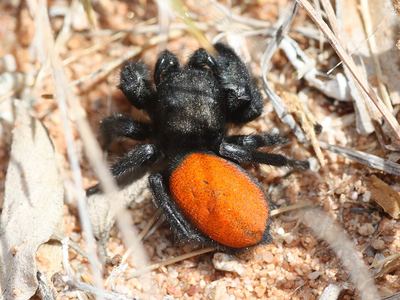
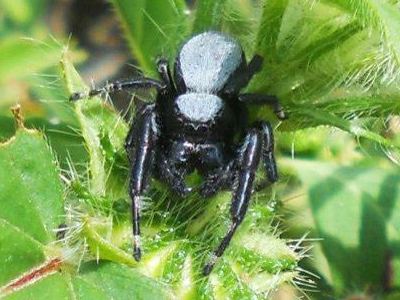
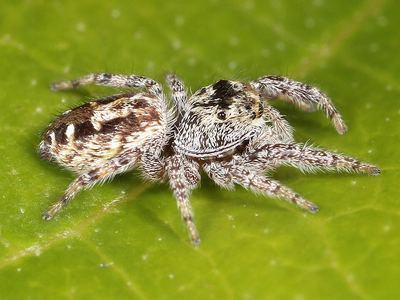
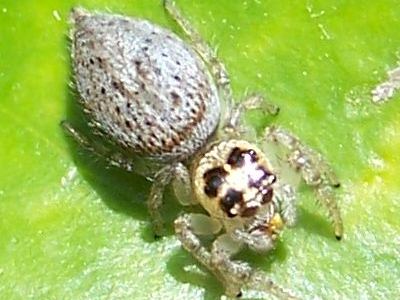
Plus 32: Habronattus geronimoi, Habronattus tranquillus, Metaphidippus chera, Pelegrina furcata, Phidippus asotus, Habronattus ustulatus, California flattened jumping spider, Salticus peckhamae, Habronattus virgulatus, Pelegrina arizonensis, Habronattus gilaensis, Ribbon jumping spider, Hirsute paradise spider, Phidippus californicus, Agave jumping spider, Habronattus altanus, Habronattus festus, Proszynski's jumping spider, Black-marked jumping spider, Buttonhook leafbeetle jumping spider, Habronattus amicus, Phidippus tyrannus, Platycryptus arizonensis, Poultonella alboimmaculata, Brilliant jumping spider, Pelegrina sabinema, Johnson jumper, Mexigonus arizonensis, Minute jumping spider, Phidippus olympus, Tyrell's tufted jumping spider, Carolina jumping spider.
Observation records of Phidippus carneus in New Mexico run mostly June through October, peaking in September; most licensed records come from Bernalillo County, Doña Ana County and Catron County. Observation records of the hairy tufted jumping spider in New Mexico run mostly March through August, peaking in April; most licensed records come from Bernalillo County, Doña Ana County and Santa Fe County. Observation records of the bold jumper in New Mexico run mostly April through September, peaking in April; most licensed records come from Bernalillo County, San Miguel County and Socorro County.
Wolf spiders in New Mexico
Wolf spiders: 24 species are listed for New Mexico, with 230 records (10% of the state's spider records). The most recorded is Hogna coloradensis (40), ahead of the Carolina wolf spider (23).
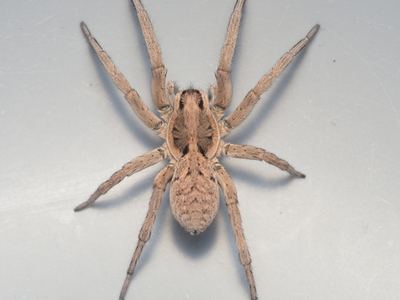
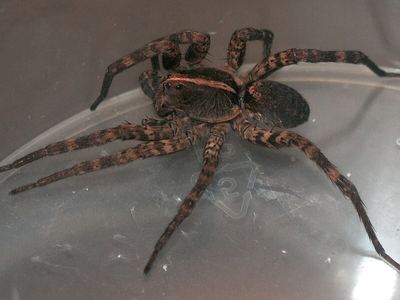
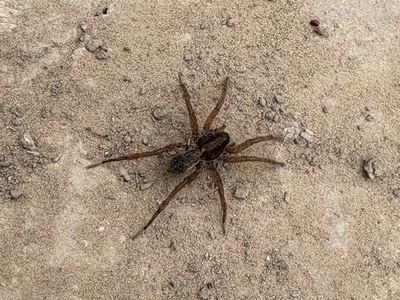
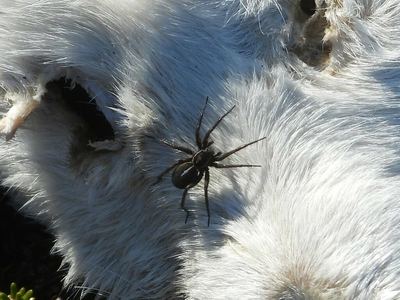
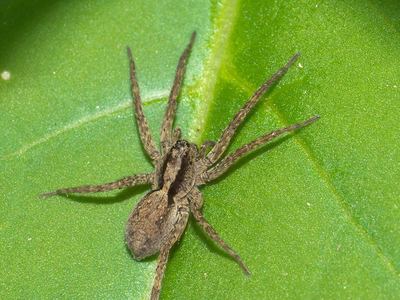
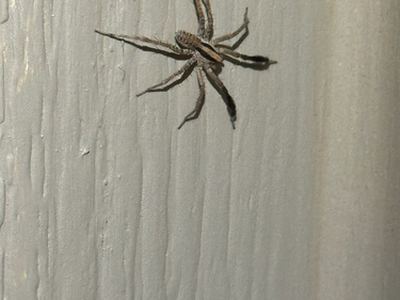
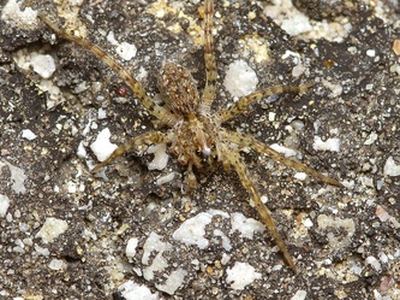
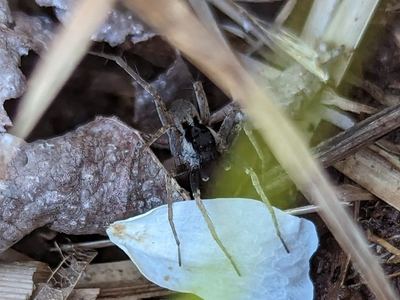 Related species: Pardosa saxatilisRelated species: Pardosa saxatilis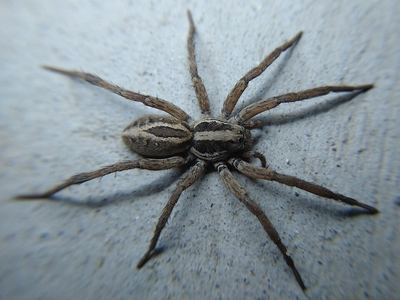
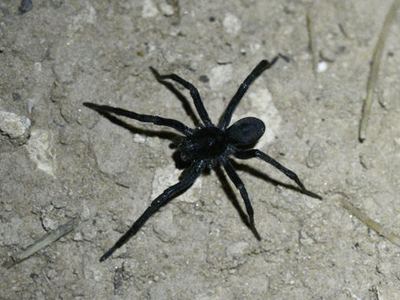
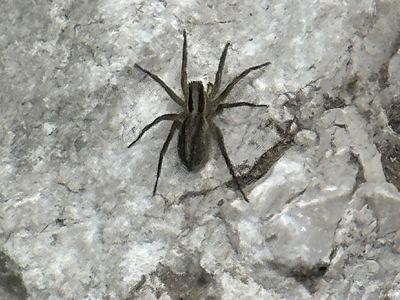
Plus twelve: Rabidosa santrita, Shoreline wolf spider, Pardosa concinna, Pardosa sternalis, Hesperocosa unica, Trochosa terricola, Pardosa steva, Pardosa coloradensis, Pardosa xerophila, Pardosa bucklei, Pardosa montgomeryi, Pardosa uncata.
Most licensed records of Hogna coloradensis in New Mexico come from Luna County, Doña Ana County and Sierra County.
Orb weavers in New Mexico
Orb weavers: nine species are listed for New Mexico, with 103 records (4% of the state's spider records). The most recorded is the western spotted orbweaver (45), ahead of the banded garden spider (25).
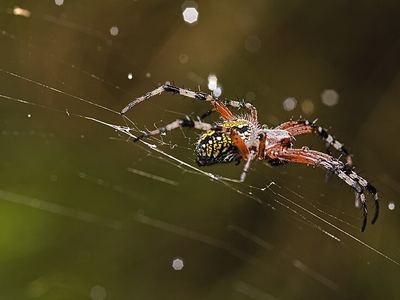
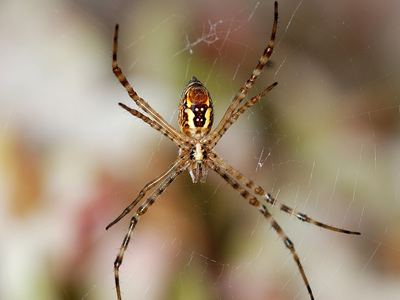
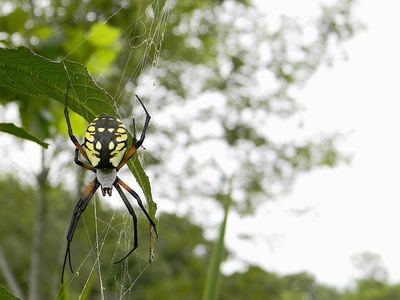
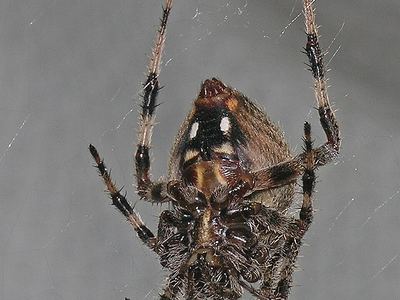
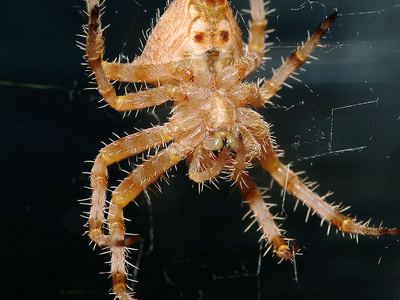
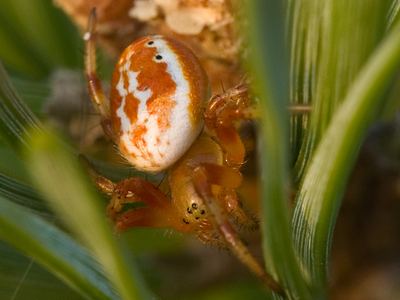
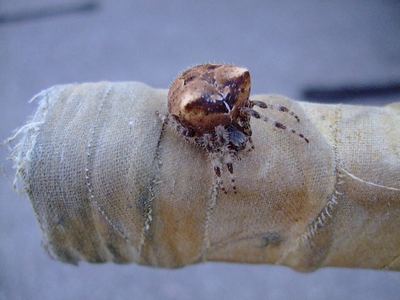
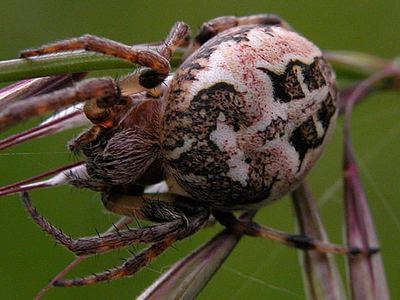
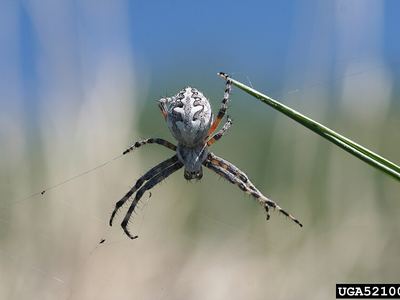
Observation records of the western spotted orbweaver in New Mexico run mostly June through October, peaking in September; most licensed records come from Eddy County, Doña Ana County and Hidalgo County.
Long-jawed orb weavers in New Mexico
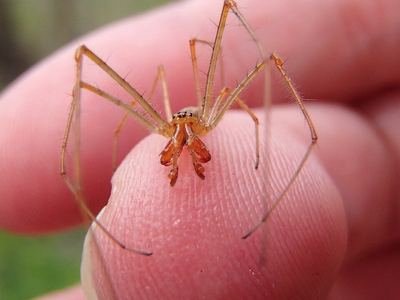
Long-jawed orb weavers are a small part of the spider record here: two species with 0.4% of records between them. The most recorded is the long-jawed orb weaver (6), ahead of the versicolor long-jawed orbweaver (4).
Fishing and nursery web spiders in New Mexico
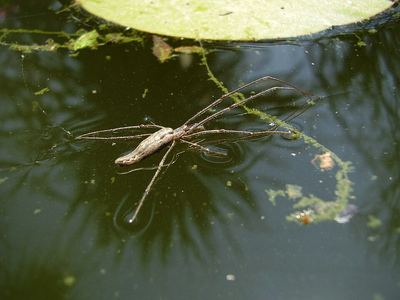
One species of this group is listed for New Mexico: the New Mexico fishing spider, with 2 records (0.1% of the state's spider records).
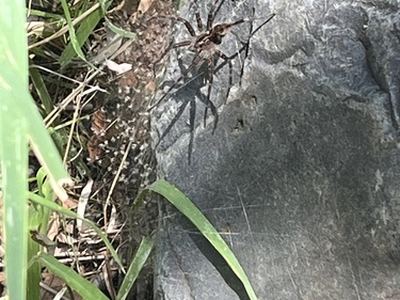
Tarantulas in New Mexico
Tarantulas: five species are listed for New Mexico, with 97 records (4% of the state's spider records). The most recorded is the Texas brown tarantula (55), ahead of the Chiricahuan gray tarantula (17).
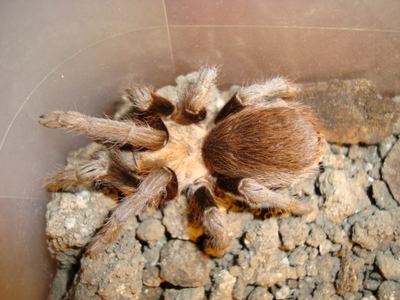
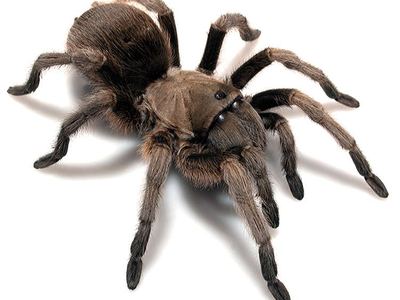
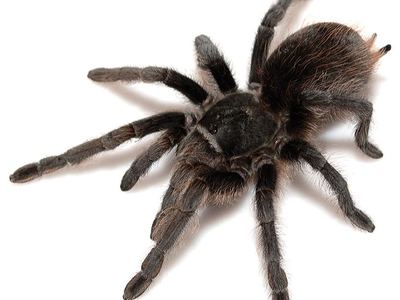
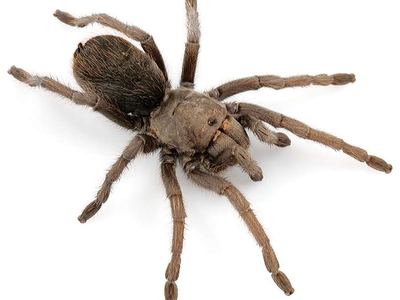
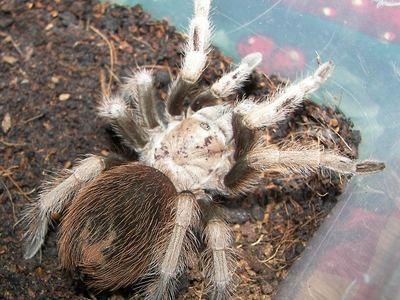
Observation records of the Texas brown tarantula in New Mexico run mostly June through October, peaking in October; most licensed records come from Doña Ana County, Eddy County and Hidalgo County.
Crab spiders in New Mexico
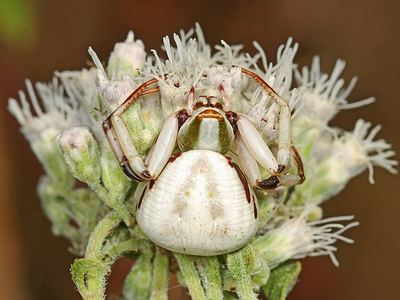
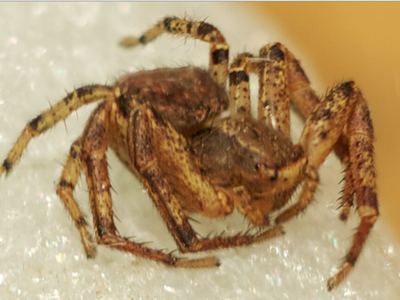
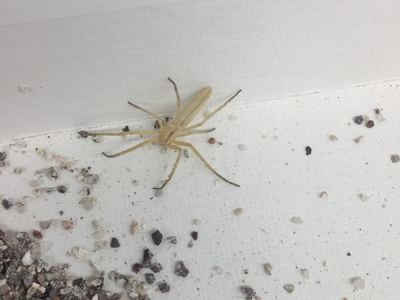
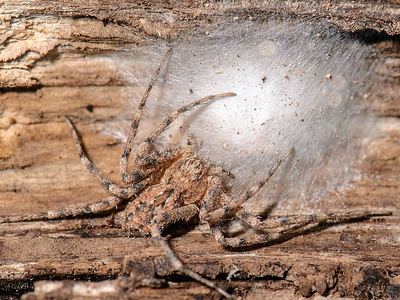
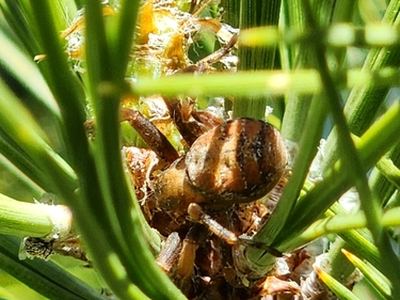
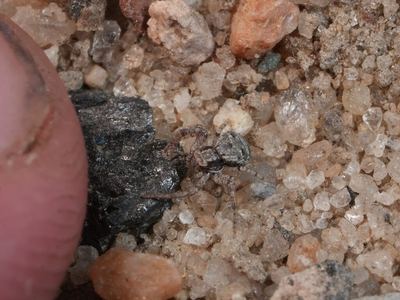
Crab spiders: 31 species are listed for New Mexico, with 88 records (4% of the state's spider records). The most recorded is the celer crab spider (15), ahead of the goldenrod crab spider (12).
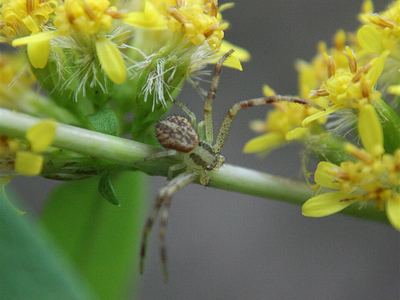
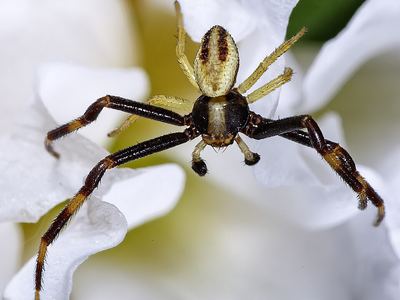
 Related species: Xysticus ferox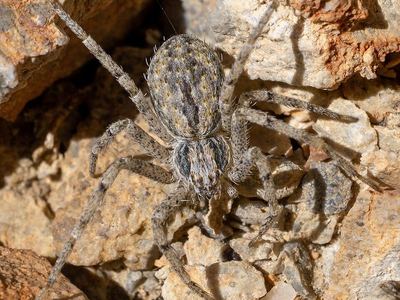
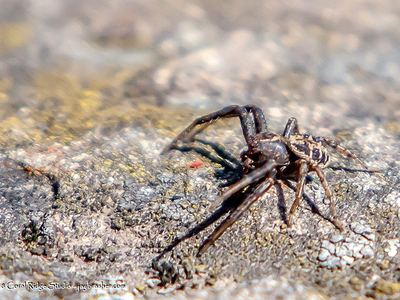
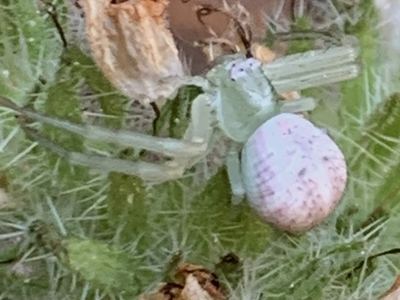
Plus 19: Utah crab spider, Xysticus locuples, Misumessus dicaprioi, Multicolored bark crab spider, Nearctic white-striped running crab spider, Philodromus vulgaris, Xysticus aprilinus, Xysticus luctuosus, Xysticus paiutus, Ebo pepinensis, Ebo punctatus, Flower crab spider, Montane crab spider, Oblong running spider, Philodromus californicus, Threebanded crab spider, Tuberculated crab spider, Xysticus cunctator, Xysticus facetus.
Cobweb spiders in New Mexico
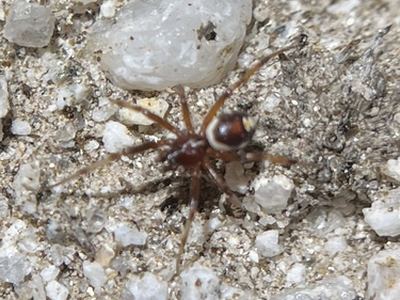
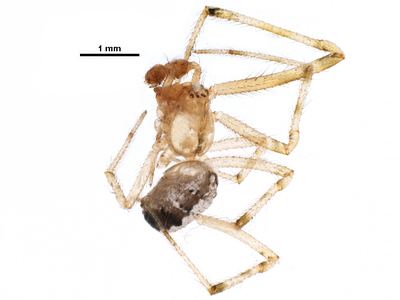
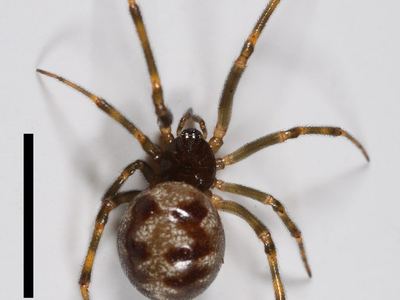
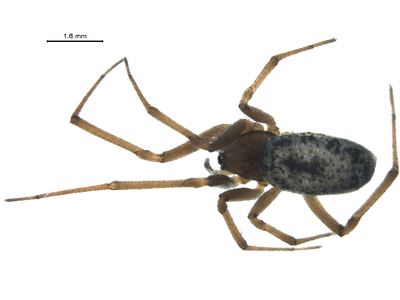
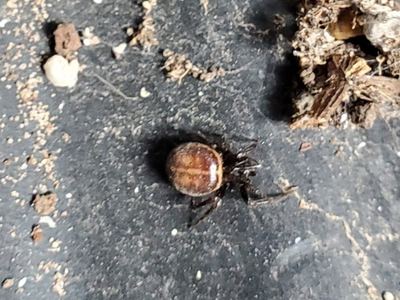
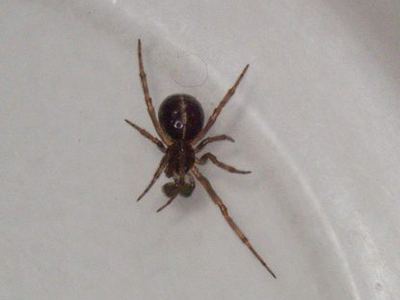
Cobweb spiders are a small part of the spider record here: nine species with 1% of records between them. The most recorded is the false black widow (10), ahead of Euryopis scriptipes (9).
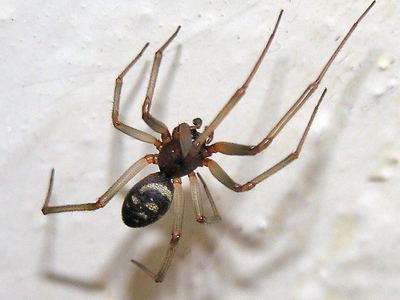
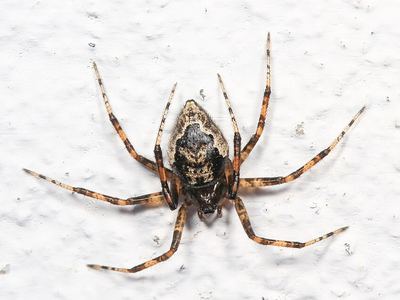 Related species: Euryopis funebris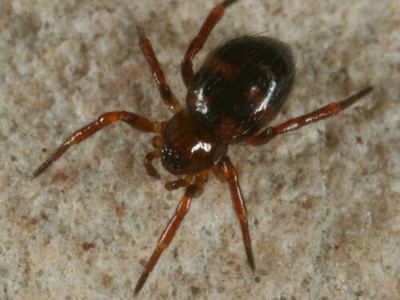
Funnel weavers and grass spiders in New Mexico
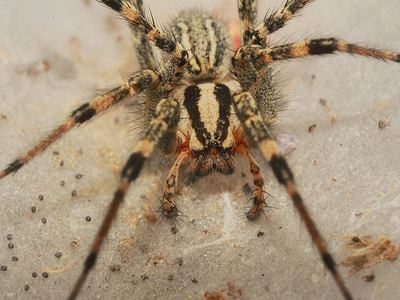
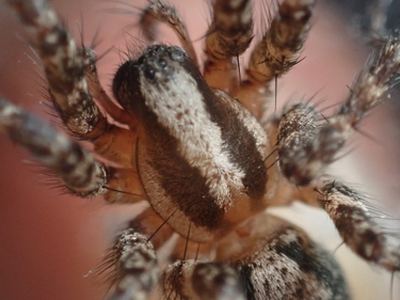
Funnel weavers and grass spiders are a small part of the spider record here: eight species with 0.7% of records between them. The most recorded is the desert grass spider (10), ahead of Hololena hola (4).
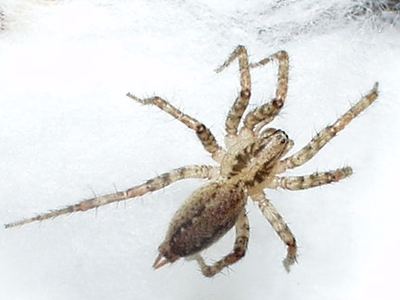 Related species: Agelenopsis pennsylvanicaRelated species: Agelenopsis pennsylvanicaRelated species: Agelenopsis pennsylvanica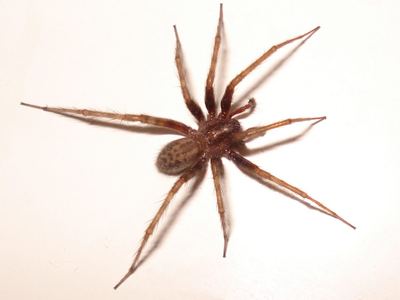
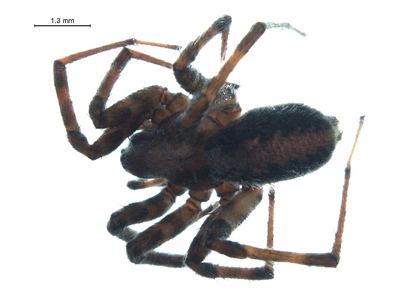 Related species: Novalena intermedia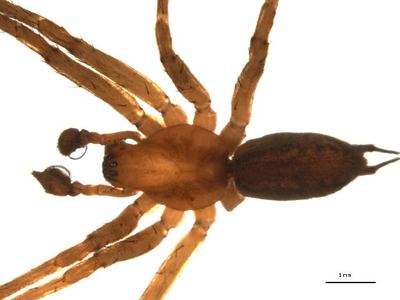
Lynx spiders in New Mexico
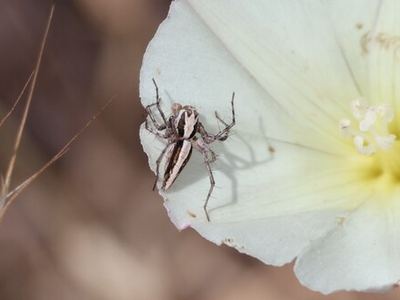
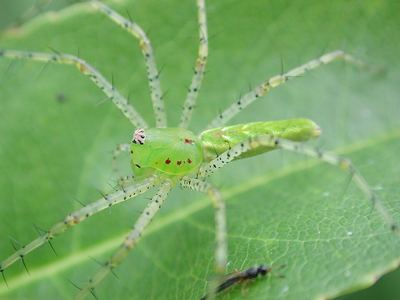
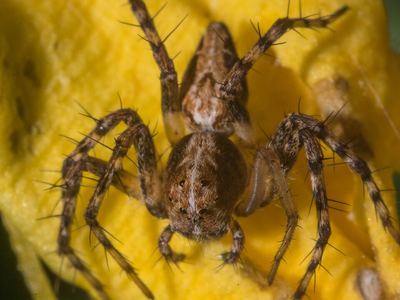
Lynx spiders are a small part of the spider record here: three species with 0.6% of records between them. The most recorded is Oxyopes tridens (7), ahead of the green lynx spider (5).
Sheetweb and dwarf spiders in New Mexico
Sheetweb and dwarf spiders are a small part of the spider record here: 44 species with 0.7% of records between them. The most recorded is the filmy dome spider (6), ahead of the bowl and doily spider (5).
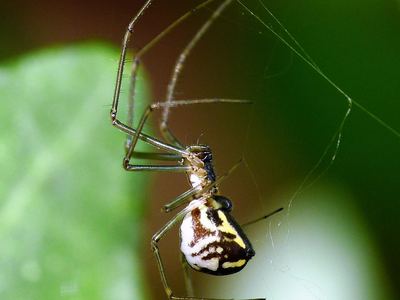
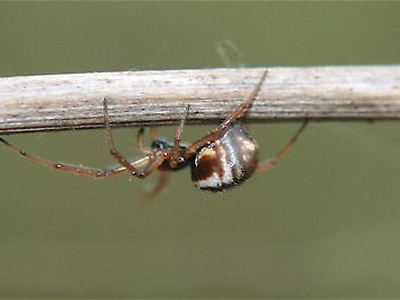 Same family (Linyphiidae): Frontinella pyramitelaSame family (Linyphiidae): Frontinella pyramitela
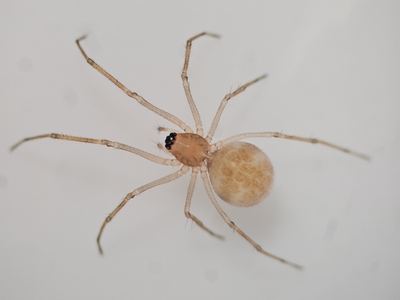 Related species: Agyneta micaria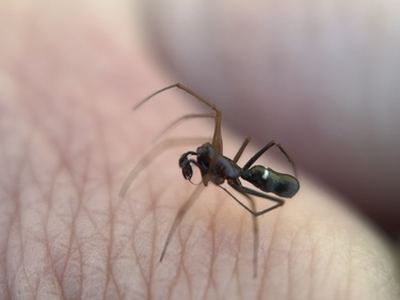
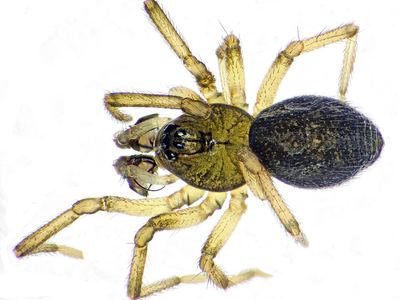 Related species: Pocadicnemis pumilaSame family (Linyphiidae): Frontinella pyramitelaRelated species: Agyneta micariaRelated species: Agyneta micariaRelated species: Agyneta micariaSame family (Linyphiidae): Frontinella pyramitela
Plus 32: Ant sheet-web weaver, Blazed dwarf weaver, Ceratinops sylvaticus, Disembolus alpha, Disembolus anguineus, Erigone dentosa, Fern sheetweaver, Grammonota gentilis, Helophora orinoma, Incestophantes lamprus, Islandiana coconino, Islandiana lasalana, Lepthyphantes alpinus, Lepthyphantes intricatus, Lepthyphantes turbatrix, Mermessus taibo, Pityohyphantes cristatus, Scotinotylus pollucis, Scotinotylus sanctus, Sisicottus montanus, Sisicottus orites, Sphecozone magnipalpis, Spiraling sheet-web weaver, Spirembolus pallidus, Spirembolus spirotubus, Styloctetor compar, Tachygyna haydeni, Tachygyna tuoba, Trilobate dwarf weaver, Unequal whiskered money spider, Walckenaeria communis, Walckenaeria maesta.
Ground and sac spiders in New Mexico
Ground and sac spiders: 45 species are listed for New Mexico, with 150 records (6% of the state's spider records). The most recorded is Zelotes lasalanus (15), ahead of Micaria nye (11).
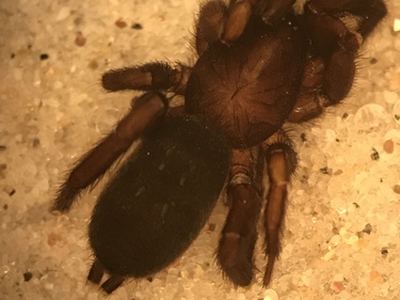
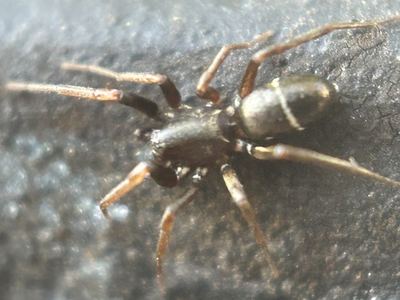 Related species: Micaria pulicaria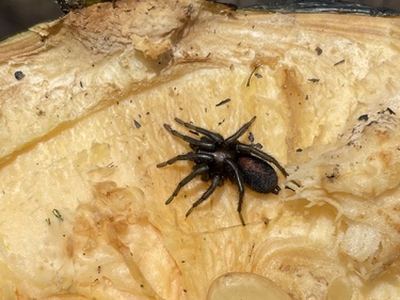
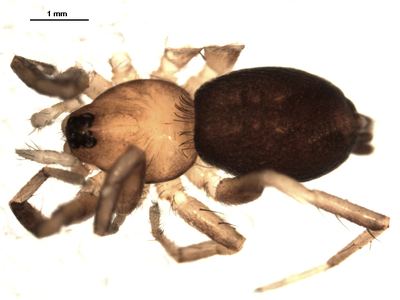 Related species: Callilepis pluto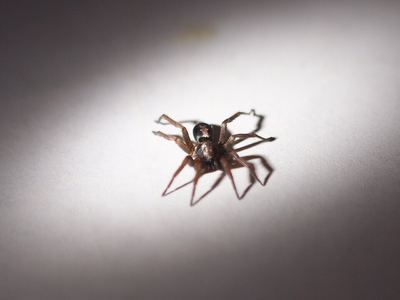
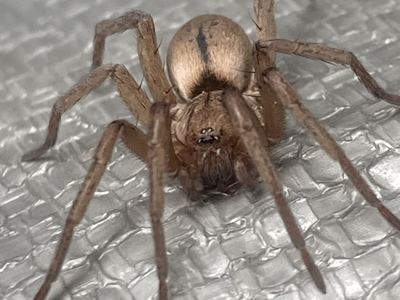 Related species: Drassodes neglectus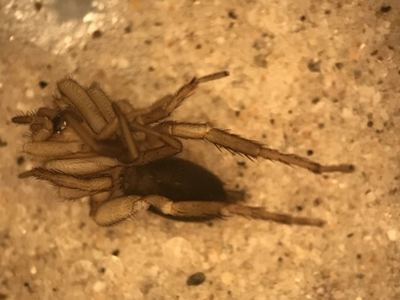
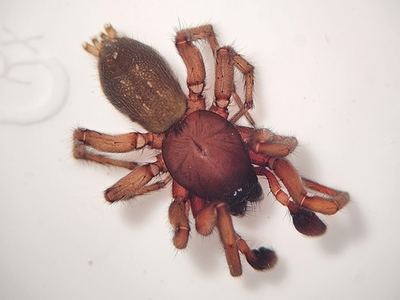 Related species: Haplodrassus signifer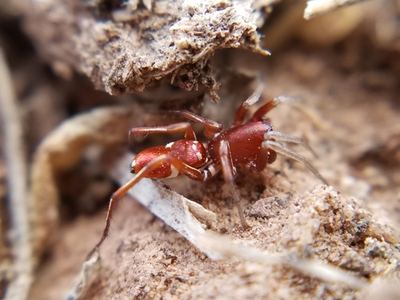
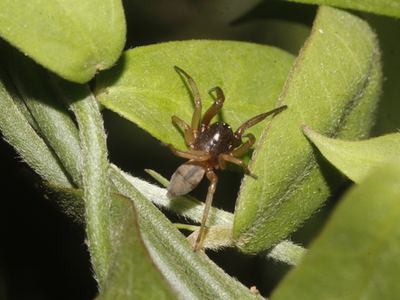
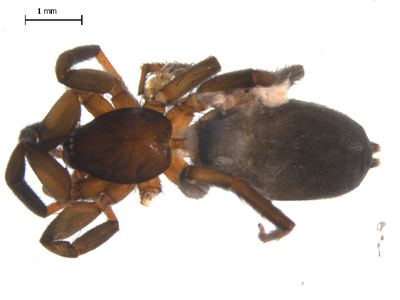 Related species: Drassyllus insularis
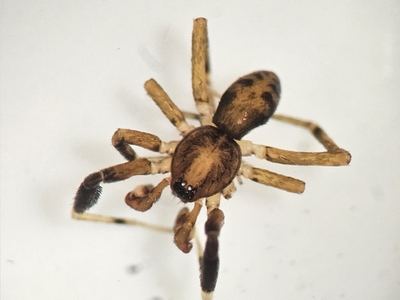 Related species: Phrurotimpus borealis
Plus 33: Anyphaena marginalis, Drassodes gosiutus, Haplodrassus signifer, Zelotes fratris, Zelotes anglo, Neglected ground hunter spider, Zelotes puritanus, Castianeira occidens, Herpyllus bubulcus, Herpyllus hesperolus, Meriola decepta, Yellow sac spider, Anyphaena dixiana, Anyphaena pacifica, Cesonia sincera, Clubiona oteroana, Drassyllus lamprus, Drassyllus mexicanus, Glossy ant-spider, Gnaphosa clara, Septentrinna bicalcarata, Urozelotes rusticus, Callilepis eremella, Drassyllus lepidus, Gnaphosa parvula, Haplodrassus bicornis, Herpyllus cockerelli, Micaria aenea, Micaria gertschi, Micaria rossica, Orodrassus coloradensis, Phrurolithus camawhitae, Victorious ground hunter.
Other spiders in New Mexico
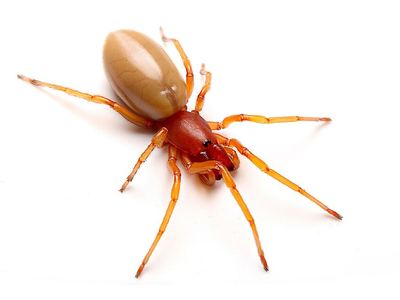
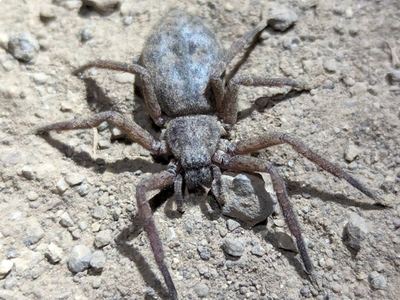
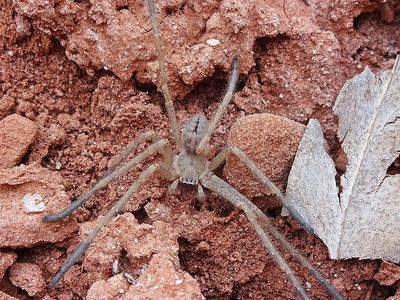
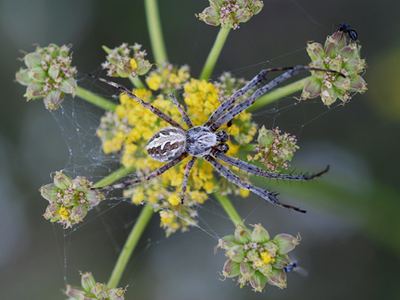
Other spiders: 20 species are listed for New Mexico, with 118 records (5% of the state's spider records). The most recorded is Dysdera crocata (21), ahead of Lauricius hooki (18).
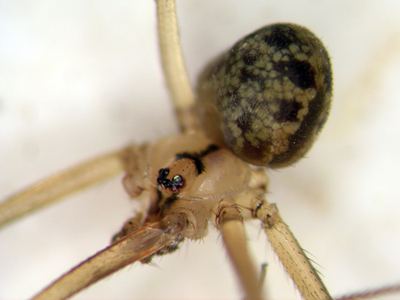 Related species: Psilochorus utahensis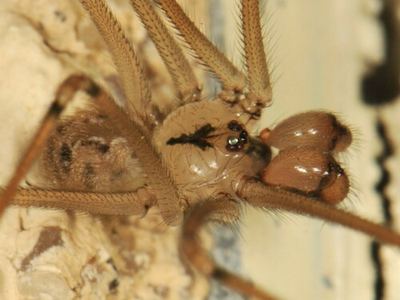
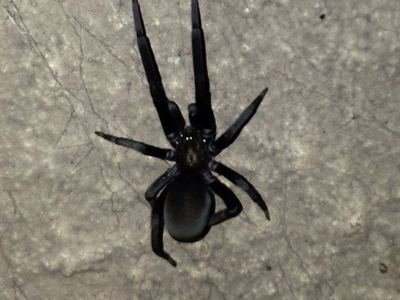
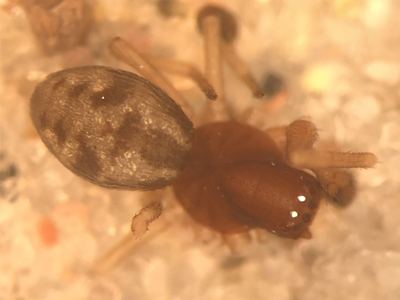 Related species: Dictyna bellans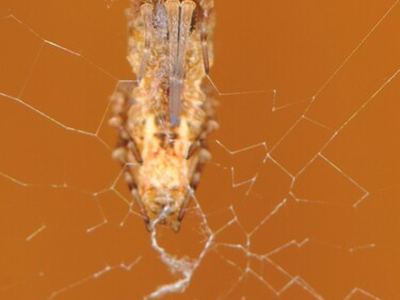
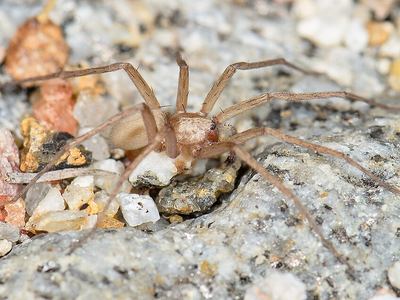
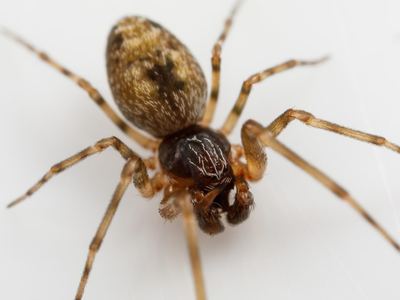
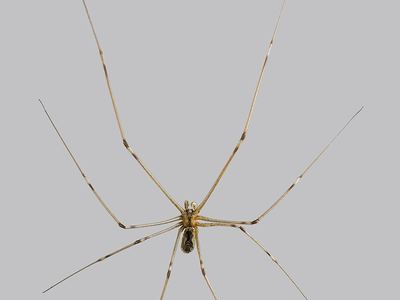
Plus eight: Zorocrates karli, Mimetus hesperus, Callobius arizonicus, Neoantistea gosiuta, Folding trapdoor spider, Mexitlia trivittata, Southern house spider, Titanoeca americana.
Where in New Mexico are spiders recorded most?
Doña Ana County leads with 594 records (25%), followed by Bernalillo County and Hidalgo County; the top five counties hold 56% of the total. 33 of New Mexico's 33 counties have at least one licensed spider record.
| # | County | Records | Share |
|---|---|---|---|
| 1 | Doña Ana County | 594 | 24.7% |
| 2 | Bernalillo County | 301 | 12.5% |
| 3 | Hidalgo County | 175 | 7.3% |
| 4 | Santa Fe County | 149 | 6.2% |
| 5 | Sandoval County | 114 | 4.7% |
| 6 | Otero County | 100 | 4.2% |
| 7 | San Miguel County | 99 | 4.1% |
| 8 | Cibola County | 93 | 3.9% |
| 9 | Eddy County | 93 | 3.9% |
| 10 | Chaves County | 74 | 3.1% |
| 11 | Luna County | 63 | 2.6% |
| 12 | Sierra County | 59 | 2.5% |
When do spiders come out in New Mexico?
Observation records of spiders in New Mexico run mostly March through October, peaking in September with 16% of them. Winter (December to February) holds 5% of the records. The sharpest rise comes from May to June.
| Jan | Feb | Mar | Apr | May | Jun | Jul | Aug | Sep | Oct | Nov | Dec |
|---|---|---|---|---|---|---|---|---|---|---|---|
| 2% | 2% | 4% | 8% | 9% | 13% | 15% | 15% | 16% | 12% | 3% | 1% |
Spiders: New Mexico compared with its neighbors
New Mexico ranks 7th of 50 states by the number of spider species listed; Texas leads with 386 species.
Of the five states bordering New Mexico, Texas and Colorado list more spider species (New Mexico: 247 species; Texas 386, Colorado 378, Arizona 162, Oklahoma 149, Utah 97).
What spiders are in New Mexico? All 247 species
Ranked by licensed records in New Mexico. The table shows the 60 most recorded of 247 listed spiders.
| # | Species | Family | Records | Share |
|---|---|---|---|---|
| 1 | Western black widow venomous Latrodectus hesperus | Theridiidae | 137 | 5.7% |
| 2 | Texas brown tarantula Aphonopelma hentzi | Theraphosidae | 55 | 2.3% |
| 3 | Phidippus carneus | Salticidae | 51 | 2.1% |
| 4 | Hairy tufted jumping spider Phidippus comatus | Salticidae | 48 | 2.0% |
| 5 | Western spotted orbweaver Neoscona oaxacensis | Araneidae | 45 | 1.9% |
| 6 | Bold jumper Phidippus audax | Salticidae | 41 | 1.7% |
| 7 | Hogna coloradensis | Lycosidae | 40 | 1.7% |
| 8 | Habronattus klauseri | Salticidae | 32 | 1.3% |
| 9 | Apache jumping spider Phidippus apacheanus | Salticidae | 30 | 1.2% |
| 10 | Banded garden spider Argiope trifasciata | Araneidae | 25 | 1.0% |
| 11 | Habronattus clypeatus | Salticidae | 24 | 1.0% |
| 12 | Habronattus conjunctus | Salticidae | 24 | 1.0% |
| 13 | Carolina wolf spider Hogna carolinensis | Lycosidae | 23 | 1.0% |
| 14 | Apache recluse venomous Loxosceles apachea | Sicariidae | 22 | 0.9% |
| 15 | Dysdera crocata | Dysderidae | 21 | 0.9% |
| 16 | Sassacus papenhoei | Salticidae | 20 | 0.8% |
| 17 | Varacosa gosiuta | Lycosidae | 20 | 0.8% |
| 18 | Lauricius hooki | Zoropsidae | 18 | 0.7% |
| 19 | Chiricahuan gray tarantula Aphonopelma gabeli | Theraphosidae | 17 | 0.7% |
| 20 | Desert red jumping spider Phidippus ardens | Salticidae | 17 | 0.7% |
| 21 | Groenland wolf spider Pardosa groenlandica | Lycosidae | 17 | 0.7% |
| 22 | Phidippus octopunctatus | Salticidae | 16 | 0.7% |
| 23 | Celer crab spider Mecaphesa celer | Thomisidae | 15 | 0.6% |
| 24 | Koch's wolf spider Alopecosa kochi | Lycosidae | 15 | 0.6% |
| 25 | Pelegrina aeneola | Salticidae | 15 | 0.6% |
| 26 | Zelotes lasalanus | Gnaphosidae | 15 | 0.6% |
| 27 | Black-and-yellow argiope Argiope aurantia | Araneidae | 14 | 0.6% |
| 28 | Giant crab spider Olios giganteus | Sparassidae | 13 | 0.5% |
| 29 | Camptocosa parallela | Lycosidae | 12 | 0.5% |
| 30 | Colonus hesperus | Salticidae | 12 | 0.5% |
| 31 | Goldenrod crab spider Misumena vatia | Thomisidae | 12 | 0.5% |
| 32 | Habronattus geronimoi | Salticidae | 12 | 0.5% |
| 33 | Habronattus tranquillus | Salticidae | 12 | 0.5% |
| 34 | Hogna antelucana | Lycosidae | 12 | 0.5% |
| 35 | Metaphidippus chera | Salticidae | 12 | 0.5% |
| 36 | Pelegrina furcata | Salticidae | 12 | 0.5% |
| 37 | Phidippus asotus | Salticidae | 12 | 0.5% |
| 38 | Arizona black Aphonopelma marxi | Theraphosidae | 11 | 0.5% |
| 39 | Diguetia canities | Diguetidae | 11 | 0.5% |
| 40 | Habronattus ustulatus | Salticidae | 11 | 0.5% |
| 41 | Micaria nye | Gnaphosidae | 11 | 0.5% |
| 42 | Pardosa orophila | Lycosidae | 11 | 0.5% |
| 43 | Pardosa yavapa | Lycosidae | 11 | 0.5% |
| 44 | Psilochorus imitatus | Pholcidae | 11 | 0.5% |
| 45 | California flattened jumping spider Platycryptus californicus | Salticidae | 10 | 0.4% |
| 46 | Desert grass spider Agelenopsis aperta | Agelenidae | 10 | 0.4% |
| 47 | False black widow Steatoda grossa | Theridiidae | 10 | 0.4% |
| 48 | Gnaphosa muscorum | Gnaphosidae | 10 | 0.4% |
| 49 | McCook's split wolf spider Schizocosa mccooki | Lycosidae | 10 | 0.4% |
| 50 | Salticus peckhamae | Salticidae | 10 | 0.4% |
| 51 | Callilepis mumai | Gnaphosidae | 9 | 0.4% |
| 52 | Euryopis scriptipes | Theridiidae | 9 | 0.4% |
| 53 | Geolycosa rafaelana | Lycosidae | 9 | 0.4% |
| 54 | Habronattus virgulatus | Salticidae | 9 | 0.4% |
| 55 | Pelegrina arizonensis | Salticidae | 9 | 0.4% |
| 56 | Physocyclus enaulus | Pholcidae | 9 | 0.4% |
| 57 | Rodeo black Aphonopelma vorhiesi | Theraphosidae | 9 | 0.4% |
| 58 | Whitebanded crab spider Misumenoides formosipes | Thomisidae | 9 | 0.4% |
| 59 | Xysticus lassanus | Thomisidae | 9 | 0.4% |
| 60 | Arizona black hole spider Kukulcania arizonica | Filistatidae | 8 | 0.3% |
Related pages
GBIF records read 2026-09-29. Listed: any license. Counted: CC0/CC BY only. How we count.