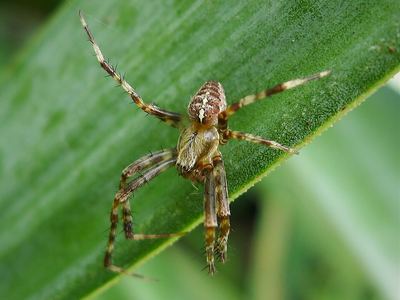
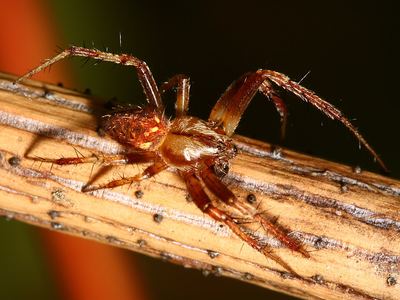
Sixspotted orbweaver (Araniella displicata)
The sixspotted orbweaver is a spider in the family Araneidae that is not dangerous to people. GBIF holds 1,290 licensed U.S. records of it; it reaches our listing threshold in 38 states, most of all California (225), New York (150) and Alaska (85). Its observation records peak in May.
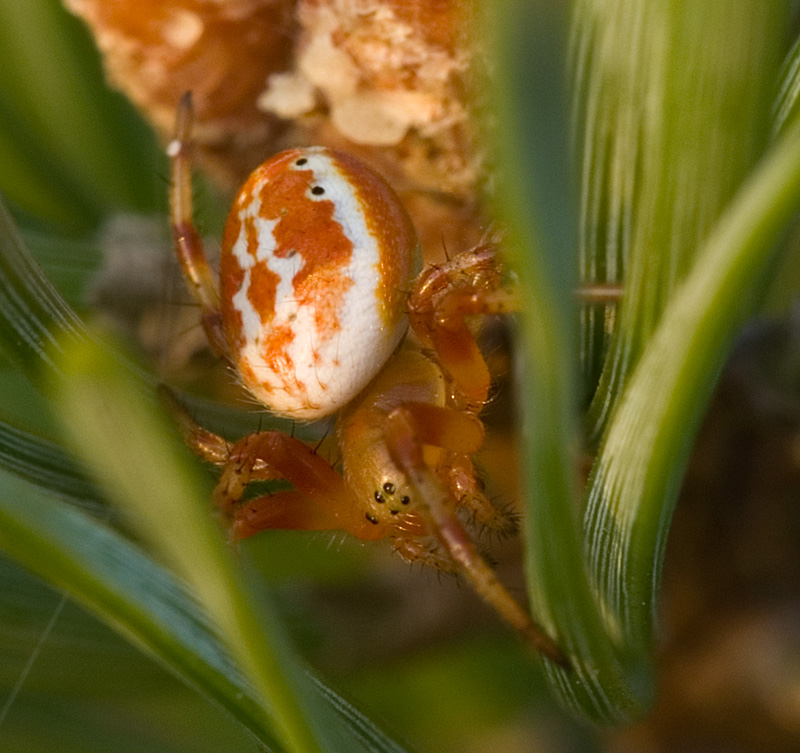

Araniella displicata, the sixspotted orbweaver, is a species of orb weaver in the spider family Araneidae. It is found in North America, Europe, a range from Russia to Kazakhstan, China, Korea, and Japan.
From Wikipedia: Araniella displicata, text under CC BY-SA 4.0.
Is the sixspotted orbweaver poisonous or venomous?
Not in any medically significant way. Like almost all spiders the sixspotted orbweaver (family Araneidae) has venom for its prey, but it is not a widow or recluse, the two U.S. groups whose bites need medical attention.
Which states have the sixspotted orbweaver?
Records are spread over 38 states; the top three, California, New York and Alaska, hold 36% of them.
| # | State | Records | Share of state spiders | Rank in state |
|---|---|---|---|---|
| 1 | California | 225 | 0.5% | 37th of 309 |
| 2 | New York | 150 | 2.4% | 10th of 149 |
| 3 | Alaska | 85 | 0.3% | 55th of 280 |
| 4 | Virginia | 79 | 0.7% | 36th of 176 |
| 5 | Pennsylvania | 74 | 1.0% | 20th of 164 |
| 6 | Vermont | 69 | 4.4% | 4th of 74 |
| 7 | Massachusetts | 59 | 1.3% | 21st of 189 |
| 8 | Ohio | 53 | 0.8% | 35th of 332 |
| 9 | New Hampshire | 48 | 3.5% | 6th of 72 |
| 10 | Washington | 39 | 1.0% | 19th of 157 |
| 11 | Michigan | 38 | 1.6% | 18th of 122 |
| 12 | Minnesota | 38 | 1.3% | 19th of 145 |
| 13 | Wisconsin | 37 | 1.2% | 15th of 149 |
| 14 | Maine | 34 | 3.6% | 5th of 297 |
| 15 | Colorado | 32 | 0.8% | 18th of 378 |
| 16 | Oregon | 30 | 1.1% | 17th of 88 |
| 17 | Illinois | 23 | 0.1% | 115th of 243 |
| 18 | Maryland | 23 | 0.4% | 55th of 153 |
| 19 | Indiana | 18 | 0.4% | 47th of 133 |
| 20 | Connecticut | 14 | 1.4% | 18th of 86 |
| 21 | New Jersey | 12 | 0.5% | 46th of 127 |
| 22 | Nebraska | 11 | 0.9% | 26th of 71 |
| 23 | Utah | 11 | 0.5% | 24th of 97 |
| 24 | Georgia | 9 | 0.1% | 98th of 186 |
| 25 | Arizona | 8 | 0.2% | 58th of 162 |
| 26 | Montana | 8 | 0.4% | 27th of 75 |
| 27 | North Carolina | 8 | 0.1% | 93rd of 184 |
| 28 | Tennessee | 8 | 0.2% | 71st of 138 |
| 29 | Missouri | 7 | 0.3% | 54th of 117 |
| 30 | West Virginia | 6 | 0.8% | 27th of 90 |
| 31 | Kentucky | 5 | 0.3% | 61st of 103 |
| 32 | Rhode Island | 5 | 2.9% | 8th of 53 |
| 33 | New Mexico | 4 | 0.2% | 99th of 247 |
| 34 | Idaho | 3 | 0.6% | 26th of 56 |
| 35 | Iowa | 2 | 0.3% | 38th of 57 |
| 36 | Nevada | 1 | 0.2% | 36th of 47 |
| 37 | Wyoming | 1 | 0.5% | 20th of 68 |
| 38 | North Dakota | 0 | — | — |
When is the sixspotted orbweaver seen?
Across the U.S., observation records of the sixspotted orbweaver run mostly April through October, peaking in May with 30% of them. Winter (December to February) holds 4% of them.
Season by state
Observation records run through most of the year in California. Among states whose main season falls within one calendar year, it starts earliest in March (Washington) and latest in May (Alaska, Maine, Minnesota, New Hampshire, New York, Oregon and 3 more). The most common peak month is June, shared by Alaska, Maine, Michigan, Minnesota, New Hampshire, Vermont and Wisconsin.
| State | Main season | Peak month | Observation records |
|---|---|---|---|
| California | most of the year | April | 223 |
| New York | May through October | May | 149 |
| Virginia | April through October | May | 79 |
| Pennsylvania | May through October | May | 72 |
| Vermont | May through October | June | 68 |
| Massachusetts | April through September | May | 57 |
| Ohio | April through September | May | 53 |
| New Hampshire | May through October | June | 46 |
| Washington | March through September | July | 39 |
| Minnesota | May through November | June | 38 |
| Michigan | April through September | June | 36 |
| Maine | May through October | June | 34 |
| Wisconsin | May through October | June | 34 |
| Alaska | May through August | June | 31 |
| Oregon | May through August | May | 30 |
Where the sixspotted orbweaver is recorded in each state
California
California holds 225 licensed records, the 37th most recorded of 309 spiders listed there. Its observation records in California run through most of the year, peaking in April; most licensed records come from Santa Barbara County, San Mateo County and Contra Costa County. Next come Santa Clara County (19) and San Bernardino County (11).
New York
New York holds 150 licensed records, the 10th most recorded of 149 spiders listed there. Its observation records in New York run mostly May through October, peaking in May; most licensed records come from Tompkins County, Rockland County and Onondaga County. Next come Broome County (10) and Greene County (8).
Alaska
Alaska holds 85 licensed records, the joint 55th most recorded of 280 spiders listed there. Its observation records in Alaska run mostly May through August, peaking in June; most licensed records come from Kenai Peninsula Borough, Skagway-Yakutat-Angoon Census Area and Anchorage Municipality. Next come Kodiak Island Borough (9) and Fairbanks North Star Borough (8).
Virginia
Virginia holds 79 licensed records, the 36th most recorded of 176 spiders listed there. Its observation records in Virginia run mostly April through October, peaking in May; most licensed records come from Fairfax County, Loudoun County and Prince William County. Next come Rappahannock County (4) and Fairfax City County (4).
Pennsylvania
Pennsylvania holds 74 licensed records, the 20th most recorded of 164 spiders listed there. Its observation records in Pennsylvania run mostly May through October, peaking in May; most licensed records come from Centre County, Bucks County and Lackawanna County. Next come Allegheny County (6) and Armstrong County (5).
Vermont
Vermont holds 69 licensed records, the 4th most recorded of 74 spiders listed there. Its observation records in Vermont run mostly May through October, peaking in June; most licensed records come from Chittenden County, Washington County and Windsor County. Next come Windham County (11) and Caledonia County (3).
Massachusetts
Massachusetts holds 59 licensed records, the joint 21st most recorded of 189 spiders listed there. Its observation records in Massachusetts run mostly April through September, peaking in May; most licensed records come from Worcester County, Middlesex County and Dukes County. Next come Barnstable County (5) and Hampden County (4).
Ohio
Ohio holds 53 licensed records, the joint 35th most recorded of 332 spiders listed there. Its observation records in Ohio run mostly April through September, peaking in May; most licensed records come from Portage County, Butler County and Cuyahoga County. Next come Franklin County (4) and Greene County (4).
New Hampshire
New Hampshire holds 48 licensed records, the 6th most recorded of 72 spiders listed there. Its observation records in New Hampshire run mostly May through October, peaking in June; most licensed records come from Cheshire County, Hillsborough County and Sullivan County. Next come Grafton County (9) and Rockingham County (4).
Washington
Washington holds 39 licensed records, the joint 19th most recorded of 157 spiders listed there. Its observation records in Washington run mostly March through September, peaking in July; most licensed records come from Pierce County, King County and Jefferson County. Next come Skamania County (3) and Snohomish County (3).
Michigan
Michigan holds 38 licensed records, the 18th most recorded of 122 spiders listed there. Its observation records in Michigan run mostly April through September, peaking in June; most licensed records come from Ingham County, Washtenaw County and Alger County. Next come Charlevoix County (2) and Clinton County (2).
Minnesota
Minnesota holds 38 licensed records, the 19th most recorded of 145 spiders listed there. Its observation records in Minnesota run mostly May through November, peaking in June; most licensed records come from Stevens County, Hennepin County and Anoka County. Next come Ramsey County (4) and Lake County (3).
Wisconsin
Wisconsin holds 37 licensed records, the joint 15th most recorded of 149 spiders listed there. Its observation records in Wisconsin run mostly May through October, peaking in June; most licensed records come from Dane County, Door County and Columbia County. Next come Grant County (2) and Kenosha County (2).
Maine
Maine holds 34 licensed records, the joint 5th most recorded of 297 spiders listed there. Its observation records in Maine run mostly May through October, peaking in June; most licensed records come from Aroostook County, Somerset County and Piscataquis County. Next come Hancock County (3) and Lincoln County (3).
Colorado
Colorado holds 32 licensed records, the 18th most recorded of 378 spiders listed there. Most of its licensed records in Colorado come from El Paso County, Huerfano County and Larimer County. Next come Weld County (2) and Boulder County (2).
Oregon
Oregon holds 30 licensed records, the 17th most recorded of 88 spiders listed there. Its observation records in Oregon run mostly May through August, peaking in May; most licensed records come from Hood River County, Lane County and Jackson County. Next come Multnomah County (3) and Wallowa County (3).
Top counties in the U.S.
| # | County | State | Records | Share of U.S. |
|---|---|---|---|---|
| 1 | Santa Barbara County | California | 67 | 5.2% |
| 2 | Fairfax County | Virginia | 34 | 2.6% |
| 3 | Tompkins County | New York | 30 | 2.3% |
| 4 | San Mateo County | California | 26 | 2.0% |
| 5 | Kenai Peninsula Borough | Alaska | 23 | 1.8% |
| 6 | Contra Costa County | California | 22 | 1.7% |
| 7 | Santa Clara County | California | 19 | 1.5% |
| 8 | El Paso County | Colorado | 19 | 1.5% |
| 9 | Chittenden County | Vermont | 19 | 1.5% |
| 10 | Rockland County | New York | 18 | 1.4% |
| 11 | Worcester County | Massachusetts | 16 | 1.2% |
| 12 | Washington County | Vermont | 13 | 1.0% |
| 13 | Pierce County | Washington | 13 | 1.0% |
| 14 | Cheshire County | New Hampshire | 12 | 0.9% |
| 15 | Centre County | Pennsylvania | 12 | 0.9% |
How recent are the sixspotted orbweaver records?
Most of what is known about the sixspotted orbweaver is recent: 89% of dated U.S. records were made in 2017–2026, and half date from 2023 or later. The oldest dated record is from 1938; the busiest year was 2025, with 211 records.
| Decade | Records | Share |
|---|---|---|
| 1930s | 1 | 0.1% |
| 1960s | 1 | 0.1% |
| 1970s | 10 | 0.8% |
| 1980s | 10 | 0.8% |
| 1990s | 18 | 1.4% |
| 2000s | 16 | 1.2% |
| 2010s | 198 | 15.0% |
| 2020s | 1,062 | 80.7% |
Species recorded in the same counties
Of the 206 counties where the sixspotted orbweaver is most recorded, 110 are also top counties for the bronze jumper, more than for any other spider. None of its closest neighbors is venomous.
| Species | Shared counties |
|---|---|
| Bronze jumper | 110 |
| Goldenrod crab spider | 102 |
| Zebra spider | 99 |
| Black-and-yellow argiope | 92 |
| Bold jumper | 92 |
| Nursery web spider | 92 |
| Dark fishing spider | 91 |
| Parson spider | 73 |
Related species in the U.S.
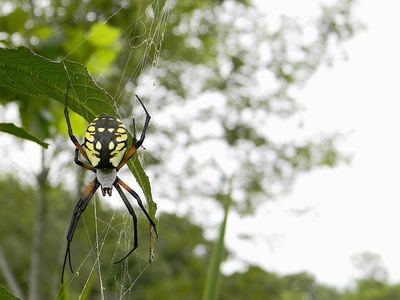
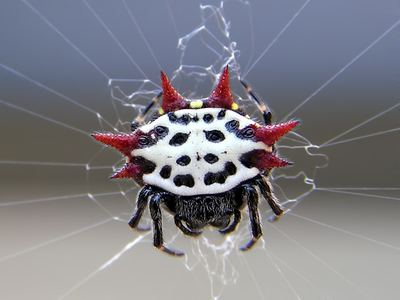
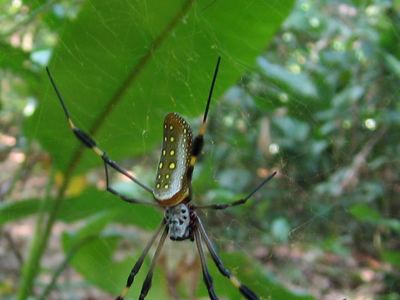
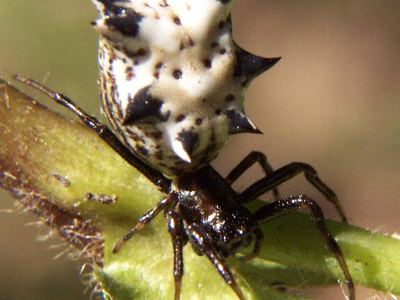
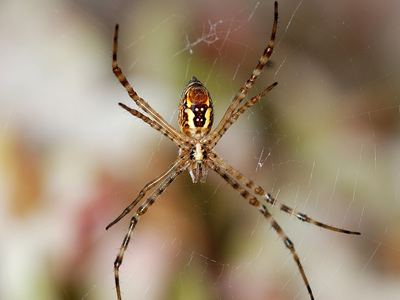
Other members of the family Araneidae with profiles here: Black-and-yellow argiope, Spotted orbweaver, Spiny-backed orbweaver, Garden spider, American golden orb weaver and Spined micrathena.
GBIF records read 2026-09-29. Listed: any license. Counted: CC0/CC BY only. How we count.