Desert blond tarantula (Aphonopelma chalcodes)
The desert blond tarantula is a spider in the family Theraphosidae that is not dangerous to people. GBIF holds 339 licensed U.S. records of it; it reaches our listing threshold in 2 states, most of all Arizona (333) and New Mexico (5). Its observation records peak in August.
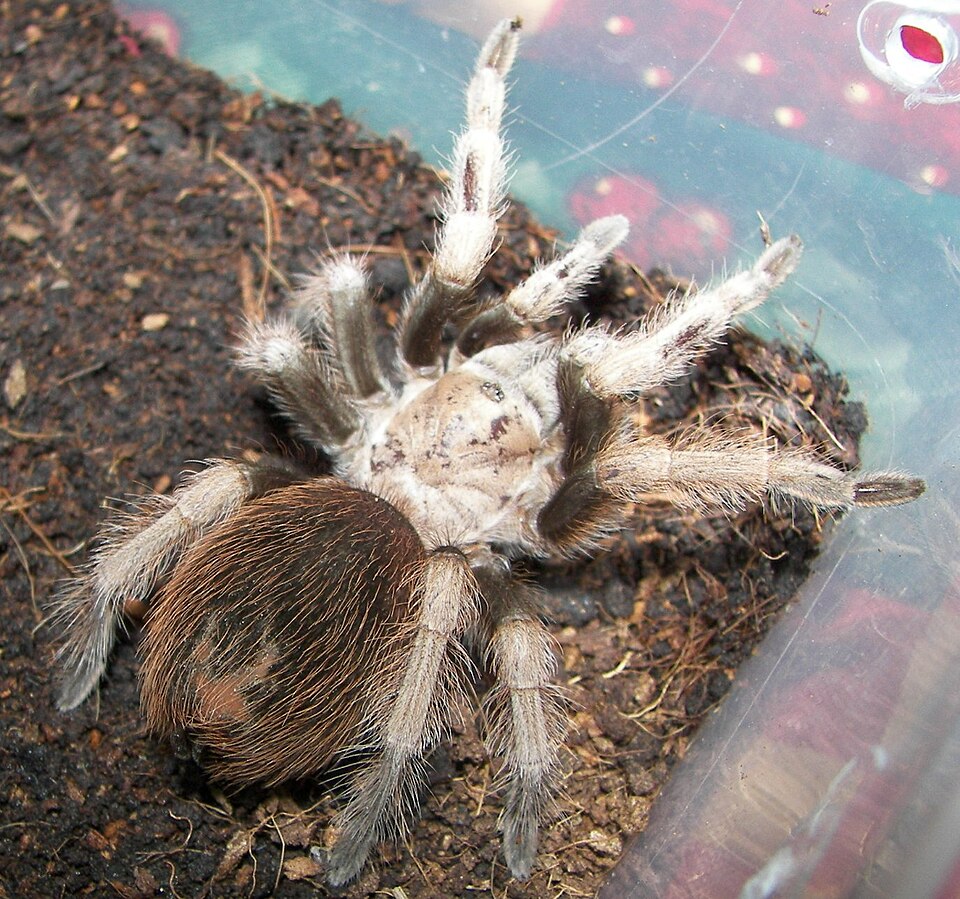
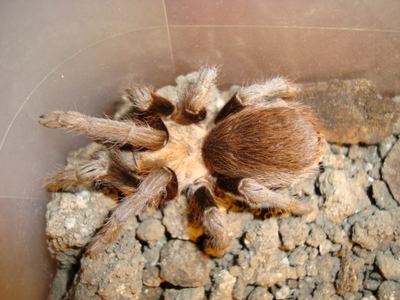
Aphonopelma chalcodes, commonly known as the western desert tarantula, desert blonde tarantula, Arizona blonde tarantula or Mexican blonde tarantula, is a species of spider belonging to the family Theraphosidae. It has a limited distribution in the deserts of Arizona and adjacent parts of Mexico but can be very common within this range. The common name "blonde tarantula" refers to the carapace, which is densely covered in pale hairs, and contrasts strongly with the all-dark legs and abdomen.
From Wikipedia: Aphonopelma chalcodes, text under CC BY-SA 4.0.
Is the desert blond tarantula poisonous or venomous?
Not in any medically significant way. Like almost all spiders the desert blond tarantula (family Theraphosidae) has venom for its prey, but it is not a widow or recluse, the two U.S. groups whose bites need medical attention.
Which states have the desert blond tarantula?
The desert blond tarantula's U.S. record is concentrated: Arizona alone holds 98% of licensed records. It is listed in 2 states in all; the next are New Mexico (5).
| # | State | Records | Share of state spiders | Rank in state |
|---|---|---|---|---|
| 1 | Arizona | 333 | 7.1% | 1st of 162 |
| 2 | New Mexico | 5 | 0.2% | 84th of 247 |
When is the desert blond tarantula seen?
Across the U.S., observation records of the desert blond tarantula run mostly June through November, peaking in August with 39% of them. Winter (December to February) holds 2% of them.
How recent are the desert blond tarantula records?
Most of what is known about the desert blond tarantula is recent: 94% of dated U.S. records were made in 2017–2026, and half date from 2023 or later. The oldest dated record is from 1996; the busiest year was 2026, with 65 records.
| Decade | Records | Share |
|---|---|---|
| 1990s | 1 | 0.3% |
| 2000s | 3 | 0.9% |
| 2010s | 69 | 20.4% |
| 2020s | 266 | 78.5% |
Species recorded in the same counties
Of the 11 counties where the desert blond tarantula is most recorded, 11 are also top counties for the western black widow, more than for any other spider. Venomous species among its neighbors: the western black widow.
| Species | Shared counties |
|---|---|
| Western black widow venomous | 11 |
| Western spotted orbweaver | 10 |
| Giant crab spider | 9 |
| Carolina wolf spider | 7 |
| Habronattus clypeatus | 7 |
| Koch's wolf spider | 7 |
| Phidippus carneus | 7 |
| Shoreline wolf spider | 7 |
Related species in the U.S.
Other species of the genus Aphonopelma with profiles here: Texas brown tarantula and Bay Area blonde.

GBIF records read 2026-09-29. Listed: any license. Counted: CC0/CC BY only. How we count.