Western spotted orbweaver (Neoscona oaxacensis)
The western spotted orbweaver is a spider in the family Araneidae that is not dangerous to people. GBIF holds 1,527 licensed U.S. records of it; it reaches our listing threshold in 13 states, most of all California (566), Texas (465) and Utah (187). Its observation records peak in August.
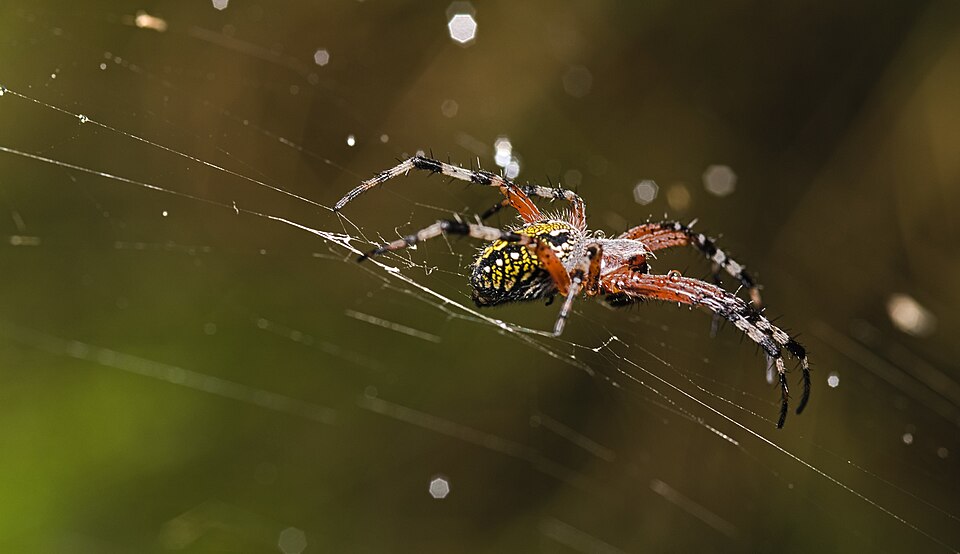

Neoscona oaxacensis, known as western spotted orbweaver and zig-zag spider, is a species of spider in the family Araneidae. It is distributed in the Americas, being widespread across Western USA and Mexico and Central America to at least Costa Rica, with sporadic southern reports from Colombia, Venezuela, Ecuador and Peru, including the Galápagos Islands.
From Wikipedia: Neoscona oaxacensis, text under CC BY-SA 4.0.
Is the western spotted orbweaver poisonous or venomous?
Not in any medically significant way. Like almost all spiders the western spotted orbweaver (family Araneidae) has venom for its prey, but it is not a widow or recluse, the two U.S. groups whose bites need medical attention.
Which states have the western spotted orbweaver?
Records are spread over 13 states; the top three, California, Texas and Utah, hold 80% of them.
| # | State | Records | Share of state spiders | Rank in state |
|---|---|---|---|---|
| 1 | California | 566 | 1.1% | 18th of 309 |
| 2 | Texas | 465 | 1.6% | 11th of 386 |
| 3 | Utah | 187 | 7.7% | 2nd of 97 |
| 4 | Arizona | 153 | 3.3% | 3rd of 162 |
| 5 | New Mexico | 45 | 1.9% | 5th of 247 |
| 6 | Washington | 39 | 1.0% | 19th of 157 |
| 7 | Nevada | 21 | 3.9% | 5th of 47 |
| 8 | Oklahoma | 18 | 0.3% | 59th of 149 |
| 9 | Idaho | 12 | 2.3% | 7th of 56 |
| 10 | Colorado | 8 | 0.2% | 44th of 378 |
| 11 | Hawaii | 4 | 0.1% | 45th of 57 |
| 12 | Oregon | 3 | 0.1% | 65th of 88 |
| 13 | Kansas | 2 | 0.1% | 74th of 94 |
When is the western spotted orbweaver seen?
Across the U.S., observation records of the western spotted orbweaver run mostly June through November, peaking in August with 31% of them. Almost none are from December to February.
Season by state
Among states whose main season falls within one calendar year, it starts earliest in May (Texas) and latest in July (Utah and Washington). The most common peak month is August, shared by Arizona, California, Utah and Washington.
| State | Main season | Peak month | Observation records |
|---|---|---|---|
| California | June through October | August | 506 |
| Texas | May through November | October | 435 |
| Utah | July through September | August | 187 |
| Arizona | June through October | August | 126 |
| New Mexico | June through October | September | 40 |
| Washington | July through September | August | 39 |
Where the western spotted orbweaver is recorded in each state
California
California holds 566 licensed records, the 18th most recorded of 309 spiders listed there. Its observation records in California run mostly June through October, peaking in August; most licensed records come from Los Angeles County, Santa Clara County and San Diego County. Next come Solano County (36) and Yolo County (32).
Texas
Texas holds 465 licensed records, the 11th most recorded of 386 spiders listed there. Its observation records in Texas run mostly May through November, peaking in October; most licensed records come from Hidalgo County, Lubbock County and Bexar County. Next come Milam County (19) and Jeff Davis County (18).
Utah
Utah holds 187 licensed records, the 2nd most recorded of 97 spiders listed there. Its observation records in Utah run mostly July through September, peaking in August; most licensed records come from Davis County, Utah County and Salt Lake County. Next come Washington County (3) and Grand County (2).
Arizona
Arizona holds 153 licensed records, the 3rd most recorded of 162 spiders listed there. Its observation records in Arizona run mostly June through October, peaking in August; most licensed records come from Pima County, Maricopa County and Cochise County. Next come Santa Cruz County (8) and Yavapai County (8).
New Mexico
New Mexico holds 45 licensed records, the 5th most recorded of 247 spiders listed there. Its observation records in New Mexico run mostly June through October, peaking in September; most licensed records come from Eddy County, Doña Ana County and Hidalgo County. Next come Luna County (4) and Bernalillo County (4).
Washington
Washington holds 39 licensed records, the joint 19th most recorded of 157 spiders listed there. Its observation records in Washington run mostly July through September, peaking in August; most licensed records come from Walla Walla County, Benton County and Franklin County. Next come Grant County (2) and Kittitas County (1).
Top counties in the U.S.
| # | County | State | Records | Share of U.S. |
|---|---|---|---|---|
| 1 | Los Angeles County | California | 136 | 8.9% |
| 2 | Davis County | Utah | 133 | 8.7% |
| 3 | Hidalgo County | Texas | 118 | 7.7% |
| 4 | Santa Clara County | California | 101 | 6.6% |
| 5 | Pima County | Arizona | 99 | 6.5% |
| 6 | San Diego County | California | 53 | 3.5% |
| 7 | Lubbock County | Texas | 46 | 3.0% |
| 8 | Solano County | California | 36 | 2.4% |
| 9 | Yolo County | California | 32 | 2.1% |
| 10 | Orange County | California | 30 | 2.0% |
| 11 | Utah County | Utah | 24 | 1.6% |
| 12 | Salt Lake County | Utah | 22 | 1.4% |
| 13 | Bexar County | Texas | 21 | 1.4% |
| 14 | Sacramento County | California | 20 | 1.3% |
| 15 | Walla Walla County | Washington | 20 | 1.3% |
How recent are the western spotted orbweaver records?
Most of what is known about the western spotted orbweaver is recent: 88% of dated U.S. records were made in 2017–2026, and half date from 2022 or later. The oldest dated record is from 1937; the busiest year was 2023, with 258 records.
| Decade | Records | Share |
|---|---|---|
| 1930s | 2 | 0.1% |
| 1940s | 1 | 0.1% |
| 1950s | 1 | 0.1% |
| 1960s | 4 | 0.3% |
| 1970s | 1 | 0.1% |
| 1980s | 2 | 0.1% |
| 1990s | 2 | 0.1% |
| 2000s | 42 | 2.7% |
| 2010s | 427 | 27.2% |
| 2020s | 1,089 | 69.3% |
Species recorded in the same counties
Of the 72 counties where the western spotted orbweaver is most recorded, 44 are also top counties for the western black widow, more than for any other spider. Venomous species among its neighbors: the western black widow.
| Species | Shared counties |
|---|---|
| Western black widow venomous | 44 |
| Bold jumper | 37 |
| Banded garden spider | 22 |
| Green lynx spider | 21 |
| Shoreline wolf spider | 20 |
| Triangulate bud spider | 19 |
| Apache jumping spider | 18 |
| Giant crab spider | 18 |
Related species in the U.S.
Other species of the genus Neoscona with profiles here: Spotted orbweaver, Arabesque orbweaver and Red-femured spotted orbweaver.
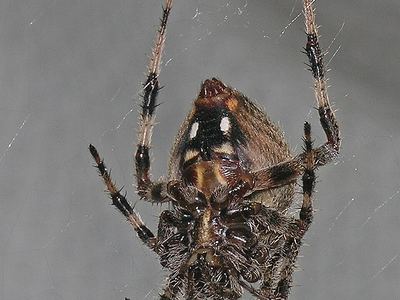
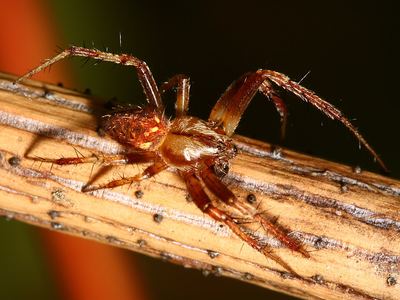
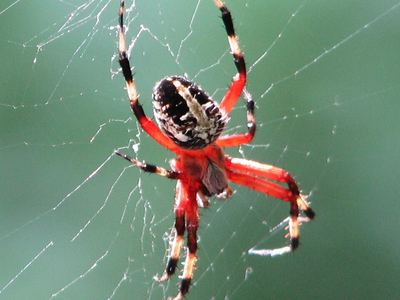
GBIF records read 2026-09-29. Listed: any license. Counted: CC0/CC BY only. How we count.