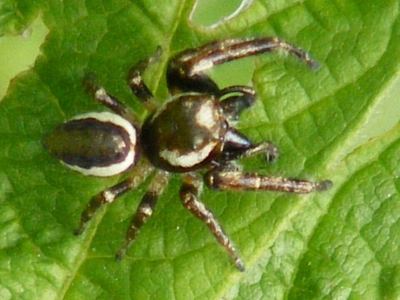
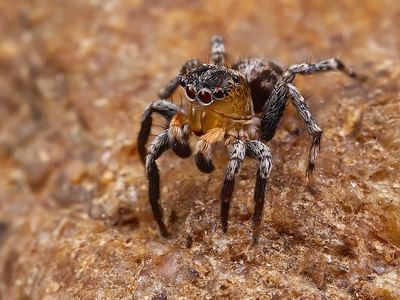
Buttonhook leafbeetle jumping spider (Sassacus vitis)
The buttonhook leafbeetle jumping spider is a spider in the family Salticidae that is not dangerous to people. GBIF holds 903 licensed U.S. records of it; it reaches our listing threshold in 12 states, most of all California (825), Texas (16) and Arizona (14). Its observation records peak in August.
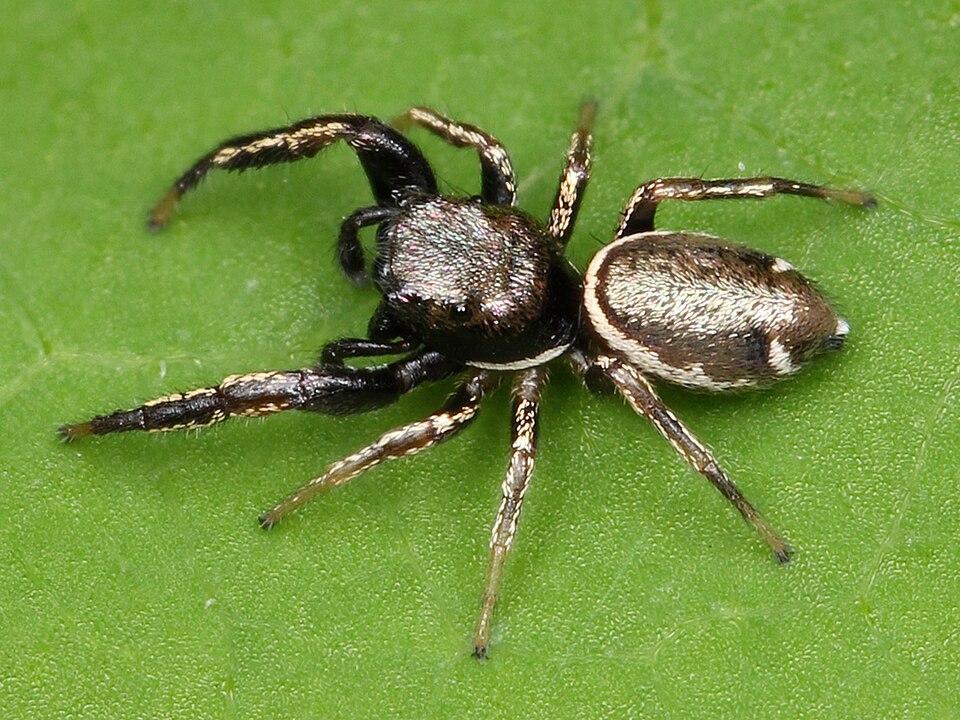

Sassacus vitis is a species of jumping spider. It is native to North America, with a range spanning from Canada to Panama. These spiders are normally no larger than five millimetres, with females being much larger than males, and duller in color.
From Wikipedia: Sassacus vitis, text under CC BY-SA 4.0.
Is the buttonhook leafbeetle jumping spider poisonous or venomous?
Not in any medically significant way. Like almost all spiders the buttonhook leafbeetle jumping spider (family Salticidae) has venom for its prey, but it is not a widow or recluse, the two U.S. groups whose bites need medical attention.
Which states have the buttonhook leafbeetle jumping spider?
The buttonhook leafbeetle jumping spider's U.S. record is concentrated: California alone holds 91% of licensed records. It is listed in 12 states in all; the next are Texas (16), Arizona (14) and Colorado (13).
| # | State | Records | Share of state spiders | Rank in state |
|---|---|---|---|---|
| 1 | California | 825 | 1.7% | 9th of 309 |
| 2 | Texas | 16 | 0.1% | 168th of 386 |
| 3 | Arizona | 14 | 0.3% | 37th of 162 |
| 4 | Colorado | 13 | 0.3% | 32nd of 378 |
| 5 | Oklahoma | 9 | 0.2% | 85th of 149 |
| 6 | Florida | 7 | 0.1% | 171st of 237 |
| 7 | Idaho | 5 | 1.0% | 20th of 56 |
| 8 | Utah | 4 | 0.2% | 51st of 97 |
| 9 | Washington | 4 | 0.1% | 81st of 157 |
| 10 | New Mexico | 3 | 0.1% | 111th of 247 |
| 11 | Oregon | 3 | 0.1% | 65th of 88 |
| 12 | Nevada | 0 | — | — |
When is the buttonhook leafbeetle jumping spider seen?
Across the U.S., observation records of the buttonhook leafbeetle jumping spider run through most of the year, peaking in August with 14% of them. Winter (December to February) holds 11% of them.
How recent are the buttonhook leafbeetle jumping spider records?
Most of what is known about the buttonhook leafbeetle jumping spider is recent: 86% of dated U.S. records were made in 2017–2026, and half date from 2023 or later. The oldest dated record is from 1924; the busiest year was 2024, with 165 records.
| Decade | Records | Share |
|---|---|---|
| 1920s | 1 | 0.1% |
| 1940s | 6 | 0.6% |
| 1950s | 1 | 0.1% |
| 1960s | 1 | 0.1% |
| 1970s | 1 | 0.1% |
| 1980s | 4 | 0.4% |
| 1990s | 6 | 0.6% |
| 2000s | 13 | 1.4% |
| 2010s | 191 | 20.7% |
| 2020s | 700 | 75.8% |
Species recorded in the same counties
Of the 15 counties where the buttonhook leafbeetle jumping spider is most recorded, 13 are also top counties for Dysdera crocata, more than for any other spider. None of its closest neighbors is venomous.
| Species | Shared counties |
|---|---|
| Dysdera crocata | 13 |
| False black widow | 12 |
| Flatmesh weaver | 12 |
| Habronattus pyrrithrix | 12 |
| Bold jumper | 11 |
| Green lynx spider | 11 |
| Johnson jumper | 11 |
| Longbodied cellar spider | 11 |
Related species in the U.S.
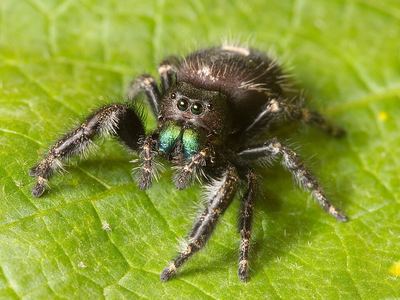
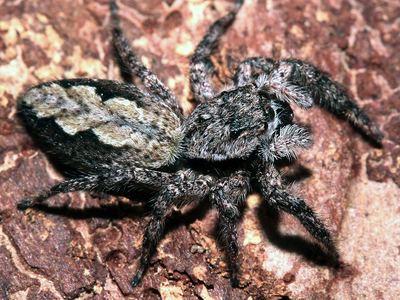
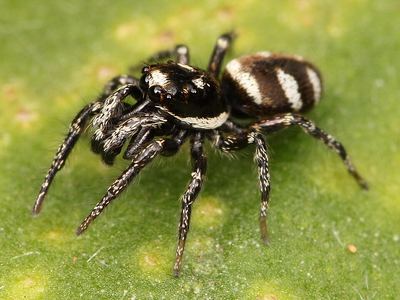
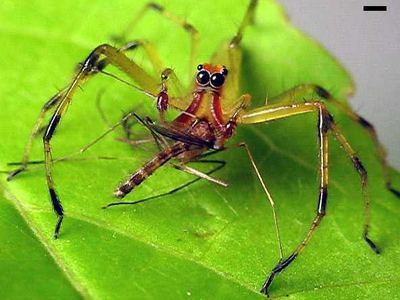
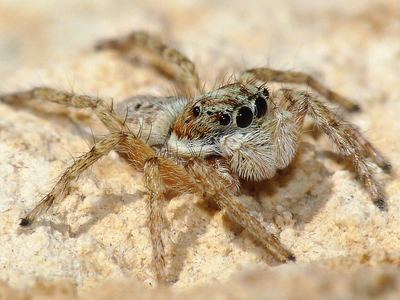
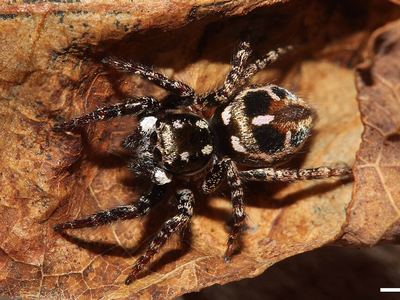
Other members of the family Salticidae with profiles here: Bold jumper, Familiar jumping spider, Zebra spider, Bronze jumper, Magnolia green jumper and Half-edged wall jumping spider.
GBIF records read 2026-09-29. Listed: any license. Counted: CC0/CC BY only. How we count.