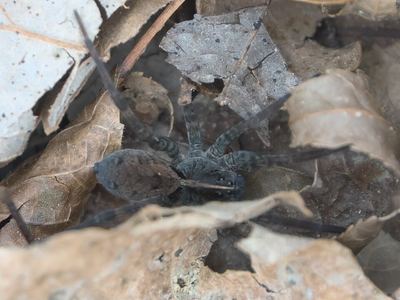
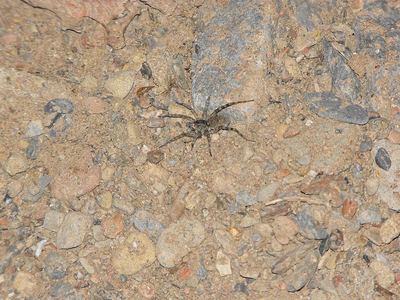
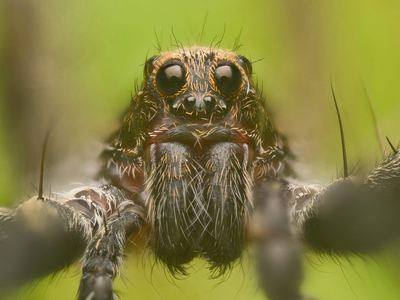
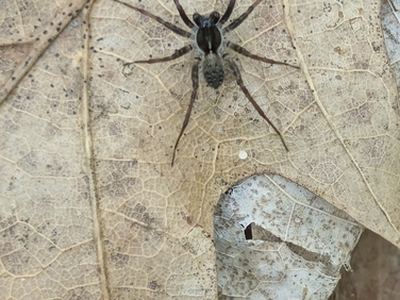
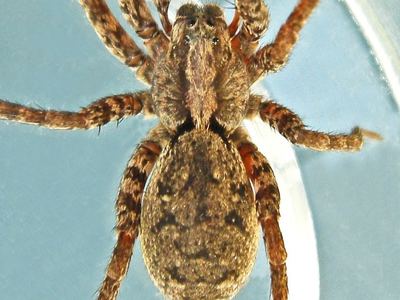
McCook's split wolf spider (Schizocosa mccooki)
The McCook's split wolf spider is a spider in the family Lycosidae that is not dangerous to people. GBIF holds 557 licensed U.S. records of it; it reaches our listing threshold in 14 states, most of all Montana (257), California (211) and Colorado (21). Its observation records peak in June.
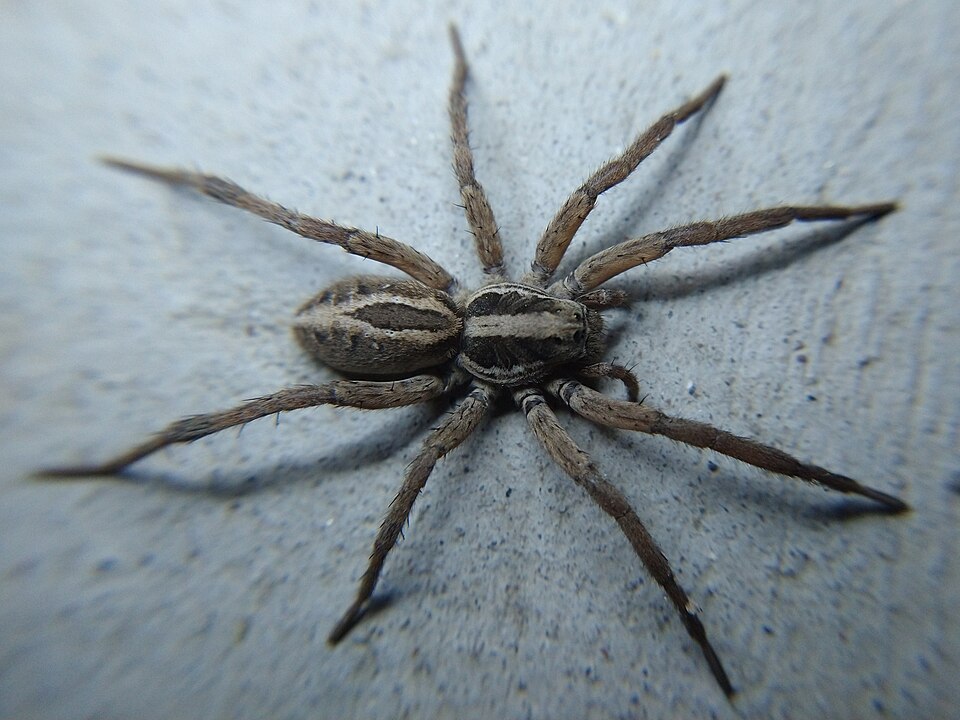

Schizocosa mccooki is a species of wolf spider in the family Lycosidae. They can be found from the west coast to western Lake Erie in western North America, including Canada, the United States, and Mexico.
From Wikipedia: Schizocosa mccooki, text under CC BY-SA 4.0.
Is the McCook's split wolf spider poisonous or venomous?
Not in any medically significant way. Like almost all spiders the McCook's split wolf spider (family Lycosidae) has venom for its prey, but it is not a widow or recluse, the two U.S. groups whose bites need medical attention.
Which states have the McCook's split wolf spider?
Records are spread over 14 states; the top three, Montana, California and Colorado, hold 88% of them. It is the most recorded spider of all in Montana.
| # | State | Records | Share of state spiders | Rank in state |
|---|---|---|---|---|
| 1 | Montana | 257 | 11.5% | 1st of 75 |
| 2 | California | 211 | 0.4% | 40th of 309 |
| 3 | Colorado | 21 | 0.5% | 24th of 378 |
| 4 | Illinois | 17 | 0.1% | 142nd of 243 |
| 5 | New Mexico | 10 | 0.4% | 45th of 247 |
| 6 | Utah | 7 | 0.3% | 35th of 97 |
| 7 | Nevada | 6 | 1.1% | 15th of 47 |
| 8 | Texas | 6 | 0.0% | 240th of 386 |
| 9 | Idaho | 4 | 0.8% | 23rd of 56 |
| 10 | Oregon | 3 | 0.1% | 65th of 88 |
| 11 | Washington | 3 | 0.1% | 94th of 157 |
| 12 | North Dakota | 1 | 1.2% | 11th of 115 |
| 13 | Minnesota | 0 | — | — |
| 14 | Wyoming | 0 | — | — |
When is the McCook's split wolf spider seen?
Across the U.S., observation records of the McCook's split wolf spider run mostly April through October, peaking in June with 25% of them. Almost none are from December to February.
Where the McCook's split wolf spider is recorded in each state
Montana
Montana holds 257 licensed records, the most recorded of 75 spiders listed there. Most of its licensed records in Montana come from Missoula County and Cascade County.
California
California holds 211 licensed records, the 40th most recorded of 309 spiders listed there. Its observation records in California run mostly April through October, peaking in June; most licensed records come from San Diego County, Los Angeles County and Stanislaus County. Next come Santa Barbara County (8) and Santa Clara County (8).
Top counties in the U.S.
| # | County | State | Records | Share of U.S. |
|---|---|---|---|---|
| 1 | Missoula County | Montana | 256 | 46.0% |
| 2 | San Diego County | California | 111 | 19.9% |
| 3 | Los Angeles County | California | 13 | 2.3% |
| 4 | Stanislaus County | California | 13 | 2.3% |
| 5 | Santa Barbara County | California | 8 | 1.4% |
| 6 | Santa Clara County | California | 8 | 1.4% |
| 7 | Contra Costa County | California | 5 | 0.9% |
| 8 | Kern County | California | 4 | 0.7% |
| 9 | Alameda County | California | 4 | 0.7% |
| 10 | Monterey County | California | 4 | 0.7% |
| 11 | Shasta County | California | 4 | 0.7% |
| 12 | Solano County | California | 4 | 0.7% |
| 13 | Napa County | California | 3 | 0.5% |
| 14 | Sonoma County | California | 3 | 0.5% |
| 15 | Lake County | California | 2 | 0.4% |
How recent are the McCook's split wolf spider records?
Most of what is known about the McCook's split wolf spider is recent: 71% of dated U.S. records were made in 2017–2026, and half date from 2019 or later. The oldest dated record is from 1980; the busiest year was 2019, with 265 records.
| Decade | Records | Share |
|---|---|---|
| 1980s | 4 | 0.7% |
| 1990s | 24 | 4.3% |
| 2000s | 96 | 17.4% |
| 2010s | 309 | 56.0% |
| 2020s | 119 | 21.6% |
Species recorded in the same counties
Of the 17 counties where the McCook's split wolf spider is most recorded, 10 are also top counties for each of the first five spiders in the table below; no other spider shares more. None of its closest neighbors is venomous.
| Species | Shared counties |
|---|---|
| Hairy tufted jumping spider | 10 |
| Koch's wolf spider | 10 |
| Steatoda nobilis | 10 |
| Western lynx spider | 10 |
| Zebra spider | 10 |
| Banded garden spider | 9 |
| Cyclosa turbinata | 9 |
| False black widow | 9 |
Related species in the U.S.
Other species of the genus Schizocosa with profiles here: Brush-legged split wolf spider.
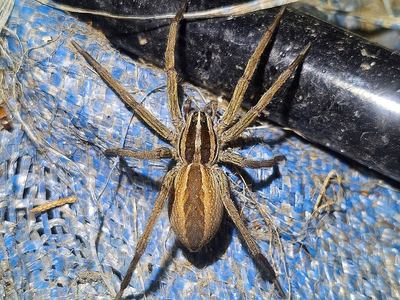
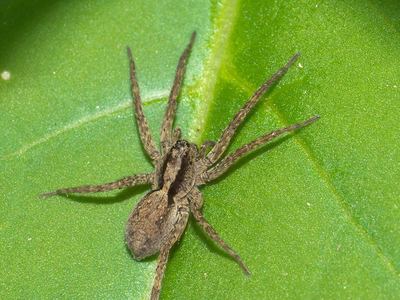
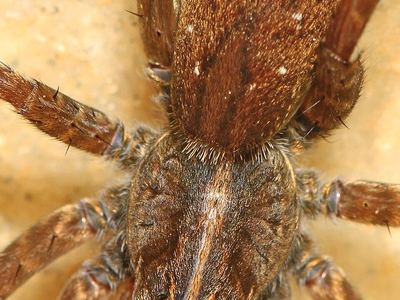
GBIF records read 2026-09-29. Listed: any license. Counted: CC0/CC BY only. How we count.