Snakes and spiders in San Bernardino County, California
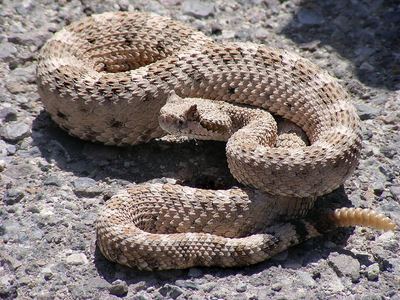
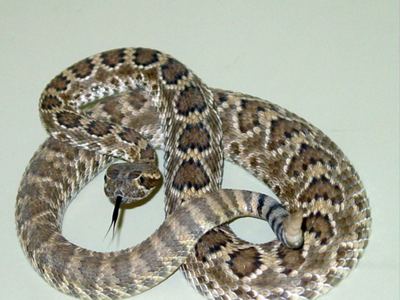
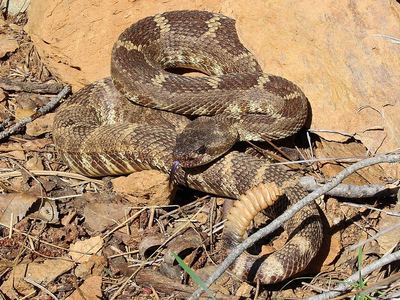
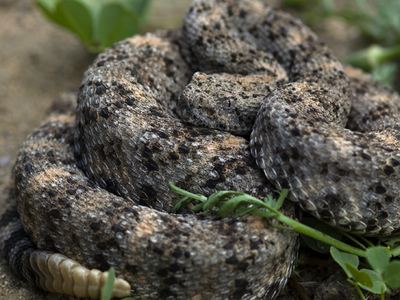
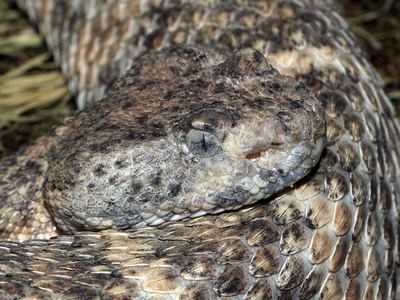
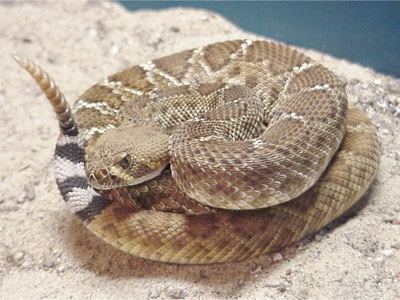
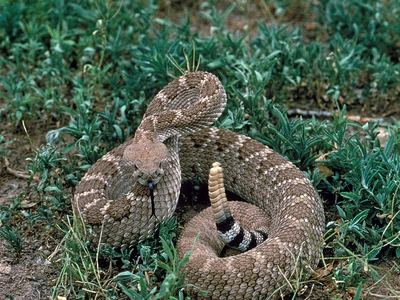
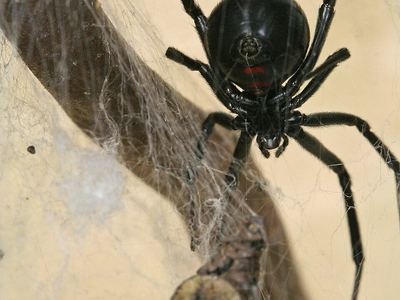
San Bernardino County has 33 snake and 59 spider species on record, from 3,802 licensed snake and 1,036 spider records. Venomous species here: the sidewinder, the Mohave rattlesnake, the western rattlesnake, the southwestern speckled rattlesnake, the Panamint rattlesnake, the red diamond rattlesnake, the western diamondback rattlesnake, the western black widow, the brown widow and the desert recluse.
Are there venomous snakes or spiders in San Bernardino County?
Yes. The sidewinder: 533 licensed records, 28% of all California records of it. The Mohave rattlesnake: 256 licensed records, 60% of all California records of it. The western rattlesnake: 130 licensed records, 2% of all California records of it. The southwestern speckled rattlesnake: 69 licensed records, 26% of all California records of it. The Panamint rattlesnake: 15 licensed records, 8% of all California records of it. The red diamond rattlesnake: 15 licensed records, 2% of all California records of it. The western diamondback rattlesnake: 6 licensed records, 4% of all California records of it. The western black widow: 73 licensed records, 6% of all California records of it. The brown widow: 25 licensed records, 3% of all California records of it. The desert recluse: 19 licensed records, 48% of all California records of it.
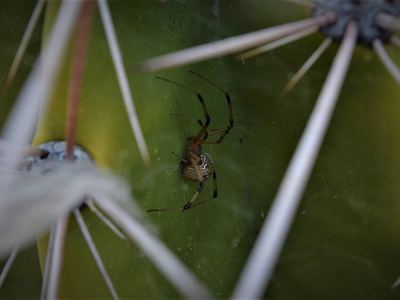
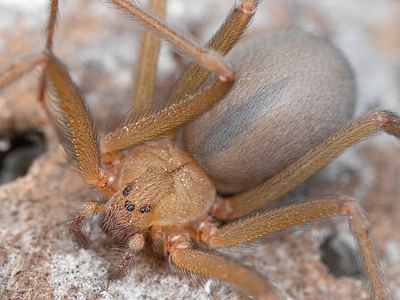
What snakes are in San Bernardino County?
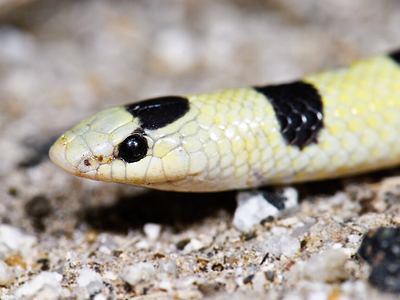
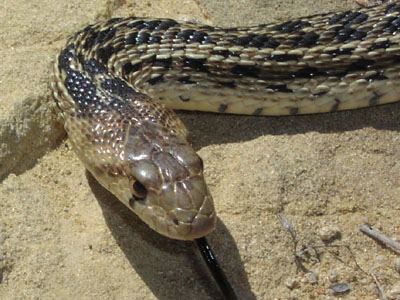
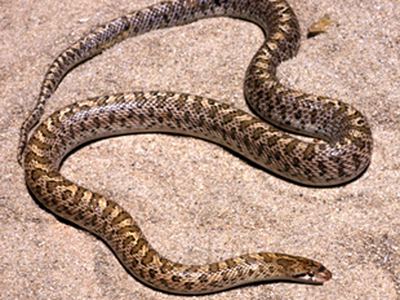
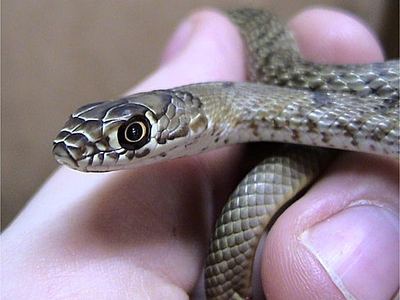
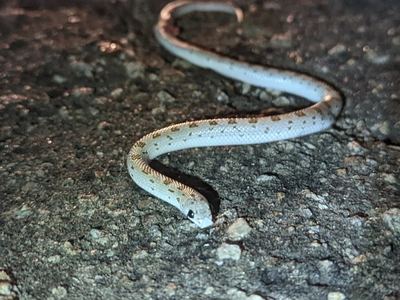
In all, 33 snake species are on the San Bernardino County list. The most recorded are the sidewinder (533), the western shovel-nosed snake (443) and the gopher snake (332). San Bernardino County holds more than half of all California records of the Mohave rattlesnake and the southern rubber boa.
| # | Species | Records | Share of California records |
|---|---|---|---|
| 1 | Sidewinder venomous Crotalus cerastes | 533 | 28% |
| 2 | Western shovel-nosed snake Sonora occipitalis | 443 | 30% |
| 3 | Gopher snake Pituophis catenifer | 332 | 5% |
| 4 | Glossy snake Arizona elegans | 320 | 22% |
| 5 | Mohave rattlesnake venomous Crotalus scutulatus | 256 | 60% |
| 6 | Coachwhip Masticophis flagellum | 234 | 20% |
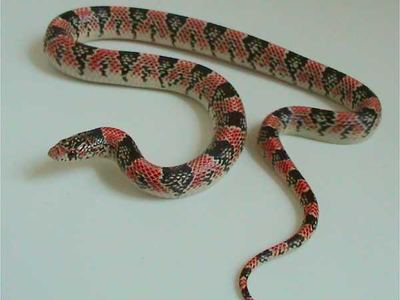
| 7 | Long-nosed snake Rhinocheilus lecontei | 209 | 21% |
| 8 | Spotted leaf-nosed snake Phyllorhynchus decurtatus | 208 | 16% |
| 9 | Western patch-nosed snake Salvadora hexalepis | 157 | 26% |
| 10 | Western rattlesnake venomous Crotalus oreganus | 130 | 2% |
| 11 | Western terrestrial garter snake Thamnophis elegans | 124 | 1% |
| 12 | California kingsnake Lampropeltis californiae | 115 | 4% |
| 13 | Southwestern speckled rattlesnake venomous Crotalus pyrrhus | 69 | 26% |
| 14 | Two-striped garter snake Thamnophis hammondii | 60 | 4% |
| 15 | Striped racer Masticophis lateralis | 52 | 4% |
| 16 | Rosy boa Lichanura trivirgata | 48 | 12% |
| 17 | California mountain kingsnake Lampropeltis zonata | 46 | 9% |
| 18 | Western aquatic garter snake Thamnophis couchii | 38 | 1% |
| 19 | Western threadsnake Rena humilis | 36 | 5% |
| 20 | Northern three-lined boa Lichanura orcutti | 29 | 21% |
| 21 | Ring-necked snake Diadophis punctatus | 21 | 1% |
| 22 | Western ground snake Sonora semiannulata | 19 | 6% |
| 23 | Northern rubber boa Charina bottae | 18 | 3% |
| 24 | Panamint rattlesnake venomous Crotalus stephensi | 15 | 8% |
| 25 | Red diamond rattlesnake venomous Crotalus ruber | 15 | 2% |
| 26 | Southwestern blackhead snake Tantilla hobartsmithi | 15 | 29% |
| 27 | Striped whipsnake Masticophis taeniatus | 14 | 15% |
| 28 | Desert nightsnake Hypsiglena chlorophaea | 11 | 10% |
| 29 | Western diamondback rattlesnake venomous Crotalus atrox | 6 | 4% |
| 30 | Baja California lyre snake Trimorphodon lyrophanes | 5 | 3% |
| 31 | Coast nightsnake Hypsiglena ochrorhynchus | 3 | 1% |
| 32 | Southern rubber boa Charina umbratica | 3 | 60% |
| 33 | Western black-headed snake Tantilla planiceps | 2 | 1% |
When are snakes out in San Bernardino County?
Observation records of snakes in San Bernardino County run mostly March through September, peaking in May with 32% of them, the same peak as California as a whole.
What spiders are in San Bernardino County?
In all, 59 spider species are on the San Bernardino County list. The most recorded are the western black widow (73), Habronattus signatus (63) and the Bay Area blonde (28). San Bernardino County holds more than half of all California records of Tarsonops systematicus and the Mojave dwarf tarantula.
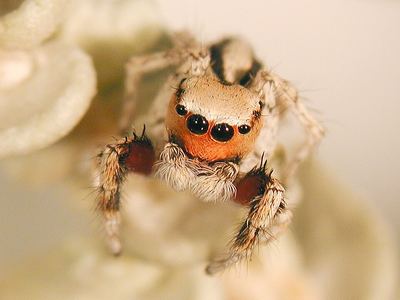
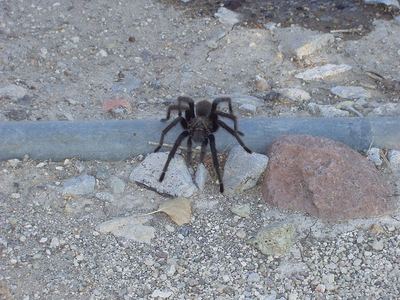
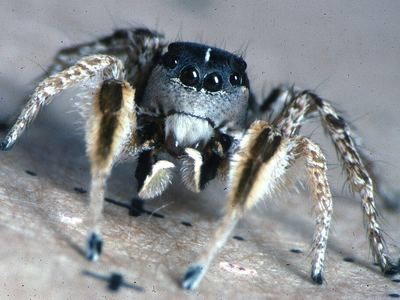
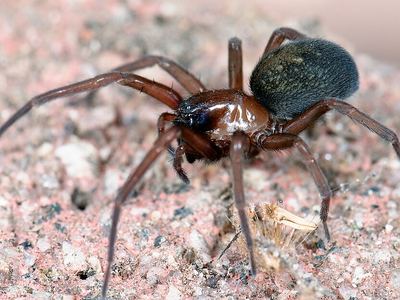
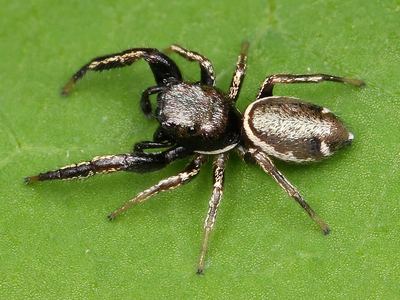
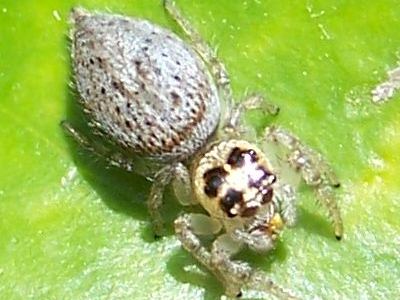
| # | Species | Records | Share of California records |
|---|---|---|---|
| 1 | Western black widow venomous Latrodectus hesperus | 73 | 6% |
| 2 | Habronattus signatus | 63 | 39% |
| 3 | Bay Area blonde Aphonopelma iodius | 28 | 9% |
| 4 | Habronattus tarsalis | 26 | 11% |
| 5 | Brown widow venomous introduced Latrodectus geometricus | 25 | 3% |
| 6 | Cribellate spider Metaltella simoni | 22 | 6% |
| 7 | Buttonhook leafbeetle jumping spider Sassacus vitis | 21 | 3% |
| 8 | Colonus hesperus | 19 | 3% |
| 9 | Desert recluse venomous Loxosceles deserta | 19 | 48% |
| 10 | Marbled cellar spider Holocnemus pluchei | 18 | 2% |
| 11 | Koch's wolf spider Alopecosa kochi | 16 | 2% |
| 12 | Giant crab spider Olios giganteus | 15 | 25% |
| 13 | Dysdera crocata | 13 | 2% |
| 14 | Apostenus californicus | 12 | 36% |
| 15 | Johnson jumper Phidippus johnsoni | 11 | 1% |
| 16 | Sixspotted orbweaver Araniella displicata | 11 | 5% |
| 17 | Habronattus pyrrithrix | 10 | 1% |
| 18 | Ribbon jumping spider Metacyrba taeniola | 10 | 4% |
| 19 | Syspira longipes | 9 | 21% |
| 20 | Tarsonops systematicus | 9 | 100% |
| 21 | False black widow Steatoda grossa | 8 | 1% |
| 22 | Western lynx spider Oxyopes scalaris | 8 | 1% |
| 23 | Western parson spider Herpyllus propinquus | 8 | 4% |
| 24 | Banded garden spider Argiope trifasciata | 7 | 2% |
| 25 | Gray wall jumper Menemerus bivittatus | 7 | 3% |
| 26 | Pelegrina aeneola | 6 | 6% |
| 27 | Uloborus diversus | 6 | 4% |
| 28 | Bull-headed sac spider Trachelas pacificus | 5 | 3% |
| 29 | Green lynx spider Peucetia viridans | 5 | 1% |
| 30 | Hirsute paradise spider Habronattus hirsutus | 5 | 2% |
| 31 | Homalonychus theologus | 5 | 23% |
| 32 | Mojave dwarf tarantula Aphonopelma mojave | 5 | 71% |
| 33 | Phidippus nikites | 5 | 15% |
| 34 | Shoreline wolf spider Arctosa littoralis | 5 | 6% |
| 35 | Silver argiope Argiope argentata | 5 | 1% |
| 36 | California red jumping spider Phidippus adumbratus | 4 | 2% |
| 37 | Hibana incursa | 4 | 5% |
| 38 | Sassacus papenhoei | 4 | 17% |
| 39 | Western spotted orbweaver Neoscona oaxacensis | 4 | 1% |
| 40 | Bold jumper Phidippus audax | 3 | 0% |
| 41 | Red-and-white asagena Asagena fulva | 3 | 30% |
| 42 | Steatoda nobilis | 3 | 0% |
| 43 | Longbodied cellar spider Pholcus phalangioides | 2 | 0% |
| 44 | Triangulate bud spider Steatoda triangulosa | 2 | 3% |
| 45 | California ebony tarantula Aphonopelma eutylenum | 1 | 1% |
| 46 | Desert grass spider Agelenopsis aperta | 1 | 2% |
| 47 | Dictis striatipes | 1 | 10% |
| 48 | Falconina gracilis | 1 | 2% |
| 49 | Hairy tufted jumping spider Phidippus comatus | 1 | 1% |
| 50 | Hogna antelucana | 1 | 5% |
| 51 | Oxyopes tridens | 1 | 2% |
| 52 | Phidippus californicus | 1 | 4% |
| 53 | Sierra dome spider Neriene litigiosa | 1 | 1% |
| 54 | Spotted orbweaver Neoscona crucifera | 1 | 0% |
| 55 | Black-and-yellow argiope Argiope aurantia | — | — |
| 56 | California flattened jumping spider Platycryptus californicus | — | — |
| 57 | Green lynx Peucetia longipalpis | — | — |
| 58 | McCook's split wolf spider Schizocosa mccooki | — | — |
| 59 | Pecos brown Aphonopelma steindachneri | — | — |
When are spiders out in San Bernardino County?
Observation records of spiders in San Bernardino County run through most of the year, peaking in October with 16% of them; across California the peak is April.
What stands out in San Bernardino County
Species for which San Bernardino County holds a large share of all California records: the Mohave rattlesnake, 60% (256 of 430); the desert recluse, 48% (19 of 40); Habronattus signatus, 39% (63 of 162); Apostenus californicus, 36% (12 of 33); the western shovel-nosed snake, 30% (443 of 1,482); the southwestern blackhead snake, 29% (15 of 51); the sidewinder, 28% (533 of 1,923); the southwestern speckled rattlesnake, 26% (69 of 269).
Common in California, not on the San Bernardino County list
Among the snakes most recorded across California, these do not reach the county list: the common garter snake (5,777 statewide) and the aquatic garter snake (3,727 statewide). Few records here can mean the species is rare in the county, or that few people have looked.
Among the spiders most recorded across California, these do not reach the county list: the half-edged wall jumping spider (2,178 statewide). Few records here can mean the species is rare in the county, or that few people have looked.
Harmless lookalikes in San Bernardino County
Rattlesnakes are on the county list, and so are harmless species often taken for them: the gopher snake. Coral snakes are not on the California list, but GBIF holds 3 coral snake records of any license in California (Sonoran coralsnake 3): treat any snake like this as venomous until identified. Harmless species often taken for them here: the long-nosed snake and the California mountain kingsnake. Widow spiders are on the county list, and so are harmless species often taken for them: the false black widow and the triangulate bud spider. Recluse spiders are on the county list, and so are harmless species often taken for them: the longbodied cellar spider.
San Bernardino County among California counties
By licensed snake records San Bernardino County ranks 5th of 58 California counties with any.
Other California counties with their own page: San Diego County, Lassen County, Shasta County, Riverside County, Humboldt County, Sonoma County, San Mateo County and Los Angeles County.
The whole state: venomous species in California, all snakes, all spiders.
GBIF records read 2026-09-29. Listed: any license. Counted: CC0/CC BY only. How we count.