Coachwhip (Masticophis flagellum)
The coachwhip is a non-venomous snake in the family Colubridae. GBIF holds 5,894 licensed U.S. records of it; it reaches our listing threshold in 19 states, most of all Texas (2,062), California (1,152) and Arizona (621). Its observation records peak in May.
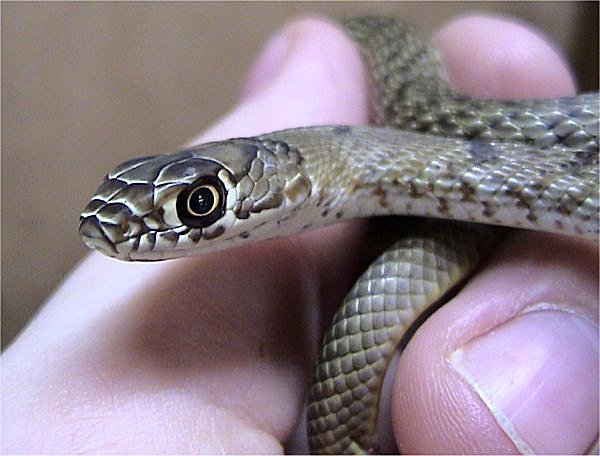

Masticophis flagellum is a species of nonvenomous colubrid snake, commonly referred to as the coachwhip, whip snake or the red racer. It is endemic to the United States and Mexico. Three subspecies are recognized (including the nominotypical subspecies).
From Wikipedia: Masticophis flagellum, text under CC BY-SA 4.0.
Is the coachwhip poisonous or venomous?
No. The coachwhip is non-venomous: it belongs to the family Colubridae, not to the pit vipers or coral snakes, the only U.S. land snakes with medically dangerous venom. It may bite if handled; clean the bite like any small wound.
Which states have the coachwhip?
Records are spread over 19 states; the top three, Texas, California and Arizona, hold 65% of them.
| # | State | Records | Share of state snakes | Rank in state |
|---|---|---|---|---|
| 1 | Texas | 2,062 | 5.0% | 4th of 86 |
| 2 | California | 1,152 | 1.6% | 16th of 46 |
| 3 | Arizona | 621 | 3.0% | 12th of 60 |
| 4 | Oklahoma | 542 | 4.1% | 6th of 50 |
| 5 | Nevada | 293 | 7.3% | 5th of 27 |
| 6 | Kansas | 248 | 1.7% | 21st of 44 |
| 7 | New Mexico | 245 | 3.8% | 6th of 56 |
| 8 | Florida | 180 | 0.9% | 23rd of 49 |
| 9 | North Carolina | 164 | 0.8% | 29th of 39 |
| 10 | Georgia | 78 | 1.3% | 17th of 44 |
| 11 | Alabama | 77 | 1.3% | 27th of 44 |
| 12 | Colorado | 58 | 1.7% | 7th of 26 |
| 13 | Nebraska | 43 | 1.8% | 14th of 31 |
| 14 | South Carolina | 31 | 0.9% | 29th of 40 |
| 15 | Utah | 31 | 0.9% | 11th of 28 |
| 16 | Louisiana | 30 | 0.6% | 25th of 41 |
| 17 | Arkansas | 16 | 0.3% | 26th of 36 |
| 18 | Missouri | 11 | 0.6% | 28th of 36 |
| 19 | Mississippi | 8 | 0.4% | 34th of 38 |
When is the coachwhip seen?
Across the U.S., observation records of the coachwhip run mostly March through October, peaking in May with 20% of them. Winter (December to February) holds 3% of them.
Season by state
Observation records run through most of the year in Florida. Among states whose main season falls within one calendar year, it starts earliest in March (Arizona, California and Oklahoma) and latest in June (Nebraska). The most common peak month is May, shared by California, New Mexico and Oklahoma.
| State | Main season | Peak month | Observation records |
|---|---|---|---|
| Texas | April through October | April | 438 |
| California | March through September | May | 211 |
| Arizona | March through September | August | 128 |
| Florida | most of the year | April | 84 |
| New Mexico | May through September | May | 47 |
| Nebraska | June through September | September | 41 |
| Oklahoma | March through September | May | 35 |
Where the coachwhip is recorded in each state
Texas
Texas holds 2,062 licensed records, the 4th most recorded of 86 snakes listed there. Its observation records in Texas run mostly April through October, peaking in April; most licensed records come from Brewster County, Jeff Davis County and Val Verde County. Next come Hutchinson County (61) and Terrell County (46).
California
California holds 1,152 licensed records, the 16th most recorded of 46 snakes listed there. Its observation records in California run mostly March through September, peaking in May; most licensed records come from Riverside County, San Bernardino County and San Diego County. Next come Kern County (112) and Inyo County (80).
Arizona
Arizona holds 621 licensed records, the 12th most recorded of 60 snakes listed there. Its observation records in Arizona run mostly March through September, peaking in August; most licensed records come from Pima County, Maricopa County and Cochise County. Next come Pinal County (51) and Yuma County (33).
Oklahoma
Oklahoma holds 542 licensed records, the 6th most recorded of 50 snakes listed there. Its observation records in Oklahoma run mostly March through September, peaking in May; most licensed records come from Comanche County, Cleveland County and LeFlore County. Next come Marshall County (20) and Tulsa County (19).
Nevada
Nevada holds 293 licensed records, the 5th most recorded of 27 snakes listed there. Most of its licensed records in Nevada come from Clark County, Nye County and Mineral County. Next come Lincoln County (19) and Washoe County (18).
Kansas
Kansas holds 248 licensed records, the 21st most recorded of 44 snakes listed there. Most of its licensed records in Kansas come from Ellis County, Morton County and Meade County. Next come Russell County (19) and Barber County (13).
New Mexico
New Mexico holds 245 licensed records, the 6th most recorded of 56 snakes listed there. Its observation records in New Mexico run mostly May through September, peaking in May; most licensed records come from Doña Ana County, Luna County and Eddy County. Next come Hidalgo County (17) and Chaves County (15).
Florida
Florida holds 180 licensed records, the 23rd most recorded of 49 snakes listed there. Its observation records in Florida run through most of the year, peaking in April; most licensed records come from Polk County, Highlands County and Citrus County. Next come Marion County (13) and Okaloosa County (10).
North Carolina
North Carolina holds 164 licensed records, the 29th most recorded of 39 snakes listed there. Most of its licensed records in North Carolina come from Scotland County, Richmond County and Bladen County. Next come Moore County (12) and New Hanover County (11).
Georgia
Georgia holds 78 licensed records, the joint 17th most recorded of 44 snakes listed there. Most of its licensed records in Georgia come from Baker County, Clay County and Decatur County. Next come Emanuel County (6) and Thomas County (4).
Alabama
Alabama holds 77 licensed records, the 27th most recorded of 44 snakes listed there. Most of its licensed records in Alabama come from Lee County, Macon County and Baldwin County. Next come Covington County (4) and Crenshaw County (4).
Colorado
Colorado holds 58 licensed records, the 7th most recorded of 26 snakes listed there. Most of its licensed records in Colorado come from Otero County, Pueblo County and El Paso County. Next come Yuma County (5) and Prowers County (4).
Nebraska
Nebraska holds 43 licensed records, the 14th most recorded of 31 snakes listed there. Its observation records in Nebraska run mostly June through September, peaking in September; most licensed records come from Dundy County, Chase County and Hitchcock County.
South Carolina
South Carolina holds 31 licensed records, the joint 29th most recorded of 40 snakes listed there. Most of its licensed records in South Carolina come from Chesterfield County, Jasper County and Horry County. Next come Aiken County (3) and Charleston County (2).
Utah
Utah holds 31 licensed records, the 11th most recorded of 28 snakes listed there. Most of its licensed records in Utah come from Washington County and Salt Lake County.
Louisiana
Louisiana holds 30 licensed records, the 25th most recorded of 41 snakes listed there. Most of its licensed records in Louisiana come from Vernon Parish, Jackson Parish and Rapides Parish. Next come Natchitoches Parish (3) and Washington Parish (3).
Top counties in the U.S.
| # | County | State | Records | Share of U.S. |
|---|---|---|---|---|
| 1 | Riverside County | California | 252 | 4.3% |
| 2 | San Bernardino County | California | 234 | 4.0% |
| 3 | San Diego County | California | 212 | 3.6% |
| 4 | Pima County | Arizona | 165 | 2.8% |
| 5 | Clark County | Nevada | 157 | 2.7% |
| 6 | Maricopa County | Arizona | 146 | 2.5% |
| 7 | Brewster County | Texas | 122 | 2.1% |
| 8 | Kern County | California | 112 | 1.9% |
| 9 | Cochise County | Arizona | 103 | 1.7% |
| 10 | Inyo County | California | 80 | 1.4% |
| 11 | Comanche County | Oklahoma | 77 | 1.3% |
| 12 | Los Angeles County | California | 72 | 1.2% |
| 13 | Jeff Davis County | Texas | 70 | 1.2% |
| 14 | Imperial County | California | 66 | 1.1% |
| 15 | Val Verde County | Texas | 64 | 1.1% |
How recent are the coachwhip records?
The coachwhip record leans on older material: only 18% of dated U.S. records come from 2017–2026, and the median record is from 1973. The oldest dated record is from 1852; the busiest year was 2023, with 139 records.
| Decade | Records | Share |
|---|---|---|
| 1850s | 3 | 0.1% |
| 1860s | 1 | 0.0% |
| 1870s | 8 | 0.1% |
| 1880s | 5 | 0.1% |
| 1890s | 25 | 0.4% |
| 1900s | 30 | 0.5% |
| 1910s | 95 | 1.7% |
| 1920s | 173 | 3.1% |
| 1930s | 388 | 7.0% |
| 1940s | 408 | 7.3% |
| 1950s | 653 | 11.7% |
| 1960s | 801 | 14.4% |
| 1970s | 557 | 10.0% |
| 1980s | 425 | 7.6% |
| 1990s | 222 | 4.0% |
| 2000s | 409 | 7.3% |
| 2010s | 596 | 10.7% |
| 2020s | 768 | 13.8% |
Species recorded in the same counties
Of the 201 counties where the coachwhip is most recorded, 94 are also top counties for the gopher snake, more than for any other snake. None of its closest neighbors is venomous.
| Species | Shared counties |
|---|---|
| Gopher snake | 94 |
| Ring-necked snake | 71 |
| Eastern racer | 70 |
| Long-nosed snake | 62 |
| Glossy snake | 61 |
| Eastern hog-nosed snake | 57 |
| Western ground snake | 56 |
| Common garter snake | 54 |
Related species in the U.S.
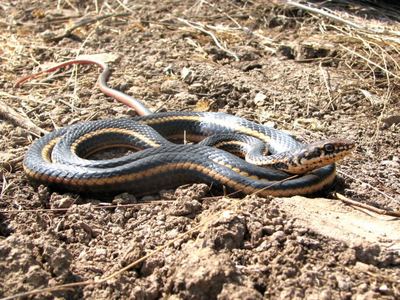
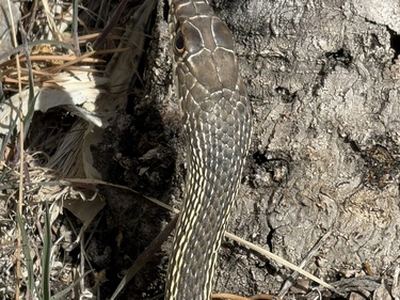
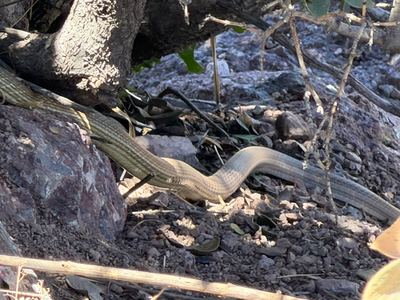
Other species of the genus Masticophis with profiles here: Striped racer, Striped whipsnake and Sonoran whipsnake.
GBIF records read 2026-09-29. Listed: any license. Counted: CC0/CC BY only. How we count.