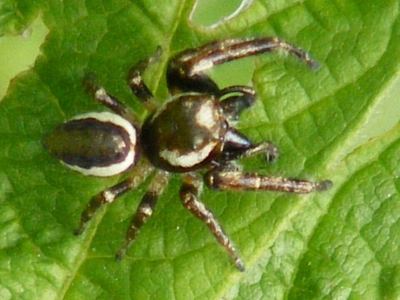
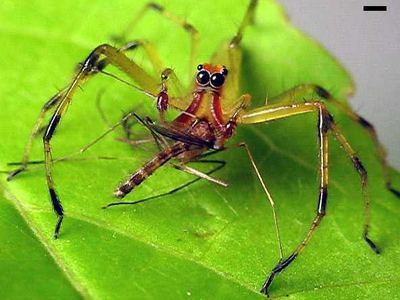
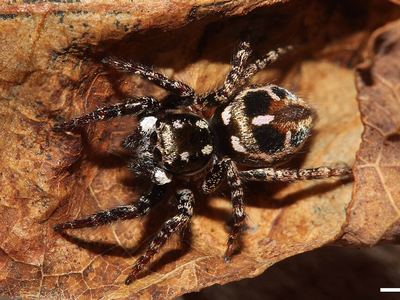
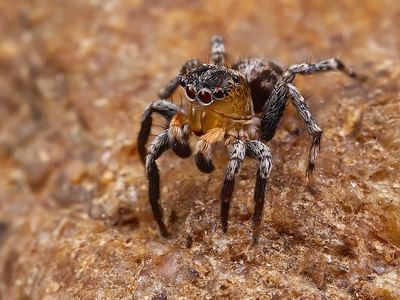
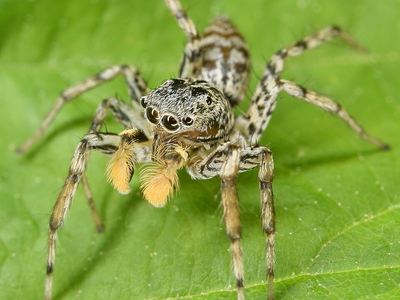
Half-edged wall jumping spider (Menemerus semilimbatus)
The half-edged wall jumping spider is a spider in the family Salticidae that is not dangerous to people. GBIF holds 2,183 licensed U.S. records of it; it reaches our listing threshold in 2 states, most of all California (2,178) and Texas (4). Its observation records peak in August.
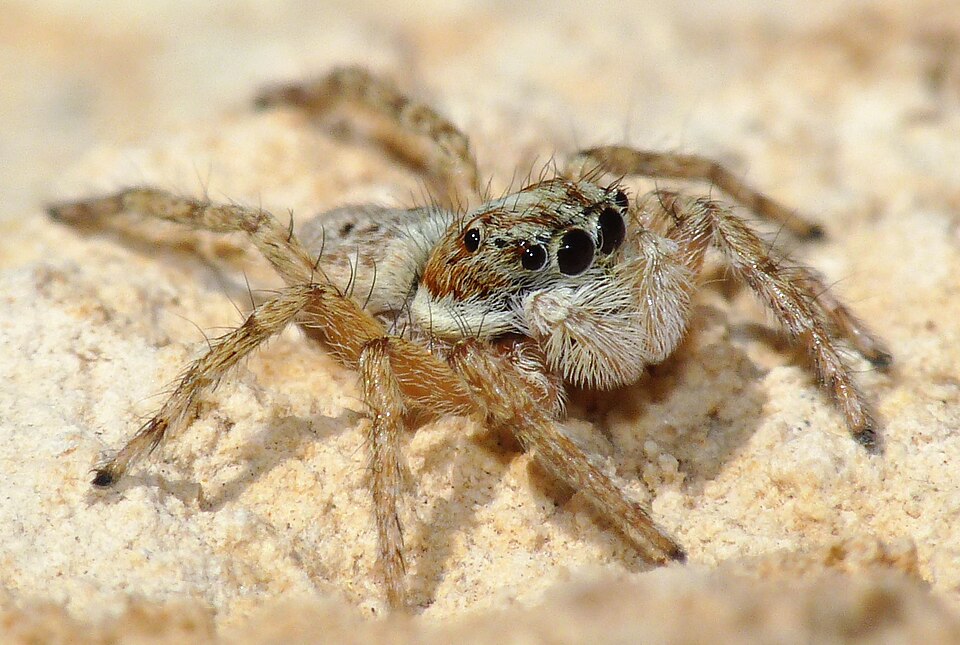

Is the half-edged wall jumping spider poisonous or venomous?
Not in any medically significant way. Like almost all spiders the half-edged wall jumping spider (family Salticidae) has venom for its prey, but it is not a widow or recluse, the two U.S. groups whose bites need medical attention.
Which states have the half-edged wall jumping spider?
The half-edged wall jumping spider's U.S. record is concentrated: California alone holds 100% of licensed records. It is listed in 2 states in all; the next are Texas (4).
| # | State | Records | Share of state spiders | Rank in state |
|---|---|---|---|---|
| 1 | California | 2,178 | 4.4% | 2nd of 309 |
| 2 | Texas | 4 | 0.0% | 262nd of 386 |
When is the half-edged wall jumping spider seen?
Across the U.S., observation records of the half-edged wall jumping spider run mostly March through October, peaking in August with 16% of them. Winter (December to February) holds 3% of them.
How recent are the half-edged wall jumping spider records?
Most of what is known about the half-edged wall jumping spider is recent: 98% of dated U.S. records were made in 2017–2026, and half date from 2024 or later. The oldest dated record is from 2011; the busiest year was 2024, with 750 records.
| Decade | Records | Share |
|---|---|---|
| 2010s | 48 | 2.2% |
| 2020s | 2,140 | 97.8% |
Species recorded in the same counties
Of the 15 counties where the half-edged wall jumping spider is most recorded, 10 are also top counties for the western spotted orbweaver, more than for any other spider. Venomous species among its neighbors: the western black widow.
| Species | Shared counties |
|---|---|
| Western spotted orbweaver | 10 |
| Bold jumper | 9 |
| Koch's wolf spider | 9 |
| Marbled cellar spider | 9 |
| Triangulate bud spider | 9 |
| Western black widow venomous | 9 |
| Attinella dorsata | 8 |
| Colonus hesperus | 8 |
Related species in the U.S.
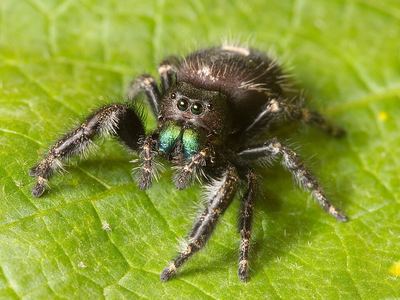
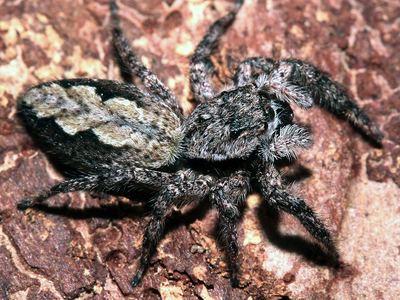
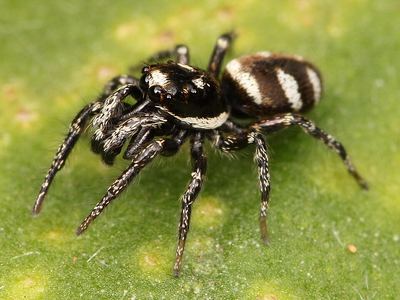
Other members of the family Salticidae with profiles here: Bold jumper, Familiar jumping spider, Zebra spider, Bronze jumper, Magnolia green jumper and Twin-flagged jumping spider.
GBIF records read 2026-09-29. Listed: any license. Counted: CC0/CC BY only. How we count.