Northern rubber boa (Charina bottae)
The northern rubber boa is a non-venomous snake in the family Boidae. GBIF holds 1,231 licensed U.S. records of it; it reaches our listing threshold in 8 states, most of all California (642), Oregon (270) and Washington (127). Its observation records peak in June.
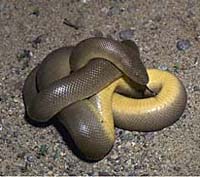
The rubber boa (Charina bottae) is a species of snake in the family Boidae and is native to western North America. It is sometimes known as the coastal rubber boa or the northern rubber boa and is not to be confused with the southern rubber boa (Charina umbratica).
From Wikipedia: Rubber boa, text under CC BY-SA 4.0.
Is the northern rubber boa poisonous or venomous?
No. The northern rubber boa is non-venomous: it belongs to the family Boidae, not to the pit vipers or coral snakes, the only U.S. land snakes with medically dangerous venom. It may bite if handled; clean the bite like any small wound.
Which states have the northern rubber boa?
The northern rubber boa's U.S. record is concentrated: California alone holds 52% of licensed records. It is listed in 8 states in all; the next are Oregon (270), Washington (127) and Idaho (61).
| # | State | Records | Share of state snakes | Rank in state |
|---|---|---|---|---|
| 1 | California | 642 | 0.9% | 21st of 46 |
| 2 | Oregon | 270 | 3.6% | 5th of 16 |
| 3 | Washington | 127 | 2.4% | 7th of 11 |
| 4 | Idaho | 61 | 4.1% | 7th of 11 |
| 5 | Utah | 49 | 1.5% | 9th of 28 |
| 6 | Nevada | 41 | 1.0% | 18th of 27 |
| 7 | Montana | 37 | 2.9% | 7th of 9 |
| 8 | Wyoming | 3 | 0.3% | 10th of 11 |
When is the northern rubber boa seen?
Across the U.S., observation records of the northern rubber boa run mostly March through September, peaking in June with 21% of them. Winter (December to February) holds 3% of them.
Season by state
The main season starts in the same month, March, in all 2 states whose main season falls within one calendar year. Each of these states peaks in a different month: May in Oregon and July in California.
| State | Main season | Peak month | Observation records |
|---|---|---|---|
| California | March through October | July | 161 |
| Oregon | March through September | May | 89 |
Where the northern rubber boa is recorded in each state
California
California holds 642 licensed records, the 21st most recorded of 46 snakes listed there. Its observation records in California run mostly March through October, peaking in July; most licensed records come from Tulare County, San Mateo County and Tuolumne County. Next come Mono County (40) and El Dorado County (31).
Oregon
Oregon holds 270 licensed records, the 5th most recorded of 16 snakes listed there. Its observation records in Oregon run mostly March through September, peaking in May; most licensed records come from Benton County, Columbia County and Lane County. Next come Lake County (15) and Linn County (14).
Washington
Washington holds 127 licensed records, the 7th most recorded of 11 snakes listed there. Most of its licensed records in Washington come from Pierce County, Whatcom County and Kittitas County. Next come King County (11) and Chelan County (10).
Idaho
Idaho holds 61 licensed records, the 7th most recorded of 11 snakes listed there. Most of its licensed records in Idaho come from Bannock County, Idaho County and Latah County. Next come Kootenai County (5) and Bonner County (5).
Utah
Utah holds 49 licensed records, the 9th most recorded of 28 snakes listed there. Most of its licensed records in Utah come from Salt Lake County, Utah County and Weber County. Next come Cache County (4) and Box Elder County (3).
Nevada
Nevada holds 41 licensed records, the 18th most recorded of 27 snakes listed there. Most of its licensed records in Nevada come from Washoe County, Nye County and Lander County. Next come Elko County (6) and Douglas County (4).
Montana
Montana holds 37 licensed records, the 7th most recorded of 9 snakes listed there. Most of its licensed records in Montana come from Missoula County, Ravalli County and Lake County. Next come Sanders County (2) and Flathead County (1).
Top counties in the U.S.
| # | County | State | Records | Share of U.S. |
|---|---|---|---|---|
| 1 | Benton County | Oregon | 74 | 6.0% |
| 2 | Tulare County | California | 54 | 4.4% |
| 3 | Columbia County | Oregon | 51 | 4.1% |
| 4 | San Mateo County | California | 47 | 3.8% |
| 5 | Tuolumne County | California | 42 | 3.4% |
| 6 | Mono County | California | 40 | 3.2% |
| 7 | El Dorado County | California | 31 | 2.5% |
| 8 | Kern County | California | 27 | 2.2% |
| 9 | Nevada County | California | 26 | 2.1% |
| 10 | Marin County | California | 25 | 2.0% |
| 11 | Calaveras County | California | 24 | 1.9% |
| 12 | Alameda County | California | 23 | 1.9% |
| 13 | Fresno County | California | 22 | 1.8% |
| 14 | Plumas County | California | 22 | 1.8% |
| 15 | Santa Cruz County | California | 21 | 1.7% |
How recent are the northern rubber boa records?
The northern rubber boa record leans on older material: only 28% of dated U.S. records come from 2017–2026, and the median record is from 1982. The oldest dated record is from 1867; the busiest year was 2025, with 70 records.
| Decade | Records | Share |
|---|---|---|
| 1860s | 1 | 0.1% |
| 1870s | 4 | 0.3% |
| 1880s | 5 | 0.4% |
| 1890s | 21 | 1.8% |
| 1900s | 15 | 1.3% |
| 1910s | 38 | 3.2% |
| 1920s | 34 | 2.9% |
| 1930s | 97 | 8.2% |
| 1940s | 108 | 9.1% |
| 1950s | 95 | 8.0% |
| 1960s | 66 | 5.6% |
| 1970s | 82 | 6.9% |
| 1980s | 64 | 5.4% |
| 1990s | 43 | 3.6% |
| 2000s | 104 | 8.8% |
| 2010s | 127 | 10.7% |
| 2020s | 284 | 23.9% |
Species recorded in the same counties
Of the 87 counties where the northern rubber boa is most recorded, 60 are also top counties for the gopher snake, more than for any other snake. Venomous species among its neighbors: the western rattlesnake.
| Species | Shared counties |
|---|---|
| Gopher snake | 60 |
| Western terrestrial garter snake | 56 |
| Western rattlesnake venomous | 49 |
| Eastern racer | 47 |
| Common garter snake | 45 |
| Striped whipsnake | 21 |
| California kingsnake | 17 |
| Northwestern garter snake | 17 |
Related species in the U.S.
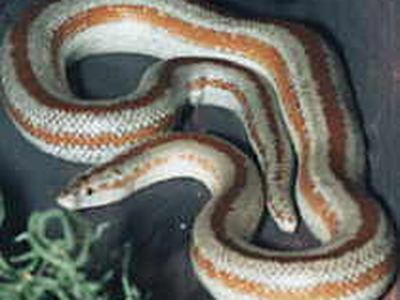
Other members of the family Boidae with profiles here: Rosy boa.

GBIF records read 2026-09-29. Listed: any license. Counted: CC0/CC BY only. How we count.