Rosy boa (Lichanura trivirgata)
The rosy boa is a non-venomous snake in the family Boidae. GBIF holds 440 licensed U.S. records of it; it reaches our listing threshold in 2 states, most of all California (406) and Arizona (32).
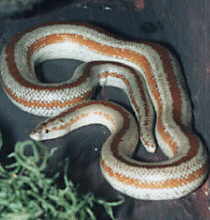
The desert rosy boa (Lichanura trivirgata) is a species of snake in the family Boidae. The desert rosy boa is native to the American Southwest and Baja California and Sonora in Mexico. The desert rosy boa is one of four species in the boa family native to the continental United States, the other three being the coastal rosy boa (Lichanura orcutti) and the two species of rubber boas (Charina).
From Wikipedia: Desert rosy boa, text under CC BY-SA 4.0.
Is the rosy boa poisonous or venomous?
No. The rosy boa is non-venomous: it belongs to the family Boidae, not to the pit vipers or coral snakes, the only U.S. land snakes with medically dangerous venom. It may bite if handled; clean the bite like any small wound.
Which states have the rosy boa?
The rosy boa's U.S. record is concentrated: California alone holds 92% of licensed records. It is listed in 2 states in all; the next are Arizona (32).
| # | State | Records | Share of state snakes | Rank in state |
|---|---|---|---|---|
| 1 | California | 406 | 0.6% | 25th of 46 |
| 2 | Arizona | 32 | 0.2% | 50th of 60 |
Where the rosy boa is recorded in each state
California
California holds 406 licensed records, the 25th most recorded of 46 snakes listed there. Most of its licensed records in California come from San Diego County, Riverside County and San Bernardino County. Next come Los Angeles County (25) and Inyo County (11).
Arizona
Arizona holds 32 licensed records, the 50th most recorded of 60 snakes listed there. Most of its licensed records in Arizona come from Pima County, Yavapai County and Yuma County. Next come Mohave County (4) and Maricopa County (3).
Top counties in the U.S.
| # | County | State | Records | Share of U.S. |
|---|---|---|---|---|
| 1 | San Diego County | California | 194 | 44.1% |
| 2 | Riverside County | California | 104 | 23.6% |
| 3 | San Bernardino County | California | 48 | 10.9% |
| 4 | Los Angeles County | California | 25 | 5.7% |
| 5 | Pima County | Arizona | 11 | 2.5% |
| 6 | Inyo County | California | 11 | 2.5% |
| 7 | Kern County | California | 11 | 2.5% |
| 8 | Yavapai County | Arizona | 7 | 1.6% |
| 9 | Orange County | California | 7 | 1.6% |
| 10 | Imperial County | California | 6 | 1.4% |
| 11 | Yuma County | Arizona | 5 | 1.1% |
| 12 | Mohave County | Arizona | 4 | 0.9% |
| 13 | Maricopa County | Arizona | 3 | 0.7% |
| 14 | La Paz County | Arizona | 2 | 0.5% |
How recent are the rosy boa records?
The rosy boa record leans on older material: only 2% of dated U.S. records come from 2017–2026, and the median record is from 1953. The oldest dated record is from 1892; the busiest year was 1938, with 14 records.
| Decade | Records | Share |
|---|---|---|
| 1890s | 8 | 1.9% |
| 1900s | 8 | 1.9% |
| 1910s | 11 | 2.7% |
| 1920s | 29 | 7.0% |
| 1930s | 81 | 19.5% |
| 1940s | 47 | 11.3% |
| 1950s | 58 | 14.0% |
| 1960s | 58 | 14.0% |
| 1970s | 33 | 8.0% |
| 1980s | 23 | 5.5% |
| 1990s | 18 | 4.3% |
| 2000s | 22 | 5.3% |
| 2010s | 10 | 2.4% |
| 2020s | 9 | 2.2% |
Species recorded in the same counties
Of the 14 counties where the rosy boa is most recorded, 14 are also top counties for each of the first five snakes in the table below; no other snake shares more. Venomous species among its neighbors: the sidewinder.
| Species | Shared counties |
|---|---|
| California kingsnake | 14 |
| Coachwhip | 14 |
| Glossy snake | 14 |
| Gopher snake | 14 |
| Western patch-nosed snake | 14 |
| Long-nosed snake | 13 |
| Sidewinder venomous | 13 |
| Spotted leaf-nosed snake | 13 |
Related species in the U.S.
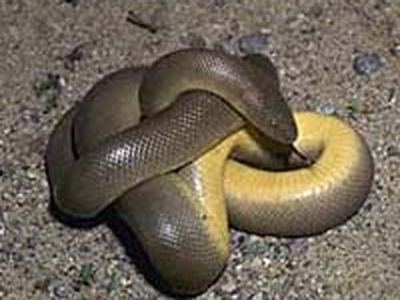
Other members of the family Boidae with profiles here: Northern rubber boa.

GBIF records read 2026-09-29. Listed: any license. Counted: CC0/CC BY only. How we count.