Snakes and spiders in San Diego County, California
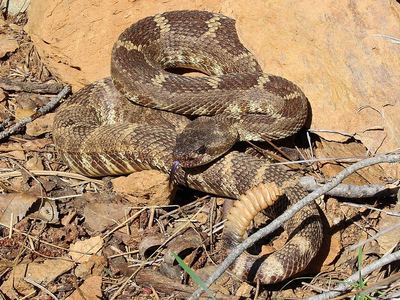
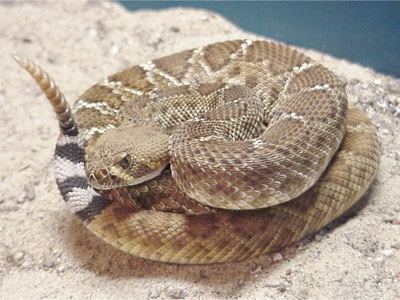
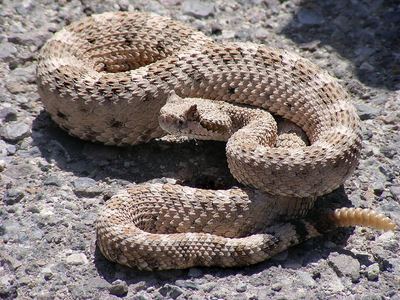
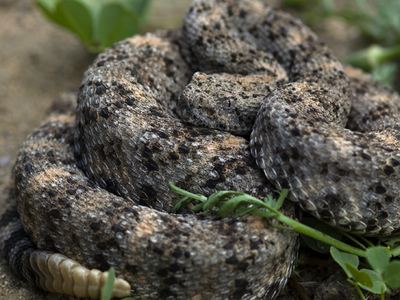
San Diego County has 29 snake and 119 spider species on record, from 9,077 licensed snake and 8,431 spider records. Venomous species here: the western rattlesnake, the red diamond rattlesnake, the sidewinder, the southwestern speckled rattlesnake, the brown widow, the western black widow and the desert recluse.
Are there venomous snakes or spiders in San Diego County?
Yes. The western rattlesnake: 1,368 licensed records, 26% of all California records of it. The red diamond rattlesnake: 626 licensed records, 68% of all California records of it. The sidewinder: 329 licensed records, 17% of all California records of it. The southwestern speckled rattlesnake: 73 licensed records, 27% of all California records of it. The brown widow: 161 licensed records, 21% of all California records of it. The western black widow: 124 licensed records, 10% of all California records of it. The desert recluse: 6 licensed records, 15% of all California records of it.
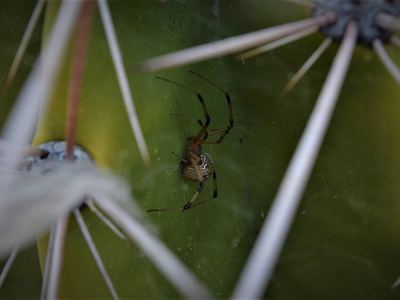
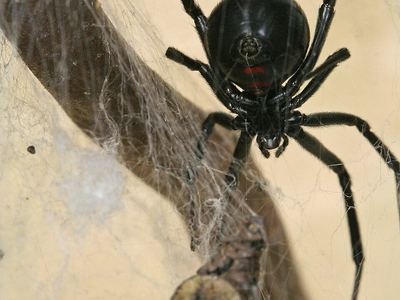
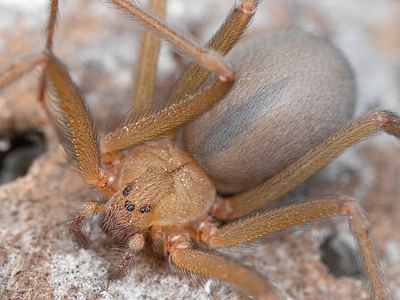
What snakes are in San Diego County?
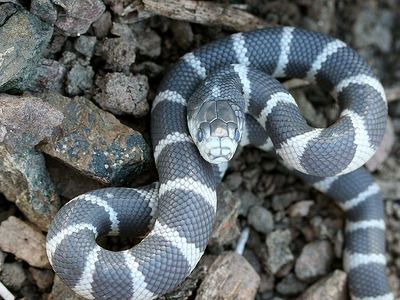
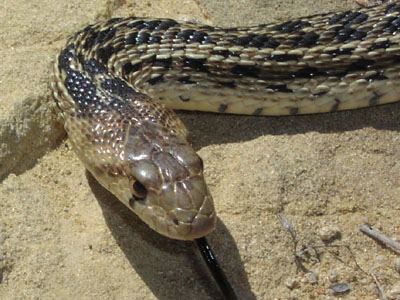
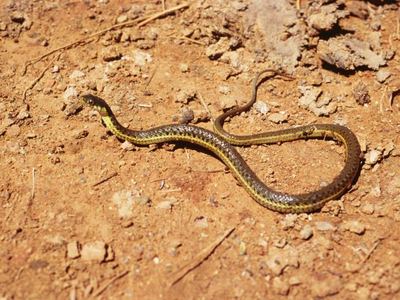
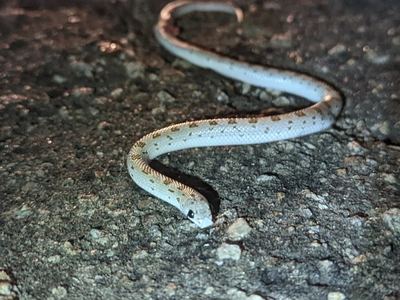
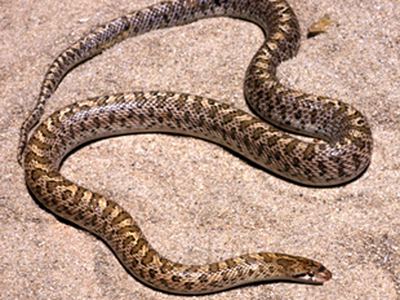
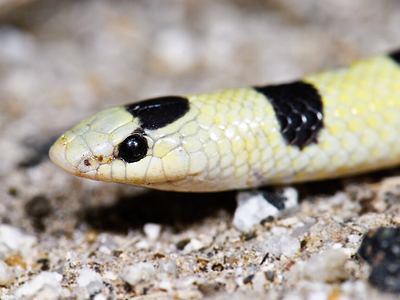
In all, 29 snake species are on the San Diego County list. The most recorded are the western rattlesnake (1,368), the California kingsnake (817) and the gopher snake (764). San Diego County holds more than half of all California records of the red diamond rattlesnake, the Colorado desert shovel-nosed snake, the Baja California lyre snake and the coast nightsnake.
| # | Species | Records | Share of California records |
|---|---|---|---|
| 1 | Western rattlesnake venomous Crotalus oreganus | 1,368 | 26% |
| 2 | California kingsnake Lampropeltis californiae | 817 | 31% |
| 3 | Gopher snake Pituophis catenifer | 764 | 11% |
| 4 | Two-striped garter snake Thamnophis hammondii | 670 | 41% |
| 5 | Red diamond rattlesnake venomous Crotalus ruber | 626 | 68% |
| 6 | Spotted leaf-nosed snake Phyllorhynchus decurtatus | 568 | 45% |
| 7 | Glossy snake Arizona elegans | 422 | 30% |
| 8 | Western shovel-nosed snake Sonora occipitalis | 357 | 24% |
| 9 | Long-nosed snake Rhinocheilus lecontei | 347 | 34% |
| 10 | Sidewinder venomous Crotalus cerastes | 329 | 17% |
| 11 | Striped racer Masticophis lateralis | 307 | 25% |
| 12 | Western threadsnake Rena humilis | 289 | 43% |
| 13 | Ring-necked snake Diadophis punctatus | 244 | 14% |
| 14 | Coachwhip Masticophis flagellum | 212 | 18% |
| 15 | Rosy boa Lichanura trivirgata | 194 | 48% |
| 16 | Western patch-nosed snake Salvadora hexalepis | 166 | 27% |
| 17 | Colorado desert shovel-nosed snake Chionactis annulata | 165 | 73% |
| 18 | Baja California lyre snake Trimorphodon lyrophanes | 143 | 78% |
| 19 | Coast nightsnake Hypsiglena ochrorhynchus | 129 | 56% |
| 20 | Eastern racer Coluber constrictor | 112 | 9% |
| 21 | Southwestern speckled rattlesnake venomous Crotalus pyrrhus | 73 | 27% |
| 22 | Western black-headed snake Tantilla planiceps | 73 | 38% |
| 23 | Desert nightsnake Hypsiglena chlorophaea | 56 | 50% |
| 24 | California mountain kingsnake Lampropeltis zonata | 44 | 8% |
| 25 | Common garter snake Thamnophis sirtalis | 42 | 1% |
| 26 | Northern three-lined boa Lichanura orcutti | 41 | 30% |
| 27 | Western aquatic garter snake Thamnophis couchii | 29 | 1% |
| 28 | Brahminy blindsnake introduced Indotyphlops braminus | 12 | 23% |
| 29 | Baja California coachwhip Masticophis fuliginosus | 5 | 100% |
When are snakes out in San Diego County?
Observation records of snakes in San Diego County run mostly March through October, peaking in April with 22% of them; across California the peak is May.
What spiders are in San Diego County?
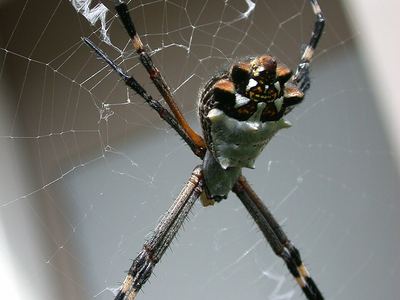
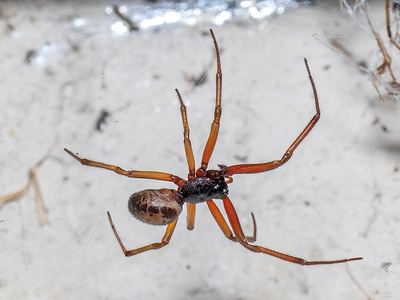
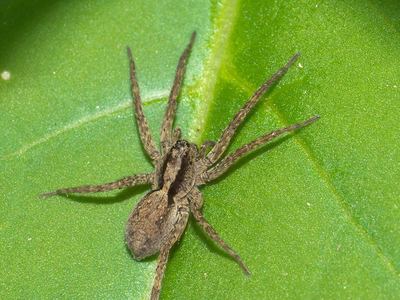
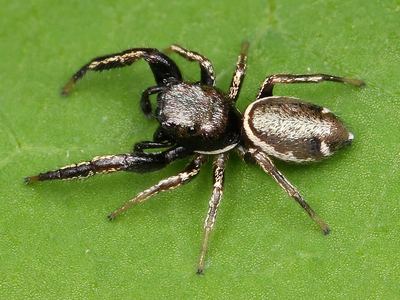
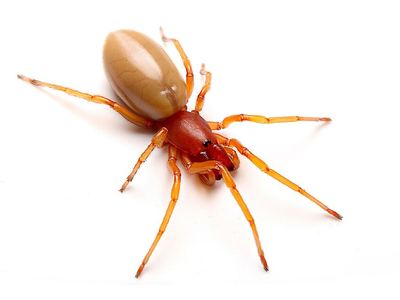
In all, 119 spider species are on the San Diego County list. The most recorded are the silver argiope (537), Steatoda nobilis (228) and the Koch's wolf spider (213). San Diego County holds more than half of all California records of the silver argiope, the McCook's split wolf spider, Habronattus californicus and the California trapdoor spider.
| # | Species | Records | Share of California records |
|---|---|---|---|
| 1 | Silver argiope Argiope argentata | 537 | 71% |
| 2 | Steatoda nobilis | 228 | 12% |
| 3 | Koch's wolf spider Alopecosa kochi | 213 | 21% |
| 4 | Buttonhook leafbeetle jumping spider Sassacus vitis | 181 | 22% |
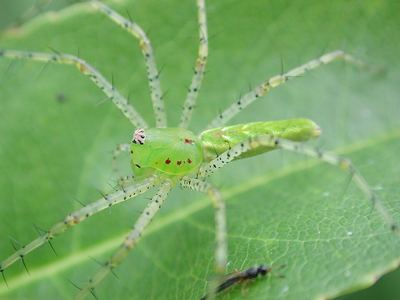
| 5 | Green lynx spider Peucetia viridans | 171 | 46% |
| 6 | Brown widow venomous introduced Latrodectus geometricus | 161 | 21% |
| 7 | Dysdera crocata | 126 | 19% |
| 8 | Western black widow venomous Latrodectus hesperus | 124 | 10% |
| 9 | McCook's split wolf spider Schizocosa mccooki | 111 | 53% |
| 10 | Spotted orbweaver Neoscona crucifera | 107 | 27% |
| 11 | Johnson jumper Phidippus johnsoni | 101 | 11% |
| 12 | Drassyllus insularis | 87 | 45% |
| 13 | Habronattus californicus | 85 | 76% |
| 14 | California trapdoor spider Bothriocyrtum californicum | 75 | 66% |
| 15 | False black widow Steatoda grossa | 72 | 6% |
| 16 | Marinarozelotes lyonneti | 62 | 89% |
| 17 | Mexigonus minutus | 62 | 70% |
| 18 | Anelosimus studiosus | 60 | 100% |
| 19 | Longbodied cellar spider Pholcus phalangioides | 59 | 9% |
| 20 | Western spotted orbweaver Neoscona oaxacensis | 53 | 9% |
| 21 | Cyclosa turbinata | 46 | 30% |
| 22 | Xysticus californicus | 45 | 49% |
| 23 | Zelotes gynethus | 44 | 100% |
| 24 | Pecos brown Aphonopelma steindachneri | 43 | 57% |
| 25 | Oxyopes tridens | 41 | 89% |
| 26 | Pardosa californica | 40 | 33% |
| 27 | Banded garden spider Argiope trifasciata | 39 | 13% |
| 28 | Cribellate spider Metaltella simoni | 38 | 10% |
| 29 | Phoenix jumping spider Phidippus phoenix | 37 | 100% |
| 30 | Striped lynx spider Oxyopes salticus | 36 | 5% |
| 31 | Emblyna oregona | 34 | 92% |
| 32 | Flatmesh weaver Oecobius navus | 33 | 13% |
| 33 | Habronattus tarsalis | 33 | 15% |
| 34 | Syspira tigrina | 33 | 92% |
| 35 | Yorima angelica | 33 | 79% |
| 36 | California ebony tarantula Aphonopelma eutylenum | 32 | 32% |
| 37 | Callidalena tijuana | 32 | 100% |
| 38 | Habronattus elegans | 31 | 84% |
| 39 | Colonus hesperus | 30 | 4% |
| 40 | Habronattus ustulatus | 29 | 44% |
| 41 | California red jumping spider Phidippus adumbratus | 28 | 17% |
| 42 | Yellow sac spider Cheiracanthium inclusum | 26 | 62% |
| 43 | Whitebanded crab spider Misumenoides formosipes | 25 | 40% |
| 44 | Habronattus pyrrithrix | 24 | 3% |
| 45 | Cesonia trivittata | 23 | 88% |
| 46 | Black-and-yellow argiope Argiope aurantia | 22 | 15% |
| 47 | Eustala californiensis | 22 | 88% |
| 48 | Bull-headed sac spider Trachelas pacificus | 21 | 11% |
| 49 | Icenogle trapdoor spider Aptostichus icenoglei | 21 | 91% |
| 50 | Bold jumper Phidippus audax | 20 | 1% |
| 51 | Desert grass spider Agelenopsis aperta | 20 | 33% |
| 52 | Bark lynx spider Hamataliwa grisea | 19 | 54% |
| 53 | Western parson spider Herpyllus propinquus | 19 | 10% |
| 54 | Cabrillo Monument trapdoor spider Aptostichus cabrillo | 18 | 100% |
| 55 | Gray house spider Badumna longinqua | 17 | 5% |
| 56 | Hirsute paradise spider Habronattus hirsutus | 17 | 8% |
| 57 | Ribbon jumping spider Metacyrba taeniola | 17 | 7% |
| 58 | Heser nilicola | 16 | 50% |
| 59 | Phidippus nikites | 16 | 47% |
| 60 | Syspira longipes | 16 | 37% |
When are spiders out in San Diego County?
Observation records of spiders in San Diego County run through most of the year, peaking in September with 14% of them; across California the peak is April.
What stands out in San Diego County
Species for which San Diego County holds a large share of all California records: Callidalena tijuana, 100% (32 of 32); the Phoenix jumping spider, 100% (37 of 37); Zelotes gynethus, 100% (44 of 44); Anelosimus studiosus, 100% (60 of 60); Emblyna oregona, 92% (34 of 37); Syspira tigrina, 92% (33 of 36); the Icenogle trapdoor spider, 91% (21 of 23); Oxyopes tridens, 89% (41 of 46).
Common in California, not on the San Diego County list
Among the snakes most recorded across California, these do not reach the county list: the western terrestrial garter snake (21,830 statewide) and the aquatic garter snake (3,727 statewide). Few records here can mean the species is rare in the county, or that few people have looked.
Among the spiders most recorded across California, these do not reach the county list: the half-edged wall jumping spider (2,178 statewide). Few records here can mean the species is rare in the county, or that few people have looked.
Harmless lookalikes in San Diego County
Rattlesnakes are on the county list, and so are harmless species often taken for them: the gopher snake. Coral snakes are not on the California list, but GBIF holds 3 coral snake records of any license in California (Sonoran coralsnake 3): treat any snake like this as venomous until identified. Harmless species often taken for them here: the long-nosed snake and the California mountain kingsnake. Widow spiders are on the county list, and so are harmless species often taken for them: the false black widow and the triangulate bud spider. Recluse spiders are on the county list, and so are harmless species often taken for them: the longbodied cellar spider.
San Diego County among California counties
By licensed snake records San Diego County ranks 1st of 58 California counties with any.
Other California counties with their own page: Lassen County, Shasta County, Riverside County, San Bernardino County, Humboldt County, Sonoma County, San Mateo County and Los Angeles County.
The whole state: venomous species in California, all snakes, all spiders.
GBIF records read 2026-09-29. Listed: any license. Counted: CC0/CC BY only. How we count.