Snakes and spiders in Cook County, Illinois
Cook County, home of Chicago, has 9 snake and 87 spider species on record, from 280 licensed snake and 2,242 spider records. No venomous snake or spider reaches the county list, but the northern cottonmouth, the eastern copperhead, the eastern massasauga, the timber rattlesnake and 3 more are on the Illinois list: treat any snake or spider like them as venomous until identified.
What snakes are in Cook County?
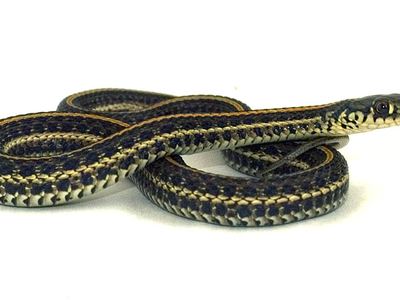
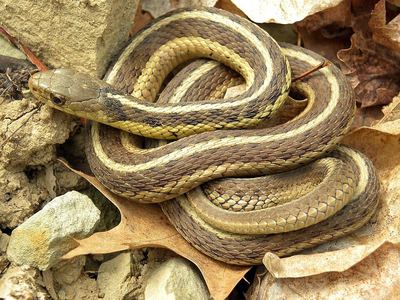
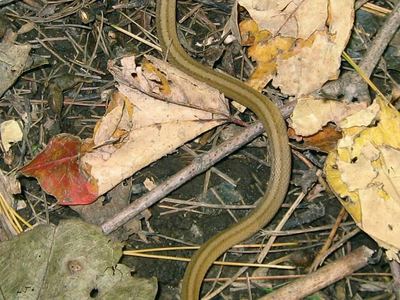
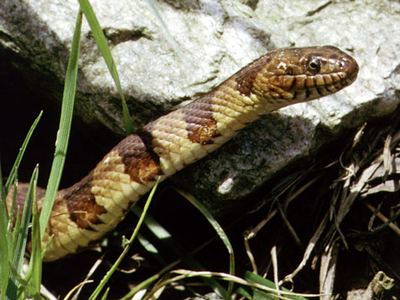
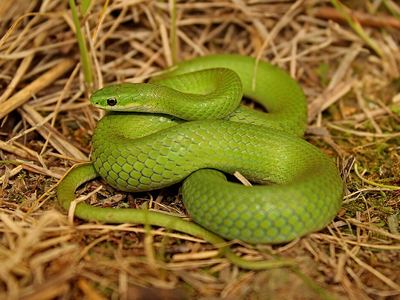
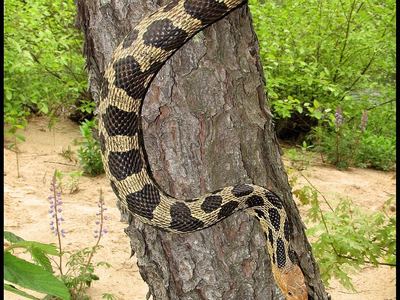
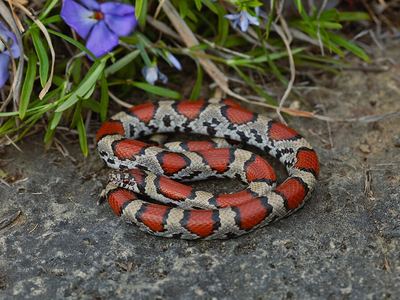
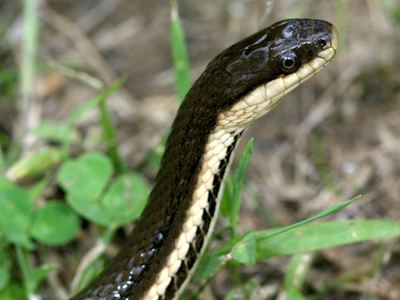
In all, 9 snake species are on the Cook County list. The most recorded are the plains garter snake (68), the common garter snake (66) and the DeKay's brown snake (63).
| # | Species | Records | Share of Illinois records |
|---|---|---|---|
| 1 | Plains garter snake Thamnophis radix | 68 | 27% |
| 2 | Common garter snake Thamnophis sirtalis | 66 | 15% |
| 3 | DeKay's brown snake Storeria dekayi | 63 | 20% |
| 4 | Northern water snake Nerodia sipedon | 25 | 10% |
| 5 | Smooth green snake Opheodrys vernalis | 15 | 28% |
| 6 | Eastern fox snake Pantherophis vulpinus | 7 | 8% |
| 7 | Eastern milksnake Lampropeltis triangulum | 7 | 12% |
| 8 | Queen snake Regina septemvittata | 6 | 24% |
| 9 | Red-bellied snake Storeria occipitomaculata | 5 | 12% |
When are snakes out in Cook County?
Observation records of snakes in Cook County run mostly April through October, peaking in April with 28% of them; across Illinois the peak is October.
What spiders are in Cook County?
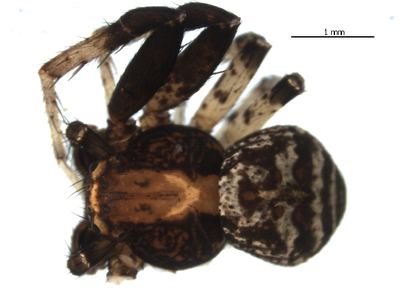
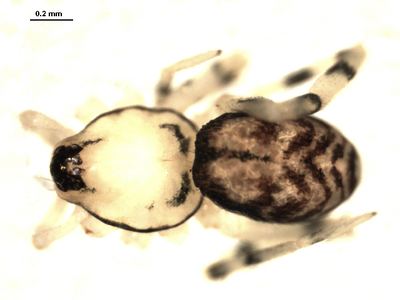
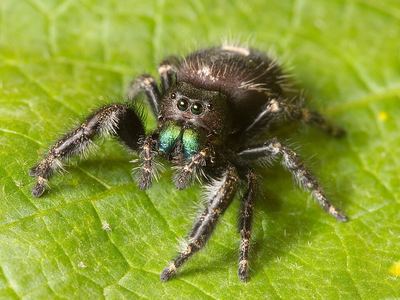
In all, 87 spider species are on the Cook County list. The most recorded are the brotherly ground crab spider (90), Phrurotimpus alarius (81) and the bold jumper (69). Cook County holds more than half of all Illinois records of the brotherly ground crab spider, Phrurotimpus alarius, Cicurina arcuata and Diplostyla concolor.
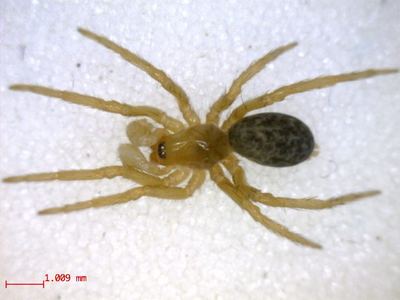
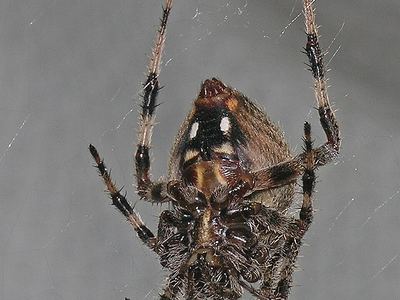
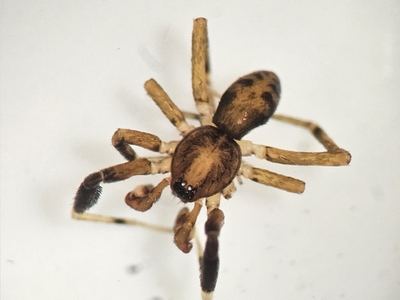
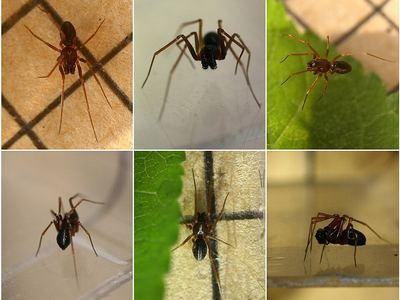
| # | Species | Records | Share of Illinois records |
|---|---|---|---|
| 1 | Brotherly ground crab spider Xysticus fraternus | 90 | 89% |
| 2 | Phrurotimpus alarius | 81 | 58% |
| 3 | Bold jumper Phidippus audax | 69 | 20% |
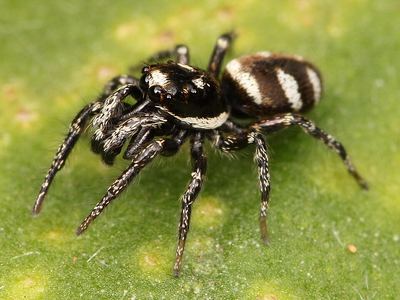
| 4 | Zebra spider Salticus scenicus | 69 | 40% |
| 5 | Cicurina arcuata | 61 | 70% |
| 6 | Spotted orbweaver Neoscona crucifera | 51 | 33% |
| 7 | Greater ant-mimic corinne spider Phrurotimpus borealis | 47 | 31% |
| 8 | Diplostyla concolor | 44 | 56% |
| 9 | Pale sheetweb weaver Bathyphantes pallidus | 44 | 22% |
| 10 | Twobanded antmimic Castianeira cingulata | 34 | 85% |
| 11 | Autumn money spider Erigone autumnalis | 33 | 33% |
| 12 | Thick-hooked comb-tailed spider Neoantistea magna | 31 | 79% |
| 13 | Nursery web spider Pisaurina mira | 30 | 24% |
| 14 | Trochosa ruricola | 30 | 19% |
| 15 | Dysdera crocata | 27 | 54% |
| 16 | Triangulate bud spider Steatoda triangulosa | 25 | 35% |
| 17 | Bridge orbweaver Larinioides sclopetarius | 24 | 73% |
| 18 | Spined micrathena Micrathena gracilis | 24 | 24% |
| 19 | Grammonota inornata | 23 | 46% |
| 20 | Nell's neon spider Neon nelli | 23 | 55% |
| 21 | Shore spider Pardosa milvina | 23 | 23% |
| 22 | Black-and-yellow argiope Argiope aurantia | 22 | 18% |
| 23 | Flea jumping spider Naphrys pulex | 22 | 40% |
| 24 | Grammonota gentilis | 22 | 92% |
| 25 | Asian wall jumper Attulus fasciger | 21 | 26% |
| 26 | Whitebanded crab spider Misumenoides formosipes | 19 | 17% |
| 27 | Barn funnel weaver Tegenaria domestica | 18 | 51% |
| 28 | Brush-legged split wolf spider Schizocosa ocreata | 18 | 9% |
| 29 | Spiraling sheet-web weaver Walckenaeria spiralis | 18 | 44% |
| 30 | Tan crab spider Xysticus ferox | 18 | 10% |
| 31 | Brilliant jumping spider Phidippus clarus | 17 | 12% |
| 32 | Orchard orbweaver Leucauge venusta | 17 | 16% |
| 33 | Banded garden spider Argiope trifasciata | 15 | 11% |
| 34 | Unequal whiskered money spider Islandiana flaveola | 15 | 20% |
| 35 | Dark fishing spider Dolomedes tenebrosus | 14 | 15% |
| 36 | Eastern spurred ghost spider Anyphaena pectorosa | 14 | 78% |
| 37 | Emblyna sublata | 14 | 82% |
| 38 | Pardosa saxatilis | 14 | 3% |
| 39 | Agyneta unimaculata | 13 | 13% |
| 40 | Pennsylvania grass spider Agelenopsis pennsylvanica | 13 | 21% |
| 41 | Ceraticelus fissiceps | 12 | 60% |
| 42 | Common candy-striped spider Enoplognatha ovata | 12 | 71% |
| 43 | Common white-cheeked jumping spider Pelegrina proterva | 12 | 20% |
| 44 | Garden spider Araneus diadematus | 12 | 43% |
| 45 | Metallic crab spider Philodromus marxi | 12 | 57% |
| 46 | Wetland giant wolf spider Tigrosa helluo | 12 | 9% |
| 47 | Long-jawed orb weaver Tetragnatha laboriosa | 11 | 35% |
| 48 | Mermessus maculatus | 11 | 65% |
| 49 | Peppered jumper Pelegrina galathea | 11 | 20% |
| 50 | Sixspotted fishing spider Dolomedes triton | 11 | 22% |
| 51 | Small sheet-web weaver Microneta viaria | 11 | 79% |
| 52 | Trilobate dwarf weaver Mermessus trilobatus | 11 | 30% |
| 53 | Agyneta fabra | 10 | 21% |
| 54 | Eridantes erigonoides | 10 | 8% |
| 55 | Scylaceus pallidus | 10 | 56% |
| 56 | Thrifty short-legged sheetweaver Agyneta micaria | 10 | 45% |
| 57 | Trochosa terricola | 10 | 14% |
| 58 | Dimorphic jumper Maevia inclemens | 9 | 17% |
| 59 | Elegant crab spider Xysticus elegans | 9 | 69% |
| 60 | Northern yellow sac spider Cheiracanthium mildei | 9 | 60% |
When are spiders out in Cook County?
Observation records of spiders in Cook County run mostly April through September, peaking in September with 23% of them, the same peak as Illinois as a whole.
What stands out in Cook County
Species for which Cook County holds a large share of all Illinois records: Grammonota gentilis, 92% (22 of 24); the brotherly ground crab spider, 89% (90 of 101); the twobanded antmimic, 85% (34 of 40); the thick-hooked comb-tailed spider, 79% (31 of 39); the bridge orbweaver, 73% (24 of 33); Cicurina arcuata, 70% (61 of 87); Ceraticelus fissiceps, 60% (12 of 20); Phrurotimpus alarius, 58% (81 of 139).
Common in Illinois, not on the Cook County list
Among the snakes most recorded across Illinois, these do not reach the county list: the northern cottonmouth (259 statewide), the eastern racer (129 statewide), the ring-necked snake (87 statewide), the eastern rat snake (86 statewide), the eastern wormsnake (85 statewide) and the prairie kingsnake (82 statewide). Few records here can mean the species is rare in the county, or that few people have looked.
Among the spiders most recorded across Illinois, these do not reach the county list: the brown recluse (313 statewide), Piratula minuta (208 statewide) and the shiny wolf spider (170 statewide). Few records here can mean the species is rare in the county, or that few people have looked.
Harmless lookalikes in Cook County
No copperheads reach the county list, but the eastern copperhead is on the Illinois list: treat any snake like it as venomous until identified. Harmless species often taken for them here: the northern water snake and the eastern milksnake. No cottonmouths reach the county list, but the northern cottonmouth is on the Illinois list: treat any snake like it as venomous until identified. Harmless species often taken for them here: the northern water snake. No rattlesnakes reach the county list, but the eastern massasauga and the timber rattlesnake are on the Illinois list: treat any snake like them as venomous until identified. Harmless species often taken for them here: the eastern fox snake. No coral snakes reach the county list, and GBIF holds no coral snake record for Illinois under any license, so one reported here is most likely a harmless lookalike: the eastern milksnake. No widow spiders reach the county list, but the southern black widow and the northern black widow are on the Illinois list: treat any spider like them as venomous until identified. Harmless species often taken for them here: the triangulate bud spider and the common house spider. No recluse spiders reach the county list, but the brown recluse is on the Illinois list: treat any spider like it as venomous until identified. Harmless species often taken for them here: the Pennsylvania grass spider, the longbodied cellar spider and the spitting spider.
Cook County among Illinois counties
By licensed snake records Cook County ranks 2nd of 90 Illinois counties with any.
Other Illinois counties with their own page: Union County, Will County, Champaign County, Jo Daviess County, Mason County, Iroquois County, Effingham County and Lee County.
The whole state: venomous species in Illinois, all snakes, all spiders.
GBIF records read 2026-09-29. Listed: any license. Counted: CC0/CC BY only. How we count.