Timber rattlesnake (Crotalus horridus)
The timber rattlesnake is a venomous pit viper in the family Viperidae. GBIF holds 2,571 licensed U.S. records of it; it reaches our listing threshold in 30 states, most of all Pennsylvania (479), Alabama (245) and Virginia (242). Its observation records peak in July.
_(26532488745).jpg)
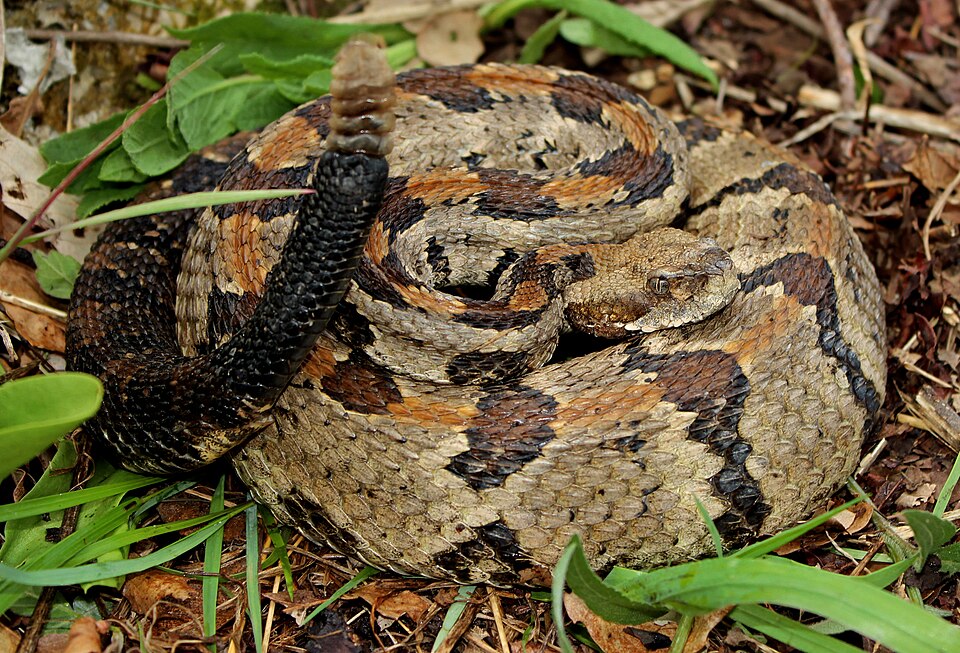
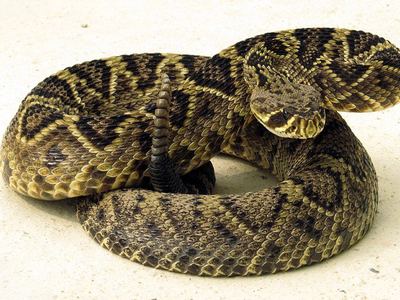
The timber rattlesnake (Crotalus horridus), also known commonly as the banded rattlesnake, and the canebrake rattlesnake in the southern United States, is a species of pit viper in the family Viperidae. The species is native to the eastern United States. Like all other pit vipers, it is venomous, with a very toxic bite.
From Wikipedia: Timber rattlesnake, text under CC BY-SA 4.0.
Is the timber rattlesnake poisonous or venomous?
Yes. The timber rattlesnake is a pit viper (family Viperidae), like every rattlesnake, copperhead and cottonmouth in the U.S. Its bite needs emergency care: call 911 and keep the bitten limb still. Antivenom is given in hospital.
Snakes often mistaken for it
Species commonly confused with rattlesnakes and recorded in the same states: eastern hog-nosed snake (recorded in 29 of its 30 states), gopher snake (recorded in 10 of its 30 states), pine snake (recorded in 8 of its 30 states), eastern fox snake (recorded in 7 of its 30 states) and Great Plains rat snake (recorded in 6 of its 30 states).
Which states have the timber rattlesnake?
Records are spread over 30 states; the top three, Pennsylvania, Alabama and Virginia, hold 38% of them.
| # | State | Records | Share of state snakes | Rank in state |
|---|---|---|---|---|
| 1 | Pennsylvania | 479 | 5.6% | 8th of 20 |
| 2 | Alabama | 245 | 4.3% | 6th of 44 |
| 3 | Virginia | 242 | 2.2% | 12th of 30 |
| 4 | New York | 207 | 3.5% | 8th of 17 |
| 5 | Texas | 188 | 0.5% | 45th of 86 |
| 6 | Kansas | 177 | 1.2% | 27th of 44 |
| 7 | Georgia | 166 | 2.7% | 8th of 44 |
| 8 | Oklahoma | 116 | 0.9% | 27th of 50 |
| 9 | North Carolina | 65 | 0.3% | 33rd of 39 |
| 10 | Connecticut | 64 | 5.5% | 7th of 14 |
| 11 | South Carolina | 64 | 1.8% | 24th of 40 |
| 12 | Tennessee | 50 | 1.9% | 17th of 32 |
| 13 | Arkansas | 46 | 0.9% | 16th of 36 |
| 14 | Kentucky | 46 | 3.6% | 10th of 24 |
| 15 | Wisconsin | 46 | 4.7% | 6th of 16 |
| 16 | West Virginia | 44 | 2.7% | 12th of 18 |
| 17 | Ohio | 39 | 0.6% | 20th of 25 |
| 18 | Louisiana | 38 | 0.8% | 23rd of 41 |
| 19 | Iowa | 35 | 3.3% | 10th of 22 |
| 20 | Mississippi | 34 | 1.8% | 17th of 38 |
| 21 | Maryland | 32 | 0.9% | 18th of 20 |
| 22 | Missouri | 29 | 1.5% | 20th of 36 |
| 23 | Florida | 24 | 0.1% | 42nd of 49 |
| 24 | Illinois | 20 | 0.7% | 25th of 33 |
| 25 | New Jersey | 17 | 1.5% | 15th of 18 |
| 26 | Indiana | 14 | 0.6% | 23rd of 27 |
| 27 | Massachusetts | 14 | 0.7% | 10th of 13 |
| 28 | Nebraska | 14 | 0.6% | 22nd of 31 |
| 29 | Minnesota | 11 | 1.2% | 13th of 15 |
| 30 | Vermont | 3 | 0.3% | 9th of 9 |
When is the timber rattlesnake seen?
Across the U.S., observation records of the timber rattlesnake run mostly April through September, peaking in July with 20% of them. Almost none are from December to February.
Season by state
Among states whose main season falls within one calendar year, it starts earliest in April (Alabama, Arkansas, Georgia, New York, Tennessee and Texas) and latest in May (North Carolina, Pennsylvania, South Carolina and Virginia). The most common peak month is July, shared by New York, North Carolina, Pennsylvania and Virginia.
| State | Main season | Peak month | Observation records |
|---|---|---|---|
| New York | April through September | July | 148 |
| Pennsylvania | May through August | July | 141 |
| Alabama | April through October | August | 115 |
| Texas | April through October | September | 78 |
| Georgia | April through October | May | 60 |
| Virginia | May through September | July | 50 |
| North Carolina | May through October | July | 41 |
| Tennessee | April through September | June | 41 |
| Arkansas | April through October | June | 39 |
| South Carolina | May through November | September | 31 |
Where the timber rattlesnake is recorded in each state
Pennsylvania
Pennsylvania holds 479 licensed records, the 8th most recorded of 20 snakes listed there. Its observation records in Pennsylvania run mostly May through August, peaking in July; most licensed records come from Wyoming County, Centre County and Susquehanna County. Next come Westmoreland County (24) and Clinton County (20).
Alabama
Alabama holds 245 licensed records, the 6th most recorded of 44 snakes listed there. Its observation records in Alabama run mostly April through October, peaking in August; most licensed records come from Lee County, Macon County and Bullock County. Next come Chambers County (13) and Barbour County (12).
Virginia
Virginia holds 242 licensed records, the 12th most recorded of 30 snakes listed there. Its observation records in Virginia run mostly May through September, peaking in July; most licensed records come from Bedford County, Albemarle County and Rappahannock County. Next come Augusta County (16) and Madison County (15).
New York
New York holds 207 licensed records, the 8th most recorded of 17 snakes listed there. Its observation records in New York run mostly April through September, peaking in July; most licensed records come from Ulster County, Orange County and Dutchess County. Next come Rockland County (7) and Chemung County (5).
Texas
Texas holds 188 licensed records, the 45th most recorded of 86 snakes listed there. Its observation records in Texas run mostly April through October, peaking in September; most licensed records come from Brazos County, Tyler County and Jasper County. Next come Grayson County (10) and Bastrop County (7).
Kansas
Kansas holds 177 licensed records, the 27th most recorded of 44 snakes listed there. Most of its licensed records in Kansas come from Douglas County, Marshall County and Franklin County. Next come Johnson County (9) and Miami County (8).
Georgia
Georgia holds 166 licensed records, the 8th most recorded of 44 snakes listed there. Its observation records in Georgia run mostly April through October, peaking in May; most licensed records come from Baker County, Harris County and Charlton County. Next come Jones County (7) and Rabun County (6).
Oklahoma
Oklahoma holds 116 licensed records, the 27th most recorded of 50 snakes listed there. Most of its licensed records in Oklahoma come from Marshall County, Garvin County and LeFlore County. Next come Cherokee County (7) and Atoka County (7).
North Carolina
North Carolina holds 65 licensed records, the 33rd most recorded of 39 snakes listed there. Its observation records in North Carolina run mostly May through October, peaking in July; most licensed records come from Macon County, Jackson County and Montgomery County. Next come Transylvania County (5) and Haywood County (4).
Connecticut
Connecticut holds 64 licensed records, the joint 7th most recorded of 14 snakes listed there. Most of its licensed records in Connecticut come from Litchfield County, Middlesex County and Hartford County. Next come New Haven County (2) and Fairfield County (1).
South Carolina
South Carolina holds 64 licensed records, the 24th most recorded of 40 snakes listed there. Its observation records in South Carolina run mostly May through November, peaking in September; most licensed records come from Charleston County, Lexington County and Jasper County. Next come Aiken County (6) and Berkeley County (4).
Tennessee
Tennessee holds 50 licensed records, the 17th most recorded of 32 snakes listed there. Its observation records in Tennessee run mostly April through September, peaking in June; most licensed records come from Blount County, Sevier County and Marion County. Next come Morgan County (3) and Carter County (2).
Arkansas
Arkansas holds 46 licensed records, the 16th most recorded of 36 snakes listed there. Its observation records in Arkansas run mostly April through October, peaking in June; most licensed records come from Columbia County, Polk County and Crawford County. Next come Washington County (5) and Logan County (3).
Kentucky
Kentucky holds 46 licensed records, the 10th most recorded of 24 snakes listed there. Most of its licensed records in Kentucky come from Bullitt County, McCreary County and Lyon County. Next come Bell County (5) and Madison County (3).
Wisconsin
Wisconsin holds 46 licensed records, the 6th most recorded of 16 snakes listed there. Most of its licensed records in Wisconsin come from Sauk County, Pepin County and Grant County. Next come La Crosse County (1) and Pierce County (1).
West Virginia
West Virginia holds 44 licensed records, the 12th most recorded of 18 snakes listed there. Most of its licensed records in West Virginia come from Pendleton County, Tucker County and Monroe County. Next come Preston County (4) and Monongalia County (3).
Ohio
Ohio holds 39 licensed records, the 20th most recorded of 25 snakes listed there. Most of its licensed records in Ohio come from Scioto County, Ross County and Vinton County. Next come Adams County (3) and Franklin County (3).
Louisiana
Louisiana holds 38 licensed records, the joint 23rd most recorded of 41 snakes listed there. Most of its licensed records in Louisiana come from Natchitoches Parish, Plaquemines Parish and Rapides Parish. Next come Concordia Parish (2) and Jackson Parish (2).
Iowa
Iowa holds 35 licensed records, the 10th most recorded of 22 snakes listed there. Most of its licensed records in Iowa come from Madison County, Lee County and Johnson County. Next come Allamakee County (1) and Jones County (1).
Mississippi
Mississippi holds 34 licensed records, the joint 17th most recorded of 38 snakes listed there. Most of its licensed records in Mississippi come from Oktibbeha County, Adams County and Panola County. Next come Warren County (3) and Kemper County (2).
Maryland
Maryland holds 32 licensed records, the 18th most recorded of 20 snakes listed there. Most of its licensed records in Maryland come from Frederick County, Garrett County and Allegany County. Next come Montgomery County (1) and Washington County (1).
Top counties in the U.S.
| # | County | State | Records | Share of U.S. |
|---|---|---|---|---|
| 1 | Wyoming County | Pennsylvania | 152 | 5.9% |
| 2 | Ulster County | New York | 132 | 5.1% |
| 3 | Douglas County | Kansas | 55 | 2.1% |
| 4 | Litchfield County | Connecticut | 41 | 1.6% |
| 5 | Bedford County | Virginia | 41 | 1.6% |
| 6 | Sauk County | Wisconsin | 39 | 1.5% |
| 7 | Baker County | Georgia | 37 | 1.4% |
| 8 | Centre County | Pennsylvania | 36 | 1.4% |
| 9 | Albemarle County | Virginia | 35 | 1.4% |
| 10 | Lee County | Alabama | 32 | 1.2% |
| 11 | Macon County | Alabama | 31 | 1.2% |
| 12 | Madison County | Iowa | 27 | 1.1% |
| 13 | Brazos County | Texas | 27 | 1.1% |
| 14 | Marshall County | Kansas | 26 | 1.0% |
| 15 | Marshall County | Oklahoma | 26 | 1.0% |
How recent are the timber rattlesnake records?
The timber rattlesnake record leans on older material: only 32% of dated U.S. records come from 2017–2026, and the median record is from 1990. The oldest dated record is from 1851; the busiest year was 2025, with 113 records.
| Decade | Records | Share |
|---|---|---|
| 1850s | 2 | 0.1% |
| 1860s | 3 | 0.1% |
| 1870s | 4 | 0.2% |
| 1880s | 2 | 0.1% |
| 1890s | 16 | 0.6% |
| 1900s | 14 | 0.6% |
| 1910s | 19 | 0.8% |
| 1920s | 51 | 2.1% |
| 1930s | 225 | 9.1% |
| 1940s | 126 | 5.1% |
| 1950s | 171 | 6.9% |
| 1960s | 285 | 11.5% |
| 1970s | 120 | 4.8% |
| 1980s | 183 | 7.4% |
| 1990s | 118 | 4.7% |
| 2000s | 150 | 6.0% |
| 2010s | 418 | 16.8% |
| 2020s | 578 | 23.3% |
Species recorded in the same counties
Of the 275 counties where the timber rattlesnake is most recorded, 131 are also top counties for the ring-necked snake, more than for any other snake.
| Species | Shared counties |
|---|---|
| Ring-necked snake | 131 |
| Eastern copperhead venomous | 129 |
| Common garter snake | 115 |
| Eastern racer | 103 |
| Northern water snake | 97 |
| Eastern rat snake | 95 |
| DeKay's brown snake | 87 |
| Eastern milksnake | 74 |
Related species in the U.S.
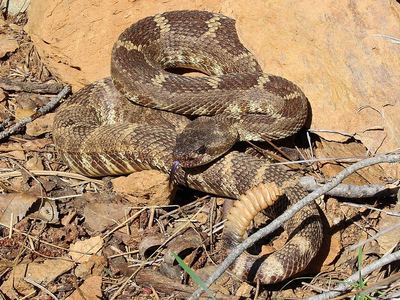
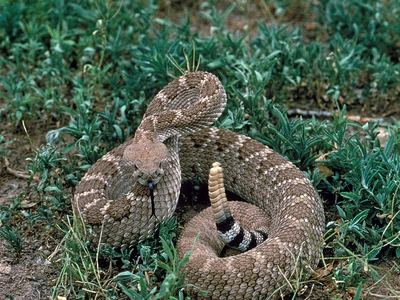
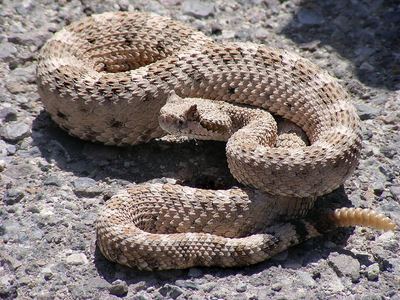
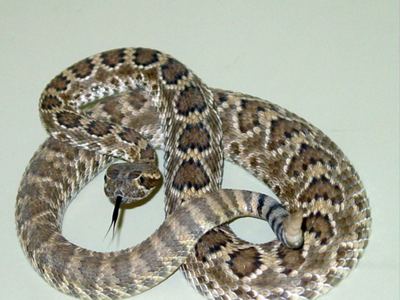
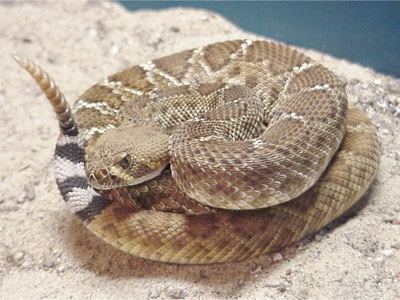
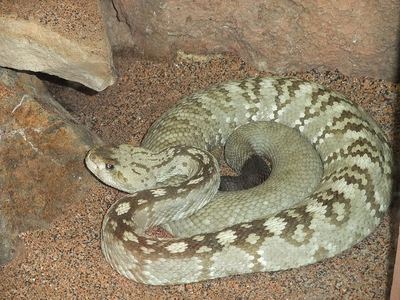
Other species of the genus Crotalus with profiles here: Western rattlesnake, Western diamondback rattlesnake, Prairie rattlesnake, Sidewinder, Mohave rattlesnake, Red diamond rattlesnake, Black-tailed rattlesnake and Eastern diamondback rattlesnake.
GBIF records read 2026-09-29. Listed: any license. Counted: CC0/CC BY only. How we count.