Eastern massasauga (Sistrurus catenatus)
The eastern massasauga is a venomous pit viper in the family Viperidae. GBIF holds 489 licensed U.S. records of it; it reaches our listing threshold in 8 states, most of all Michigan (246), Ohio (78) and Pennsylvania (55).
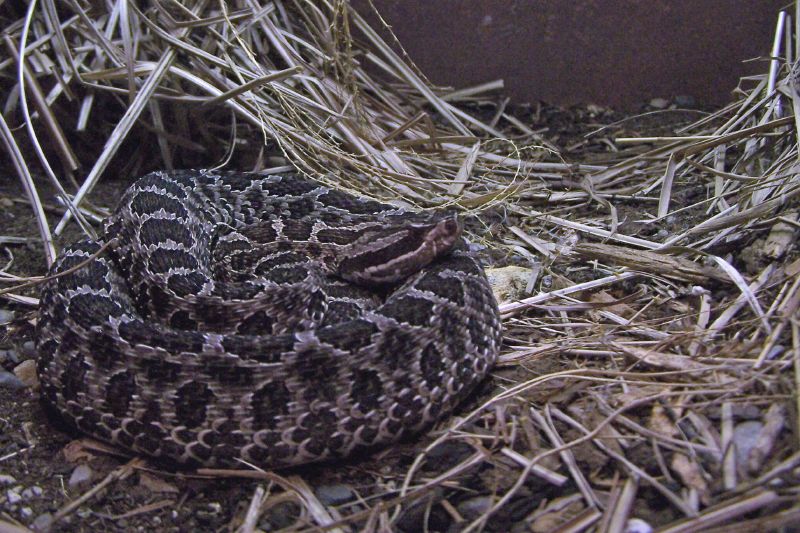

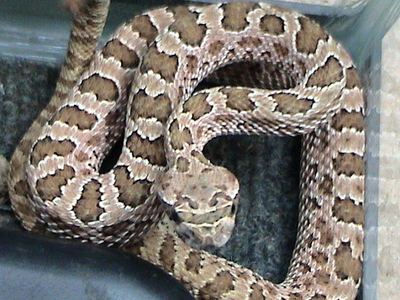
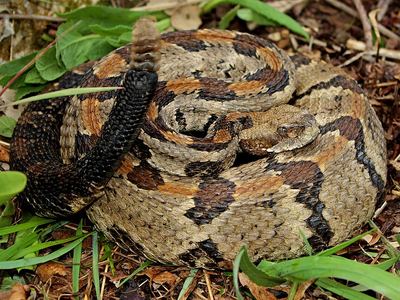
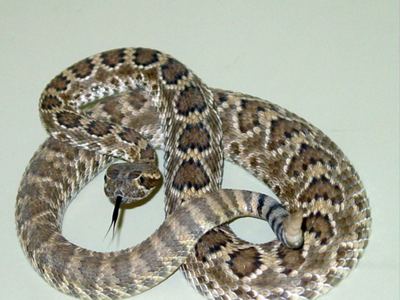
The eastern massasauga (Sistrurus catenatus) is a species of rattlesnake found in eastern North America, from southern Ontario, Canada, eastern regions of the Midwestern states, and parts of the Great Lakes region in the United States. Like all rattlesnakes, it is a pit viper and is venomous; it is the only species of venomous snake in Ontario.
From Wikipedia: Eastern massasauga, text under CC BY-SA 4.0.
Is the eastern massasauga poisonous or venomous?
Yes. The eastern massasauga is a pit viper (family Viperidae), like every rattlesnake, copperhead and cottonmouth in the U.S. Its bite needs emergency care: call 911 and keep the bitten limb still. Antivenom is given in hospital.
Snakes often mistaken for it
Species commonly confused with rattlesnakes and recorded in the same states: eastern hog-nosed snake (recorded in all 8 of its states), eastern fox snake (recorded in 6 of its 8 states), gopher snake (recorded in 4 of its 8 states), plains hog-nosed snake (recorded in 1 of its 8 states) and western foxsnake (recorded in 1 of its 8 states).
Which states have the eastern massasauga?
The eastern massasauga's U.S. record is concentrated: Michigan alone holds 50% of licensed records. It is listed in 8 states in all; the next are Ohio (78), Pennsylvania (55) and Indiana (39).
The count includes 14 records filed under the older name Sistrurus tergeminus in Indiana (2), Michigan (2) and Ohio (10). GBIF records filed under this name in Arizona, Colorado, Kansas, Nebraska, New Mexico, Oklahoma and Texas are counted as the western massasauga, the species that lives there.
| # | State | Records | Share of state snakes | Rank in state |
|---|---|---|---|---|
| 1 | Michigan | 246 | 4.7% | 8th of 17 |
| 2 | Ohio | 78 | 1.3% | 13th of 25 |
| 3 | Pennsylvania | 55 | 0.6% | 17th of 20 |
| 4 | Indiana | 39 | 1.8% | 15th of 27 |
| 5 | Illinois | 21 | 0.8% | 24th of 33 |
| 6 | New York | 19 | 0.3% | 16th of 17 |
| 7 | Iowa | 14 | 1.3% | 17th of 22 |
| 8 | Wisconsin | 12 | 1.2% | 13th of 16 |
Where the eastern massasauga is recorded in each state
Michigan
Michigan holds 246 licensed records, the 8th most recorded of 17 snakes listed there. Most of its licensed records in Michigan come from Washtenaw County, Livingston County and Oakland County. Next come Bay County (14) and Crawford County (12).
Ohio
Ohio holds 78 licensed records, the 13th most recorded of 25 snakes listed there. Most of its licensed records in Ohio come from Trumbull County, Preble County and Ashtabula County. Next come Hardin County (7) and Licking County (7).
Pennsylvania
Pennsylvania holds 55 licensed records, the 17th most recorded of 20 snakes listed there. Most of its licensed records in Pennsylvania come from Butler County, Venango County and Crawford County. Next come Allegheny County (1) and Lawrence County (1).
Indiana
Indiana holds 39 licensed records, the joint 15th most recorded of 27 snakes listed there. Most of its licensed records in Indiana come from Starke County, Porter County and Kosciusko County. Next come LaGrange County (3) and Allen County (2).
Top counties in the U.S.
| # | County | State | Records | Share of U.S. |
|---|---|---|---|---|
| 1 | Washtenaw County | Michigan | 61 | 12.5% |
| 2 | Butler County | Pennsylvania | 37 | 7.6% |
| 3 | Livingston County | Michigan | 32 | 6.5% |
| 4 | Oakland County | Michigan | 18 | 3.7% |
| 5 | Venango County | Pennsylvania | 15 | 3.1% |
| 6 | Bay County | Michigan | 14 | 2.9% |
| 7 | Crawford County | Michigan | 12 | 2.5% |
| 8 | Trumbull County | Ohio | 11 | 2.2% |
| 9 | Iosco County | Michigan | 10 | 2.0% |
| 10 | Preble County | Ohio | 10 | 2.0% |
| 11 | Jackson County | Michigan | 9 | 1.8% |
| 12 | Starke County | Indiana | 8 | 1.6% |
| 13 | Ashtabula County | Ohio | 8 | 1.6% |
| 14 | Porter County | Indiana | 7 | 1.4% |
| 15 | Berrien County | Michigan | 7 | 1.4% |
How recent are the eastern massasauga records?
The eastern massasauga record leans on older material: only 6% of dated U.S. records come from 2017–2026, and the median record is from 1940. The oldest dated record is from 1845; the busiest year was 1930, with 42 records.
| Decade | Records | Share |
|---|---|---|
| 1840s | 1 | 0.2% |
| 1860s | 1 | 0.2% |
| 1870s | 1 | 0.2% |
| 1880s | 2 | 0.5% |
| 1890s | 10 | 2.4% |
| 1900s | 23 | 5.5% |
| 1910s | 12 | 2.8% |
| 1920s | 34 | 8.1% |
| 1930s | 122 | 28.9% |
| 1940s | 23 | 5.5% |
| 1950s | 63 | 14.9% |
| 1960s | 38 | 9.0% |
| 1970s | 19 | 4.5% |
| 1980s | 17 | 4.0% |
| 1990s | 4 | 0.9% |
| 2000s | 16 | 3.8% |
| 2010s | 13 | 3.1% |
| 2020s | 23 | 5.5% |
Species recorded in the same counties
Of the 52 counties where the eastern massasauga is most recorded, 20 are also top counties for both the eastern ribbonsnake and the northern water snake; no other snake shares more. None of its closest neighbors is venomous.
| Species | Shared counties |
|---|---|
| Eastern ribbonsnake | 20 |
| Northern water snake | 20 |
| DeKay's brown snake | 19 |
| Common garter snake | 18 |
| Butler's garter snake | 15 |
| Eastern racer | 15 |
| Smooth green snake | 14 |
| Eastern milksnake | 13 |
Related species in the U.S.
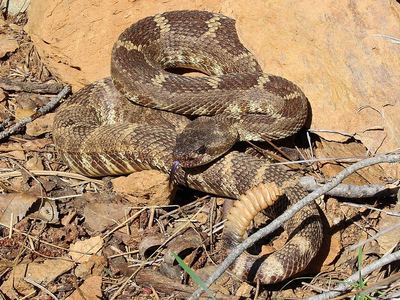
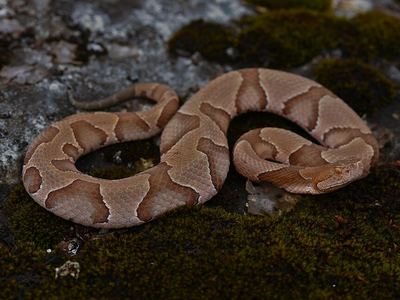
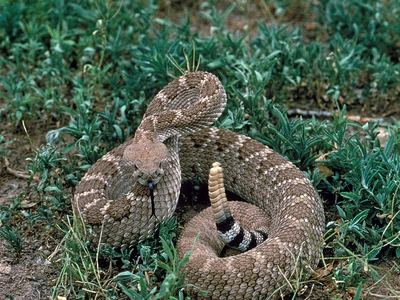
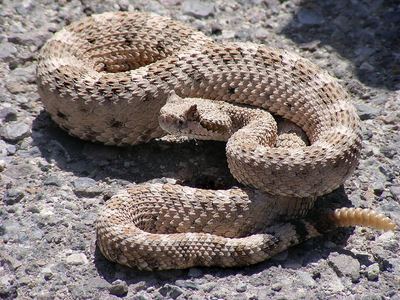
Other members of the family Viperidae with profiles here: Western rattlesnake, Eastern copperhead, Western diamondback rattlesnake, Prairie rattlesnake, Northern cottonmouth and Sidewinder.
GBIF records read 2026-09-29. Listed: any license. Counted: CC0/CC BY only. How we count.