Eastern copperhead (Agkistrodon contortrix)
The eastern copperhead is a venomous pit viper in the family Viperidae. GBIF holds 6,591 licensed U.S. records of it; it reaches our listing threshold in 27 states, most of all North Carolina (1,633), Texas (1,188) and Virginia (641). Its observation records peak in May.
,_Seitenansicht.jpg)
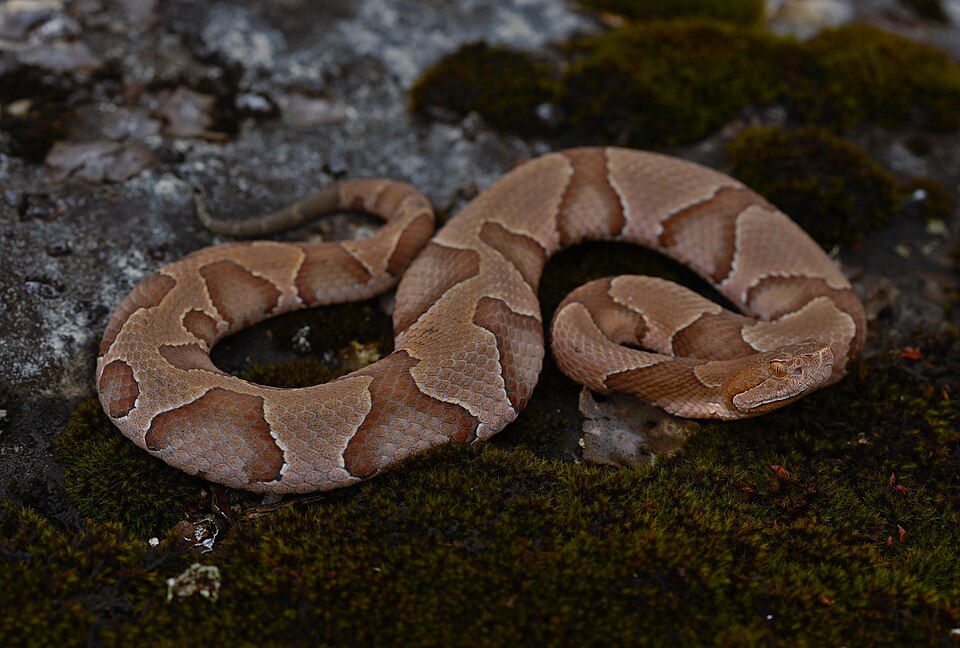
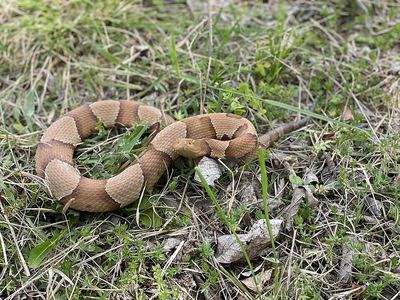
The eastern copperhead (Agkistrodon contortrix), also known simply as the copperhead, is a widespread species of venomous snake, a pit viper, endemic to eastern United States of America; it is a member of the subfamily Crotalinae in the family Viperidae. The eastern copperhead has distinctive, dark brown, hourglass-shaped markings, overlaid on a light reddish brown or brown/gray background. The body type is heavy, rather than slender.
From Wikipedia: Eastern copperhead, text under CC BY-SA 4.0.
Is the eastern copperhead poisonous or venomous?
Yes. The eastern copperhead is a pit viper (family Viperidae), like every rattlesnake, copperhead and cottonmouth in the U.S. Its bite needs emergency care: call 911 and keep the bitten limb still. Antivenom is given in hospital.
Snakes often mistaken for it
Species commonly confused with copperheads and recorded in the same states: eastern hog-nosed snake (recorded in all 27 of its states), eastern milksnake (recorded in all 27 of its states), northern water snake (recorded in all 27 of its states), eastern rat snake (recorded in 22 of its 27 states) and plain-bellied watersnake (recorded in 18 of its 27 states).
Which states have the eastern copperhead?
Records are spread over 27 states; the top three, North Carolina, Texas and Virginia, hold 53% of them.
| # | State | Records | Share of state snakes | Rank in state |
|---|---|---|---|---|
| 1 | North Carolina | 1,633 | 7.9% | 2nd of 39 |
| 2 | Texas | 1,188 | 2.9% | 11th of 86 |
| 3 | Virginia | 641 | 5.9% | 6th of 30 |
| 4 | Kansas | 615 | 4.2% | 7th of 44 |
| 5 | Oklahoma | 315 | 2.4% | 15th of 50 |
| 6 | Pennsylvania | 261 | 3.1% | 12th of 20 |
| 7 | New York | 238 | 4.0% | 7th of 17 |
| 8 | Alabama | 190 | 3.3% | 10th of 44 |
| 9 | South Carolina | 179 | 4.9% | 5th of 40 |
| 10 | Maryland | 144 | 4.0% | 9th of 20 |
| 11 | Louisiana | 139 | 2.8% | 11th of 41 |
| 12 | Tennessee | 139 | 5.3% | 5th of 32 |
| 13 | Georgia | 131 | 2.1% | 11th of 44 |
| 14 | Arkansas | 130 | 2.5% | 6th of 36 |
| 15 | Kentucky | 102 | 8.0% | 4th of 24 |
| 16 | Ohio | 94 | 1.5% | 11th of 25 |
| 17 | Connecticut | 82 | 7.1% | 5th of 14 |
| 18 | Missouri | 65 | 3.5% | 8th of 36 |
| 19 | Indiana | 62 | 2.8% | 11th of 27 |
| 20 | Nebraska | 53 | 2.2% | 12th of 31 |
| 21 | Illinois | 49 | 1.8% | 18th of 33 |
| 22 | West Virginia | 42 | 2.6% | 13th of 18 |
| 23 | Mississippi | 37 | 2.0% | 15th of 38 |
| 24 | Florida | 19 | 0.1% | 44th of 49 |
| 25 | Delaware | 17 | 2.5% | 8th of 14 |
| 26 | Massachusetts | 12 | 0.6% | 11th of 13 |
| 27 | New Jersey | 10 | 0.9% | 16th of 18 |
When is the eastern copperhead seen?
Across the U.S., observation records of the eastern copperhead run mostly April through October, peaking in May with 19% of them. Almost none are from December to February.
Season by state
Observation records run through most of the year in Louisiana. Among states whose main season falls within one calendar year, it starts earliest in March (Texas) and latest in May (New York and Virginia). The most common peak month is April, shared by Arkansas, Georgia, Louisiana and Texas.
| State | Main season | Peak month | Observation records |
|---|---|---|---|
| North Carolina | April through October | July | 273 |
| Texas | March through October | April | 245 |
| New York | May through September | August | 217 |
| Virginia | May through September | July | 148 |
| Tennessee | April through September | July | 102 |
| Kansas | April through September | September | 97 |
| Arkansas | April through September | April | 89 |
| Georgia | April through October | April | 79 |
| Kentucky | April through September | June | 79 |
| South Carolina | April through October | May | 54 |
| Maryland | April through September | June | 51 |
| Missouri | April through September | September | 45 |
| Louisiana | most of the year | April | 43 |
| Alabama | April through September | May | 37 |
Where the eastern copperhead is recorded in each state
North Carolina
North Carolina holds 1,633 licensed records, the 2nd most recorded of 39 snakes listed there. Its observation records in North Carolina run mostly April through October, peaking in July; most licensed records come from Sampson County, Wake County and Moore County. Next come Orange County (71) and Bladen County (65).
Texas
Texas holds 1,188 licensed records, the 11th most recorded of 86 snakes listed there. Its observation records in Texas run mostly March through October, peaking in April; most licensed records come from Brazos County, Terrell County and Wharton County. Next come Dallas County (50) and Harris County (48).
Virginia
Virginia holds 641 licensed records, the 6th most recorded of 30 snakes listed there. Its observation records in Virginia run mostly May through September, peaking in July; most licensed records come from Fairfax County, Bedford County and Henrico County. Next come Spotsylvania County (26) and Chesterfield County (24).
Kansas
Kansas holds 615 licensed records, the 7th most recorded of 44 snakes listed there. Its observation records in Kansas run mostly April through September, peaking in September; most licensed records come from Douglas County, Marshall County and Linn County. Next come Miami County (53) and Franklin County (44).
Oklahoma
Oklahoma holds 315 licensed records, the 15th most recorded of 50 snakes listed there. Most of its licensed records in Oklahoma come from Atoka County, McCurtain County and LeFlore County. Next come Cherokee County (25) and Marshall County (21).
Pennsylvania
Pennsylvania holds 261 licensed records, the 12th most recorded of 20 snakes listed there. Most of its licensed records in Pennsylvania come from Allegheny County, Westmoreland County and Montgomery County. Next come Wyoming County (14) and Fayette County (11).
New York
New York holds 238 licensed records, the 7th most recorded of 17 snakes listed there. Its observation records in New York run mostly May through September, peaking in August; most licensed records come from Ulster County, Orange County and Rockland County. Next come Dutchess County (2) and Putnam County (1).
Alabama
Alabama holds 190 licensed records, the 10th most recorded of 44 snakes listed there. Its observation records in Alabama run mostly April through September, peaking in May; most licensed records come from Lee County, Jefferson County and Chambers County. Next come Covington County (9) and Escambia County (8).
South Carolina
South Carolina holds 179 licensed records, the joint 5th most recorded of 40 snakes listed there. Its observation records in South Carolina run mostly April through October, peaking in May; most licensed records come from Charleston County, Berkeley County and Jasper County. Next come Oconee County (15) and Greenville County (14).
Maryland
Maryland holds 144 licensed records, the 9th most recorded of 20 snakes listed there. Its observation records in Maryland run mostly April through September, peaking in June; most licensed records come from Montgomery County, Prince George's County and Baltimore County. Next come Calvert County (11) and Cecil County (10).
Louisiana
Louisiana holds 139 licensed records, the 11th most recorded of 41 snakes listed there. Its observation records in Louisiana run through most of the year, peaking in April; most licensed records come from Ouachita Parish, East Baton Rouge Parish and Lafayette Parish. Next come Natchitoches Parish (10) and Vernon Parish (10).
Tennessee
Tennessee holds 139 licensed records, the 5th most recorded of 32 snakes listed there. Its observation records in Tennessee run mostly April through September, peaking in July; most licensed records come from Stewart County, Blount County and Davidson County. Next come Scott County (10) and Shelby County (7).
Georgia
Georgia holds 131 licensed records, the 11th most recorded of 44 snakes listed there. Its observation records in Georgia run mostly April through October, peaking in April; most licensed records come from Chatham County, Baker County and DeKalb County. Next come Clarke County (6) and Union County (5).
Arkansas
Arkansas holds 130 licensed records, the joint 6th most recorded of 36 snakes listed there. Its observation records in Arkansas run mostly April through September, peaking in April; most licensed records come from Columbia County, Polk County and Washington County. Next come Pulaski County (6) and Greene County (5).
Kentucky
Kentucky holds 102 licensed records, the joint 4th most recorded of 24 snakes listed there. Its observation records in Kentucky run mostly April through September, peaking in June; most licensed records come from Madison County, Trigg County and Lyon County. Next come Wolfe County (6) and Menifee County (6).
Ohio
Ohio holds 94 licensed records, the 11th most recorded of 25 snakes listed there. Most of its licensed records in Ohio come from Scioto County, Columbiana County and Adams County. Next come Hocking County (9) and Fairfield County (8).
Connecticut
Connecticut holds 82 licensed records, the 5th most recorded of 14 snakes listed there. Most of its licensed records in Connecticut come from New Haven County, Fairfield County and Hartford County. Next come Middlesex County (3).
Missouri
Missouri holds 65 licensed records, the 8th most recorded of 36 snakes listed there. Its observation records in Missouri run mostly April through September, peaking in September; most licensed records come from Jefferson County, Boone County and Wayne County. Next come Franklin County (4) and Shannon County (3).
Indiana
Indiana holds 62 licensed records, the 11th most recorded of 27 snakes listed there. Most of its licensed records in Indiana come from Morgan County, Monroe County and Harrison County. Next come Brown County (4) and Clark County (2).
Nebraska
Nebraska holds 53 licensed records, the 12th most recorded of 31 snakes listed there. Most of its licensed records in Nebraska come from Gage County, Pawnee County and Richardson County.
Illinois
Illinois holds 49 licensed records, the 18th most recorded of 33 snakes listed there. Most of its licensed records in Illinois come from Union County, Jersey County and Jackson County. Next come Monroe County (4) and Randolph County (3).
West Virginia
West Virginia holds 42 licensed records, the 13th most recorded of 18 snakes listed there. Most of its licensed records in West Virginia come from Berkeley County, Morgan County and Cabell County. Next come Fayette County (3) and Mineral County (3).
Mississippi
Mississippi holds 37 licensed records, the 15th most recorded of 38 snakes listed there. Most of its licensed records in Mississippi come from Panola County, Forrest County and Lafayette County. Next come Oktibbeha County (3) and Perry County (3).
Top counties in the U.S.
| # | County | State | Records | Share of U.S. |
|---|---|---|---|---|
| 1 | Ulster County | New York | 224 | 3.4% |
| 2 | Sampson County | North Carolina | 173 | 2.6% |
| 3 | Wake County | North Carolina | 170 | 2.6% |
| 4 | Douglas County | Kansas | 121 | 1.8% |
| 5 | Brazos County | Texas | 116 | 1.8% |
| 6 | Terrell County | Texas | 111 | 1.7% |
| 7 | Moore County | North Carolina | 94 | 1.4% |
| 8 | Wharton County | Texas | 73 | 1.1% |
| 9 | Orange County | North Carolina | 71 | 1.1% |
| 10 | Marshall County | Kansas | 70 | 1.1% |
| 11 | New Haven County | Connecticut | 65 | 1.0% |
| 12 | Bladen County | North Carolina | 65 | 1.0% |
| 13 | Allegheny County | Pennsylvania | 64 | 1.0% |
| 14 | Randolph County | North Carolina | 63 | 1.0% |
| 15 | Montgomery County | North Carolina | 57 | 0.9% |
How recent are the eastern copperhead records?
The eastern copperhead record leans on older material: only 27% of dated U.S. records come from 2017–2026, and the median record is from 1988. The oldest dated record is from 1860; the busiest year was 2024, with 277 records.
| Decade | Records | Share |
|---|---|---|
| 1860s | 2 | 0.0% |
| 1870s | 8 | 0.1% |
| 1880s | 5 | 0.1% |
| 1890s | 21 | 0.3% |
| 1900s | 30 | 0.5% |
| 1910s | 47 | 0.8% |
| 1920s | 119 | 1.9% |
| 1930s | 289 | 4.6% |
| 1940s | 475 | 7.6% |
| 1950s | 391 | 6.3% |
| 1960s | 731 | 11.7% |
| 1970s | 494 | 7.9% |
| 1980s | 621 | 9.9% |
| 1990s | 305 | 4.9% |
| 2000s | 631 | 10.1% |
| 2010s | 706 | 11.3% |
| 2020s | 1,380 | 22.1% |
Species recorded in the same counties
Of the 308 counties where the eastern copperhead is most recorded, 156 are also top counties for the eastern racer, more than for any other snake.
| Species | Shared counties |
|---|---|
| Eastern racer | 156 |
| Ring-necked snake | 155 |
| Rough greensnake | 134 |
| DeKay's brown snake | 131 |
| Eastern rat snake | 129 |
| Timber rattlesnake venomous | 129 |
| Eastern wormsnake | 128 |
| Common garter snake | 123 |
Related species in the U.S.
Other species of the genus Agkistrodon with profiles here: Northern cottonmouth, Broad-banded copperhead and Florida cottonmouth.
GBIF records read 2026-09-29. Listed: any license. Counted: CC0/CC BY only. How we count.