Snakes and spiders in McCurtain County, Oklahoma
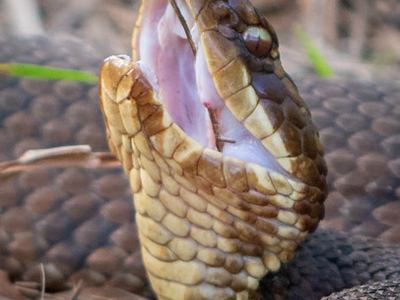
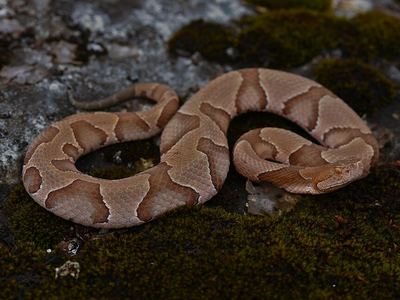
McCurtain County, home of Idabel, has 22 snake and 9 spider species on record, from 608 licensed snake and 46 spider records. Venomous species here: the northern cottonmouth and the eastern copperhead.
Are there venomous snakes or spiders in McCurtain County?
Yes. The northern cottonmouth: 148 licensed records, 34% of all Oklahoma records of it. The eastern copperhead: 34 licensed records, 11% of all Oklahoma records of it.
What snakes are in McCurtain County?
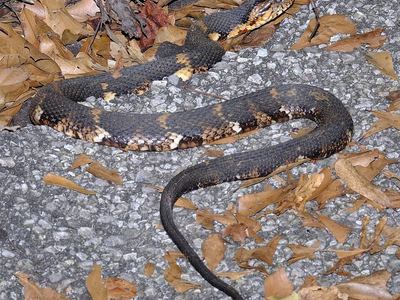
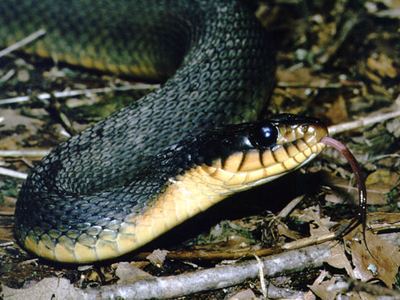
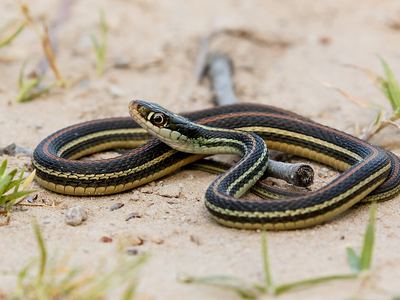
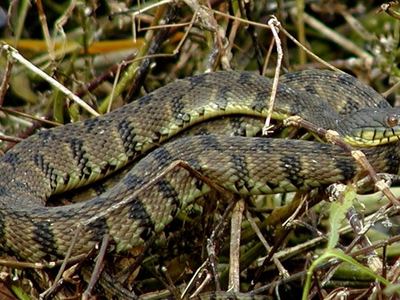
In all, 22 snake species are on the McCurtain County list. The most recorded are the northern cottonmouth (148), the southern watersnake (50) and the plain-bellied watersnake (47). McCurtain County holds more than half of all Oklahoma records of the southern watersnake and the mud snake.
| # | Species | Records | Share of Oklahoma records |
|---|---|---|---|
| 1 | Northern cottonmouth venomous Agkistrodon piscivorus | 148 | 34% |
| 2 | Southern watersnake Nerodia fasciata | 50 | 74% |
| 3 | Plain-bellied watersnake Nerodia erythrogaster | 47 | 6% |
| 4 | Western ribbon snake Thamnophis proximus | 41 | 7% |
| 5 | Diamondback water snake Nerodia rhombifer | 40 | 8% |
| 6 | Eastern copperhead venomous Agkistrodon contortrix | 34 | 11% |
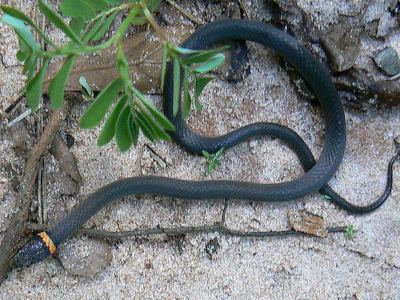
| 7 | Eastern racer Coluber constrictor | 27 | 5% |
| 8 | Ring-necked snake Diadophis punctatus | 24 | 3% |
| 9 | DeKay's brown snake Storeria dekayi | 22 | 6% |
| 10 | Northern water snake Nerodia sipedon | 20 | 11% |
| 11 | Mud snake Farancia abacura | 17 | 63% |
| 12 | Western rat snake Pantherophis obsoletus | 15 | 3% |
| 13 | Graham's crayfish snake Regina grahamii | 14 | 11% |
| 14 | Western worm snake Carphophis vermis | 12 | 5% |
| 15 | Coachwhip Masticophis flagellum | 11 | 2% |
| 16 | Common garter snake Thamnophis sirtalis | 11 | 4% |
| 17 | Speckled kingsnake Lampropeltis holbrooki | 10 | 4% |
| 18 | Flathead snake Tantilla gracilis | 9 | 1% |
| 19 | Rough earthsnake Haldea striatula | 9 | 3% |
| 20 | Eastern wormsnake Carphophis amoenus | 5 | 7% |
| 21 | Rough greensnake Opheodrys aestivus | 5 | 1% |
| 22 | Prairie kingsnake Lampropeltis calligaster | 1 | 0% |
What spiders are in McCurtain County?
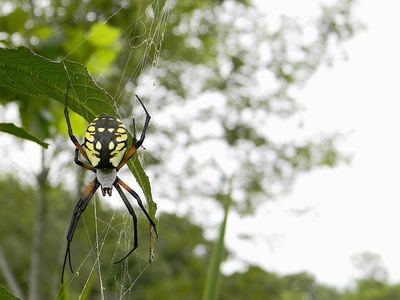
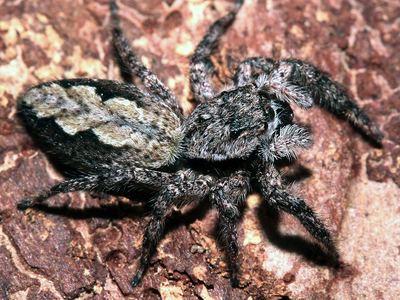
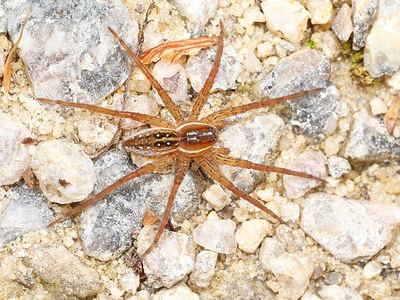
In all, 9 spider species are on the McCurtain County list. The most recorded are the black-and-yellow argiope (4), the familiar jumping spider (4) and the sixspotted fishing spider (3).
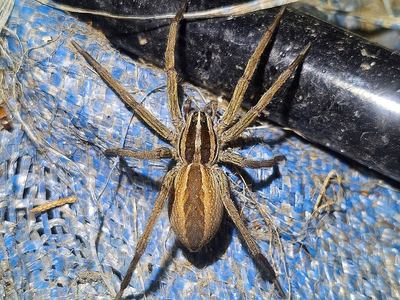
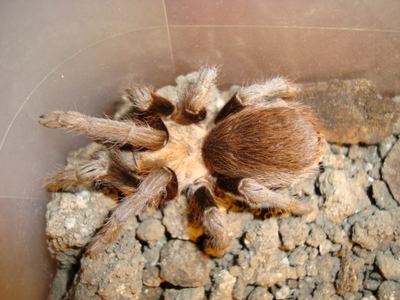
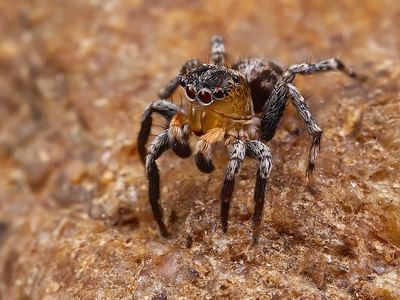
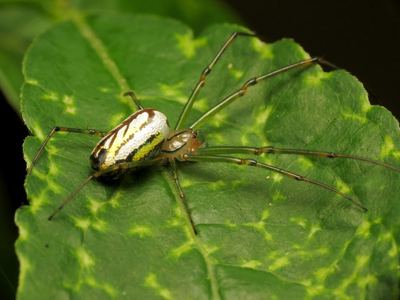
| # | Species | Records | Share of Oklahoma records |
|---|---|---|---|
| 1 | Black-and-yellow argiope Argiope aurantia | 4 | 2% |
| 2 | Familiar jumping spider Platycryptus undatus | 4 | 2% |
| 3 | Sixspotted fishing spider Dolomedes triton | 3 | 16% |
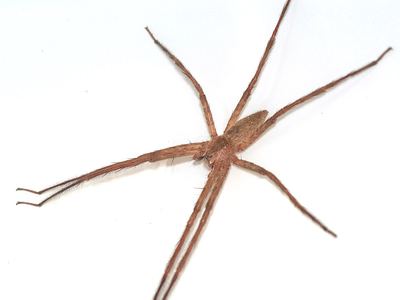
| 4 | Nursery web spider Pisaurina mira | 1 | 1% |
| 5 | Rabid wolf spider Rabidosa rabida | 1 | 1% |
| 6 | Texas brown tarantula Aphonopelma hentzi | 1 | 1% |
| 7 | Flea jumping spider Naphrys pulex | — | — |
| 8 | Orchard orbweaver Leucauge venusta | — | — |
| 9 | Spiny-backed orbweaver Gasteracantha cancriformis | — | — |
When are spiders out in McCurtain County?
Observation records of spiders in McCurtain County run mostly April through September, peaking in June with 31% of them; across Oklahoma the peak is September.
What stands out in McCurtain County
Species for which McCurtain County holds a large share of all Oklahoma records: the southern watersnake, 74% (50 of 68); the mud snake, 63% (17 of 27); the northern cottonmouth, 34% (148 of 429).
Common in Oklahoma, not on the McCurtain County list
Among the snakes most recorded across Oklahoma, these do not reach the county list: the western ground snake (1,354 statewide), the lined snake (480 statewide) and the western diamondback rattlesnake (417 statewide). Few records here can mean the species is rare in the county, or that few people have looked.
Among the spiders most recorded across Oklahoma, these do not reach the county list: the bold jumper (511 statewide), the dimorphic jumper (150 statewide), the brown recluse (137 statewide), the striped lynx spider (98 statewide), the green lynx spider (93 statewide) and the spotted orbweaver (92 statewide). Few records here can mean the species is rare in the county, or that few people have looked.
Harmless lookalikes in McCurtain County
Copperheads are on the county list, and so are harmless species often taken for them: the plain-bellied watersnake and the northern water snake. Cottonmouths are on the county list, and so are harmless species often taken for them: the southern watersnake, the plain-bellied watersnake, the diamondback water snake and the northern water snake.
McCurtain County among Oklahoma counties
By licensed snake records McCurtain County ranks 5th of 77 Oklahoma counties with any.
Other Oklahoma counties with their own page: Tulsa County, Comanche County, LeFlore County, Cleveland County, Okmulgee County, Marshall County, Rogers County and Atoka County.
The whole state: venomous species in Oklahoma, all snakes, all spiders.
GBIF records read 2026-09-29. Listed: any license. Counted: CC0/CC BY only. How we count.