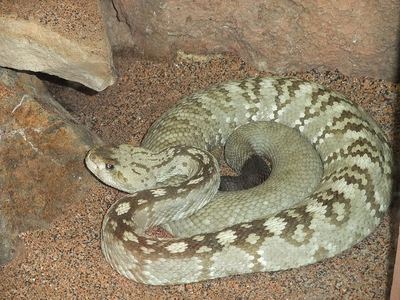
Eastern diamondback rattlesnake (Crotalus adamanteus)
The eastern diamondback rattlesnake is a venomous pit viper in the family Viperidae. GBIF holds 533 licensed U.S. records of it; it reaches our listing threshold in 5 states, most of all Florida (396), Georgia (74) and Alabama (30). Its observation records peak in October.
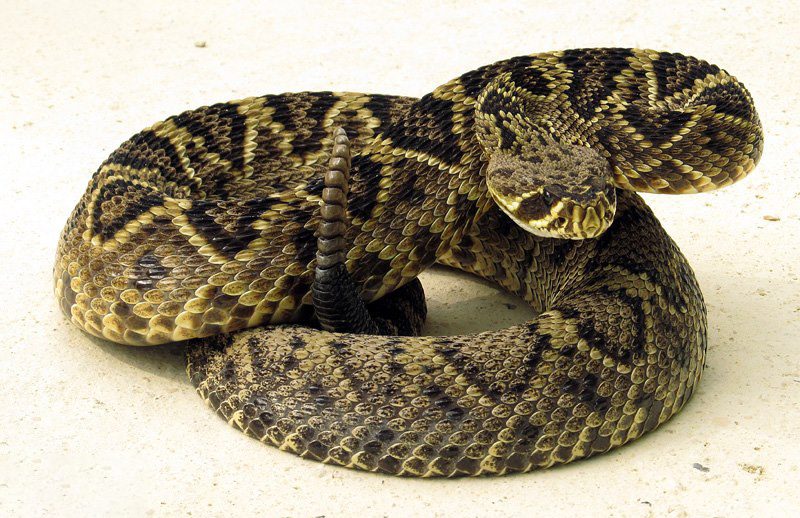

The eastern diamondback rattlesnake (Crotalus adamanteus) is a species of pit viper in the family Viperidae. The species is endemic to the Southeastern United States. It is the largest rattlesnake species and one of the heaviest venomous snakes in the Americas.
From Wikipedia: Eastern diamondback rattlesnake, text under CC BY-SA 4.0.
Is the eastern diamondback rattlesnake poisonous or venomous?
Yes. The eastern diamondback rattlesnake is a pit viper (family Viperidae), like every rattlesnake, copperhead and cottonmouth in the U.S. Its bite needs emergency care: call 911 and keep the bitten limb still. Antivenom is given in hospital.
Snakes often mistaken for it
Species commonly confused with rattlesnakes and recorded in the same states: eastern hog-nosed snake (recorded in all 5 of its states) and pine snake (recorded in all 5 of its states).
Which states have the eastern diamondback rattlesnake?
The eastern diamondback rattlesnake's U.S. record is concentrated: Florida alone holds 74% of licensed records. It is listed in 5 states in all; the next are Georgia (74), Alabama (30) and Mississippi (20).
| # | State | Records | Share of state snakes | Rank in state |
|---|---|---|---|---|
| 1 | Florida | 396 | 1.9% | 12th of 49 |
| 2 | Georgia | 74 | 1.2% | 20th of 44 |
| 3 | Alabama | 30 | 0.5% | 34th of 44 |
| 4 | Mississippi | 20 | 1.1% | 25th of 38 |
| 5 | South Carolina | 7 | 0.2% | 40th of 40 |
When is the eastern diamondback rattlesnake seen?
Across the U.S., observation records of the eastern diamondback rattlesnake run through most of the year, peaking in October with 17% of them. Winter (December to February) holds 18% of them.
Where the eastern diamondback rattlesnake is recorded in each state
Florida
Florida holds 396 licensed records, the 12th most recorded of 49 snakes listed there. Its observation records in Florida run through most of the year, peaking in October; most licensed records come from Miami-Dade County, Liberty County and Wakulla County. Next come Marion County (28) and Leon County (25).
Georgia
Georgia holds 74 licensed records, the 20th most recorded of 44 snakes listed there. Most of its licensed records in Georgia come from Grady County, Glynn County and Baker County. Next come Mitchell County (4) and Charlton County (4).
Alabama
Alabama holds 30 licensed records, the joint 34th most recorded of 44 snakes listed there. Most of its licensed records in Alabama come from Covington County, Houston County and Escambia County. Next come Baldwin County (2) and Mobile County (2).
Top counties in the U.S.
| # | County | State | Records | Share of U.S. |
|---|---|---|---|---|
| 1 | Miami-Dade County | Florida | 43 | 8.1% |
| 2 | Liberty County | Florida | 37 | 6.9% |
| 3 | Wakulla County | Florida | 32 | 6.0% |
| 4 | Marion County | Florida | 28 | 5.3% |
| 5 | Leon County | Florida | 25 | 4.7% |
| 6 | Collier County | Florida | 16 | 3.0% |
| 7 | Grady County | Georgia | 16 | 3.0% |
| 8 | Alachua County | Florida | 15 | 2.8% |
| 9 | Covington County | Alabama | 14 | 2.6% |
| 10 | Franklin County | Florida | 14 | 2.6% |
| 11 | Polk County | Florida | 14 | 2.6% |
| 12 | Jackson County | Florida | 12 | 2.3% |
| 13 | Glynn County | Georgia | 12 | 2.3% |
| 14 | Lee County | Florida | 11 | 2.1% |
| 15 | Lake County | Florida | 9 | 1.7% |
How recent are the eastern diamondback rattlesnake records?
Records of the eastern diamondback rattlesnake span old collections and new observations: 41% date from 2017–2026, and the median record is from 2013. The oldest dated record is from 1887; the busiest year was 2025, with 30 records.
| Decade | Records | Share |
|---|---|---|
| 1880s | 1 | 0.2% |
| 1890s | 2 | 0.4% |
| 1900s | 3 | 0.6% |
| 1910s | 4 | 0.8% |
| 1920s | 11 | 2.3% |
| 1930s | 20 | 4.1% |
| 1940s | 11 | 2.3% |
| 1950s | 23 | 4.8% |
| 1960s | 34 | 7.0% |
| 1970s | 19 | 3.9% |
| 1980s | 15 | 3.1% |
| 1990s | 8 | 1.7% |
| 2000s | 50 | 10.4% |
| 2010s | 126 | 26.1% |
| 2020s | 156 | 32.3% |
Species recorded in the same counties
Of the 39 counties where the eastern diamondback rattlesnake is most recorded, 22 are also top counties for the mud snake, more than for any other snake.
| Species | Shared counties |
|---|---|
| Mud snake | 22 |
| Corn snake | 21 |
| Scarlet snake | 20 |
| Southern watersnake | 20 |
| Coachwhip | 19 |
| Eastern racer | 19 |
| Northern cottonmouth venomous | 18 |
| Eastern ribbonsnake | 17 |
Related species in the U.S.
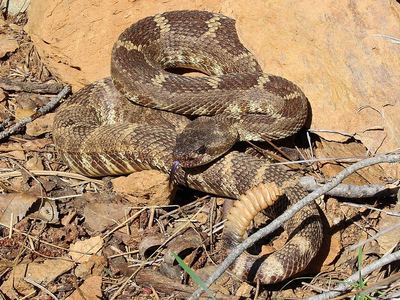
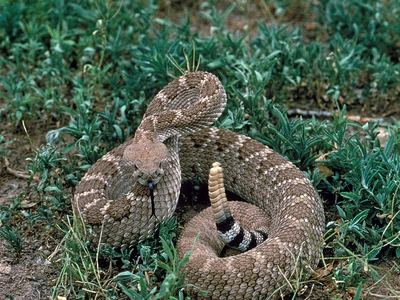
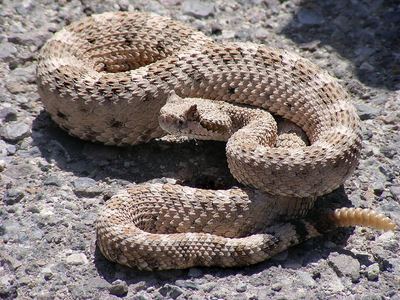
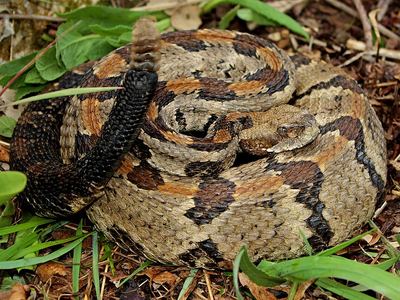
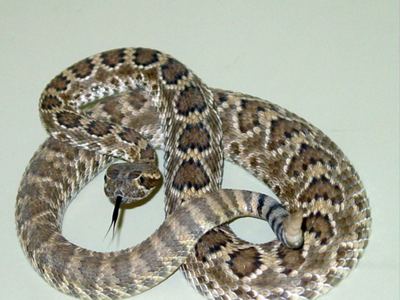
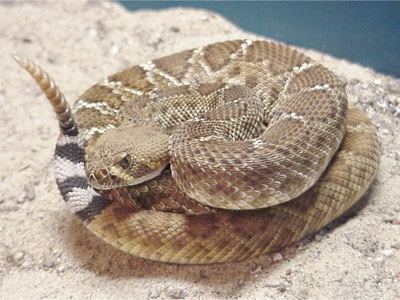
Other species of the genus Crotalus with profiles here: Western rattlesnake, Western diamondback rattlesnake, Prairie rattlesnake, Sidewinder, Timber rattlesnake, Mohave rattlesnake, Red diamond rattlesnake and Black-tailed rattlesnake.
GBIF records read 2026-09-29. Listed: any license. Counted: CC0/CC BY only. How we count.