Corn snake (Pantherophis guttatus)
The corn snake is a non-venomous snake in the family Colubridae. GBIF holds 2,366 licensed U.S. records of it; it reaches our listing threshold in 18 states, most of all North Carolina (740), Florida (700) and Texas (202). Its observation records peak in May.
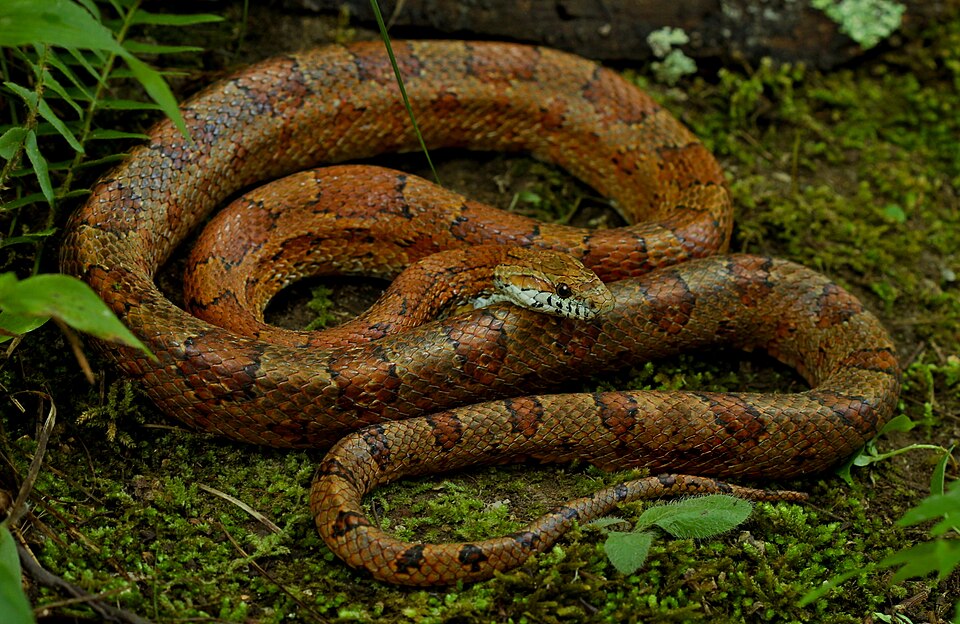
,_Seitenansicht.jpg)
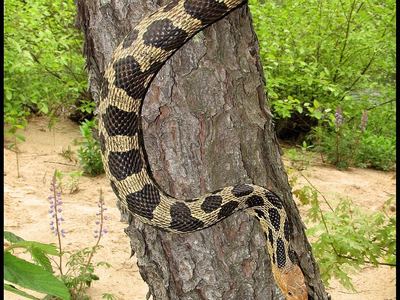
The corn snake (Pantherophis guttatus), sometimes called the red rat snake, is a species of North American rat snake in the family Colubridae. The species subdues its small prey by constriction. It is found throughout the southeastern and central United States.
From Wikipedia: Corn snake, text under CC BY-SA 4.0.
Is the corn snake poisonous or venomous?
No. The corn snake is non-venomous: it belongs to the family Colubridae, not to the pit vipers or coral snakes, the only U.S. land snakes with medically dangerous venom. It may bite if handled; clean the bite like any small wound.
Often mistaken for
The corn snake is non-venomous, but people often take it for copperheads (both are recorded in 16 of its 18 states).
Which states have the corn snake?
Records are spread over 18 states; the top three, North Carolina, Florida and Texas, hold 69% of them.
| # | State | Records | Share of state snakes | Rank in state |
|---|---|---|---|---|
| 1 | North Carolina | 740 | 3.6% | 11th of 39 |
| 2 | Florida | 700 | 3.4% | 5th of 49 |
| 3 | Texas | 202 | 0.5% | 43rd of 86 |
| 4 | South Carolina | 137 | 3.8% | 8th of 40 |
| 5 | Kansas | 118 | 0.8% | 31st of 44 |
| 6 | Alabama | 110 | 1.9% | 19th of 44 |
| 7 | Virginia | 91 | 0.8% | 23rd of 30 |
| 8 | Georgia | 78 | 1.3% | 17th of 44 |
| 9 | Mississippi | 40 | 2.2% | 13th of 38 |
| 10 | Tennessee | 39 | 1.5% | 18th of 32 |
| 11 | Louisiana | 19 | 0.4% | 30th of 41 |
| 12 | Maryland | 15 | 0.4% | 20th of 20 |
| 13 | New Mexico | 15 | 0.2% | 40th of 56 |
| 14 | Nebraska | 13 | 0.6% | 24th of 31 |
| 15 | Oklahoma | 10 | 0.1% | 48th of 50 |
| 16 | Kentucky | 6 | 0.5% | 19th of 24 |
| 17 | California | 5 | 0.0% | 44th of 46 |
| 18 | New Jersey | 3 | 0.3% | 17th of 18 |
When is the corn snake seen?
Across the U.S., observation records of the corn snake run through most of the year, peaking in May with 20% of them. Winter (December to February) holds 14% of them.
Where the corn snake is recorded in each state
North Carolina
North Carolina holds 740 licensed records, the 11th most recorded of 39 snakes listed there. Most of its licensed records in North Carolina come from Sampson County, Bladen County and Moore County. Next come Dare County (49) and Brunswick County (33).
Florida
Florida holds 700 licensed records, the 5th most recorded of 49 snakes listed there. Its observation records in Florida run through most of the year, peaking in May; most licensed records come from Miami-Dade County, Monroe County and Lee County. Next come Franklin County (29) and Collier County (24).
Texas
Texas holds 202 licensed records, the 43rd most recorded of 86 snakes listed there. Most of its licensed records in Texas come from Brazos County, Val Verde County and Hidalgo County. Next come Coke County (8) and San Patricio County (6).
South Carolina
South Carolina holds 137 licensed records, the 8th most recorded of 40 snakes listed there. Most of its licensed records in South Carolina come from Charleston County, Lexington County and Jasper County. Next come Berkeley County (10) and Horry County (7).
Kansas
Kansas holds 118 licensed records, the 31st most recorded of 44 snakes listed there. Most of its licensed records in Kansas come from Chase County, Riley County and Jewell County. Next come Douglas County (6) and Marshall County (6).
Alabama
Alabama holds 110 licensed records, the joint 19th most recorded of 44 snakes listed there. Most of its licensed records in Alabama come from Lee County, Baldwin County and Mobile County. Next come Macon County (5) and Russell County (5).
Virginia
Virginia holds 91 licensed records, the 23rd most recorded of 30 snakes listed there. Most of its licensed records in Virginia come from Chesterfield County, Buckingham County and Goochland County. Next come Bedford County (6) and Amherst County (6).
Georgia
Georgia holds 78 licensed records, the joint 17th most recorded of 44 snakes listed there. Most of its licensed records in Georgia come from Glynn County, Charlton County and Baker County. Next come McIntosh County (5) and Burke County (4).
Mississippi
Mississippi holds 40 licensed records, the 13th most recorded of 38 snakes listed there. Most of its licensed records in Mississippi come from Harrison County, Adams County and Jackson County. Next come Lafayette County (5) and Kemper County (2).
Tennessee
Tennessee holds 39 licensed records, the 18th most recorded of 32 snakes listed there. Most of its licensed records in Tennessee come from McMinn County, Anderson County and Greene County. Next come Hardeman County (4) and Sevier County (4).
Top counties in the U.S.
| # | County | State | Records | Share of U.S. |
|---|---|---|---|---|
| 1 | Miami-Dade County | Florida | 134 | 5.7% |
| 2 | Sampson County | North Carolina | 132 | 5.6% |
| 3 | Monroe County | Florida | 85 | 3.6% |
| 4 | Bladen County | North Carolina | 85 | 3.6% |
| 5 | Moore County | North Carolina | 65 | 2.7% |
| 6 | Lee County | Florida | 52 | 2.2% |
| 7 | Dare County | North Carolina | 49 | 2.1% |
| 8 | Charleston County | South Carolina | 42 | 1.8% |
| 9 | Brunswick County | North Carolina | 33 | 1.4% |
| 10 | Scotland County | North Carolina | 33 | 1.4% |
| 11 | Wake County | North Carolina | 32 | 1.4% |
| 12 | Richmond County | North Carolina | 31 | 1.3% |
| 13 | Franklin County | Florida | 29 | 1.2% |
| 14 | Columbus County | North Carolina | 29 | 1.2% |
| 15 | Craven County | North Carolina | 29 | 1.2% |
How recent are the corn snake records?
The corn snake record leans on older material: only 28% of dated U.S. records come from 2017–2026, and the median record is from 1988. The oldest dated record is from 1854; the busiest year was 2022, with 98 records.
| Decade | Records | Share |
|---|---|---|
| 1850s | 3 | 0.1% |
| 1860s | 1 | 0.0% |
| 1870s | 2 | 0.1% |
| 1880s | 7 | 0.3% |
| 1890s | 3 | 0.1% |
| 1900s | 4 | 0.2% |
| 1910s | 26 | 1.2% |
| 1920s | 28 | 1.3% |
| 1930s | 107 | 4.8% |
| 1940s | 95 | 4.3% |
| 1950s | 213 | 9.5% |
| 1960s | 229 | 10.3% |
| 1970s | 208 | 9.3% |
| 1980s | 223 | 10.0% |
| 1990s | 121 | 5.4% |
| 2000s | 200 | 9.0% |
| 2010s | 286 | 12.8% |
| 2020s | 475 | 21.3% |
Species recorded in the same counties
Of the 150 counties where the corn snake is most recorded, 68 are also top counties for the eastern rat snake, more than for any other snake. Venomous species among its neighbors: the northern cottonmouth.
| Species | Shared counties |
|---|---|
| Eastern rat snake | 68 |
| Eastern racer | 67 |
| Rough greensnake | 59 |
| Eastern hog-nosed snake | 57 |
| Ring-necked snake | 56 |
| DeKay's brown snake | 55 |
| Northern cottonmouth venomous | 55 |
| Southern watersnake | 53 |
Related species in the U.S.
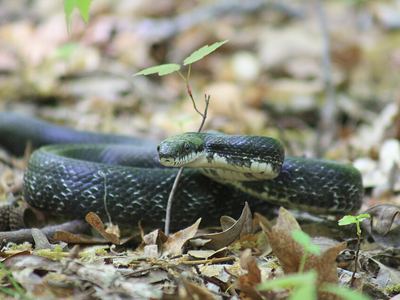
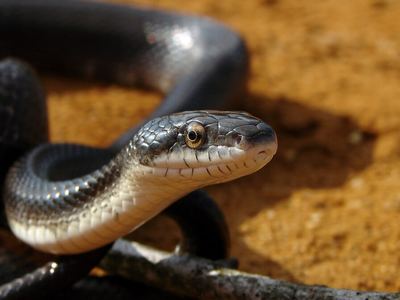
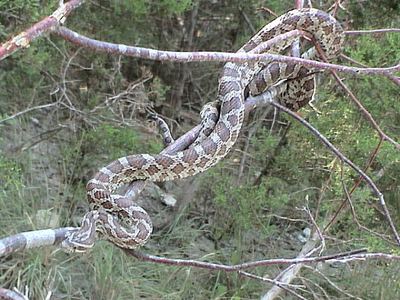
Other species of the genus Pantherophis with profiles here: Eastern rat snake, Western rat snake, Great Plains rat snake and Eastern fox snake.
GBIF records read 2026-09-29. Listed: any license. Counted: CC0/CC BY only. How we count.