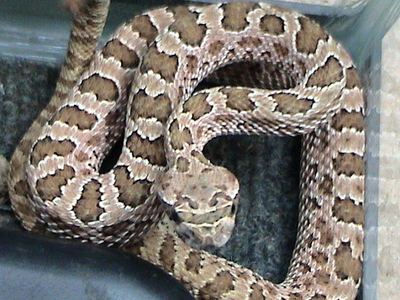
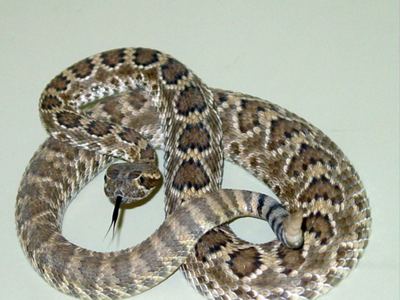
Western massasauga (Sistrurus tergeminus)
The western massasauga is a venomous pit viper in the family Viperidae. GBIF holds 1,051 licensed U.S. records of it; it reaches our listing threshold in 8 states, most of all Kansas (490), Texas (237) and Oklahoma (105). Its observation records peak in May.
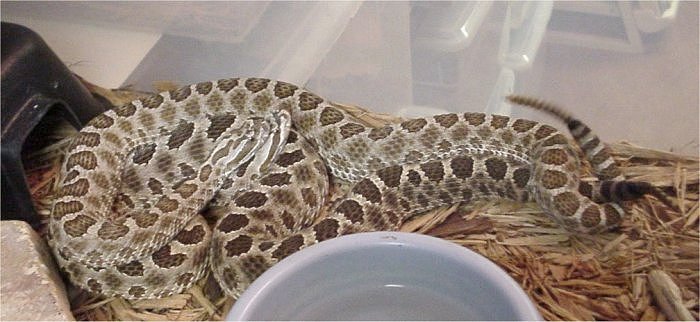

Is the western massasauga poisonous or venomous?
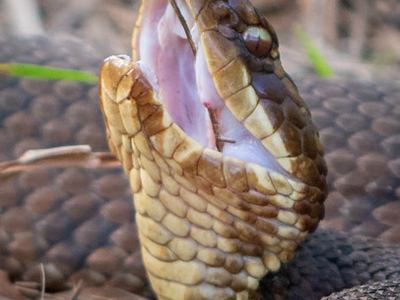
Yes. The western massasauga is a pit viper (family Viperidae), like every rattlesnake, copperhead and cottonmouth in the U.S. Its bite needs emergency care: call 911 and keep the bitten limb still. Antivenom is given in hospital.
Snakes often mistaken for it
Species commonly confused with rattlesnakes and recorded in the same states: gopher snake (recorded in all 8 of its states), Great Plains rat snake (recorded in 7 of its 8 states), plains hog-nosed snake (recorded in 7 of its 8 states), eastern hog-nosed snake (recorded in 5 of its 8 states) and western foxsnake (recorded in 2 of its 8 states).
Which states have the western massasauga?
Records are spread over 8 states; the top three, Kansas, Texas and Oklahoma, hold 79% of them.
The count includes 308 records filed under the older name Sistrurus catenatus in Arizona (69), Colorado (1), Kansas (30), Nebraska (23), New Mexico (17), Oklahoma (25) and Texas (143). GBIF records filed under this name in Indiana, Michigan and Ohio are counted as the eastern massasauga, the species that lives there.
| # | State | Records | Share of state snakes | Rank in state |
|---|---|---|---|---|
| 1 | Kansas | 490 | 3.3% | 9th of 44 |
| 2 | Texas | 237 | 0.6% | 40th of 86 |
| 3 | Oklahoma | 105 | 0.8% | 29th of 50 |
| 4 | Arizona | 80 | 0.4% | 43rd of 60 |
| 5 | Nebraska | 57 | 2.4% | 10th of 31 |
| 6 | New Mexico | 46 | 0.7% | 24th of 56 |
| 7 | Colorado | 17 | 0.5% | 17th of 26 |
| 8 | Missouri | 11 | 0.6% | 28th of 36 |
When is the western massasauga seen?
Across the U.S., observation records of the western massasauga run mostly April through October, peaking in May with 29% of them. Almost none are from December to February.
Season by state
Among states whose main season falls within one calendar year, it starts earliest in April (Nebraska) and latest in May (Kansas). Each of these states peaks in a different month: April in Nebraska and May in Kansas.
| State | Main season | Peak month | Observation records |
|---|---|---|---|
| Kansas | May through October | May | 45 |
| Nebraska | April through September | April | 33 |
Where the western massasauga is recorded in each state
Kansas
Kansas holds 490 licensed records, the 9th most recorded of 44 snakes listed there. Its observation records in Kansas run mostly May through October, peaking in May; most licensed records come from Barton County, Ellsworth County and Barber County. Next come Russell County (33) and Comanche County (26).
Texas
Texas holds 237 licensed records, the 40th most recorded of 86 snakes listed there. Most of its licensed records in Texas come from Archer County, King County and Tarrant County. Next come Foard County (16) and Shackelford County (12).
Oklahoma
Oklahoma holds 105 licensed records, the 29th most recorded of 50 snakes listed there. Most of its licensed records in Oklahoma come from Comanche County, Ellis County and Osage County. Next come Roger Mills County (8) and Harper County (5).
Arizona
Arizona holds 80 licensed records, the 43rd most recorded of 60 snakes listed there. Most of its licensed records in Arizona come from Cochise County.
Nebraska
Nebraska holds 57 licensed records, the joint 10th most recorded of 31 snakes listed there. Its observation records in Nebraska run mostly April through September, peaking in April; most licensed records come from Jefferson County, Pawnee County and Lancaster County. Next come Custer County (4) and Seward County (4).
New Mexico
New Mexico holds 46 licensed records, the 24th most recorded of 56 snakes listed there. Most of its licensed records in New Mexico come from Valencia County, Bernalillo County and Socorro County. Next come Chaves County (5) and Doña Ana County (3).
Top counties in the U.S.
| # | County | State | Records | Share of U.S. |
|---|---|---|---|---|
| 1 | Barton County | Kansas | 102 | 9.7% |
| 2 | Cochise County | Arizona | 80 | 7.6% |
| 3 | Ellsworth County | Kansas | 49 | 4.7% |
| 4 | Barber County | Kansas | 33 | 3.1% |
| 5 | Russell County | Kansas | 33 | 3.1% |
| 6 | Comanche County | Oklahoma | 33 | 3.1% |
| 7 | Archer County | Texas | 32 | 3.0% |
| 8 | Comanche County | Kansas | 26 | 2.5% |
| 9 | Greenwood County | Kansas | 24 | 2.3% |
| 10 | Chase County | Kansas | 22 | 2.1% |
| 11 | Jefferson County | Nebraska | 20 | 1.9% |
| 12 | King County | Texas | 20 | 1.9% |
| 13 | Tarrant County | Texas | 16 | 1.5% |
| 14 | Foard County | Texas | 16 | 1.5% |
| 15 | Reno County | Kansas | 15 | 1.4% |
How recent are the western massasauga records?
The western massasauga record leans on older material: only 12% of dated U.S. records come from 2017–2026, and the median record is from 1993. The oldest dated record is from 1857; the busiest year was 2006, with 71 records.
| Decade | Records | Share |
|---|---|---|
| 1850s | 2 | 0.2% |
| 1870s | 1 | 0.1% |
| 1880s | 1 | 0.1% |
| 1900s | 4 | 0.4% |
| 1910s | 4 | 0.4% |
| 1920s | 10 | 1.0% |
| 1930s | 64 | 6.5% |
| 1940s | 26 | 2.6% |
| 1950s | 71 | 7.2% |
| 1960s | 148 | 15.0% |
| 1970s | 61 | 6.2% |
| 1980s | 70 | 7.1% |
| 1990s | 114 | 11.6% |
| 2000s | 260 | 26.3% |
| 2010s | 47 | 4.8% |
| 2020s | 104 | 10.5% |
Species recorded in the same counties
Of the 106 counties where the western massasauga is most recorded, 67 are also top counties for the gopher snake, more than for any other snake. None of its closest neighbors is venomous.
| Species | Shared counties |
|---|---|
| Gopher snake | 67 |
| Chihuahuan night snake | 34 |
| Plains black-headed snake | 30 |
| Speckled kingsnake | 30 |
| Glossy snake | 28 |
| Long-nosed snake | 28 |
| Plains hog-nosed snake | 27 |
| Coachwhip | 26 |
Related species in the U.S.
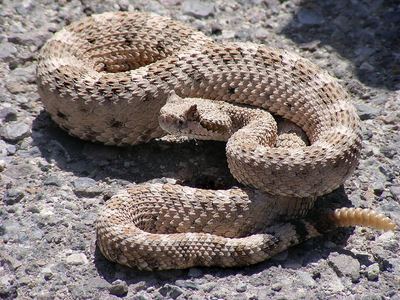
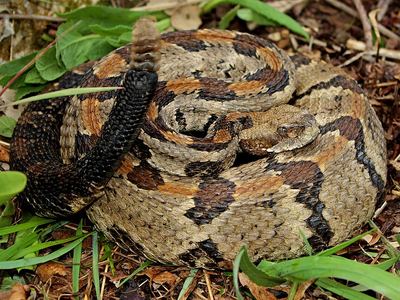
Other members of the family Viperidae with profiles here: Western rattlesnake, Eastern copperhead, Western diamondback rattlesnake, Prairie rattlesnake, Northern cottonmouth and Sidewinder.
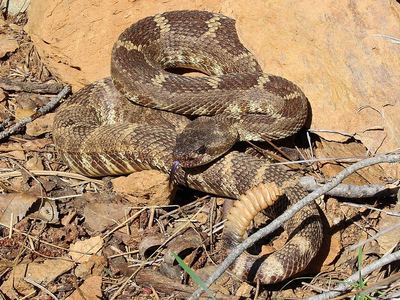
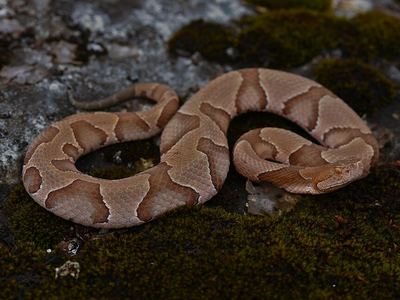
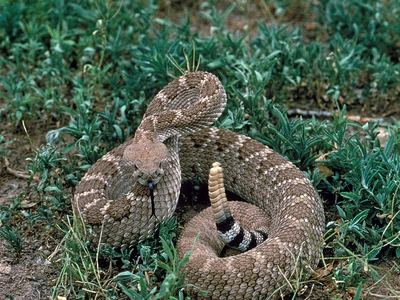
GBIF records read 2026-09-29. Listed: any license. Counted: CC0/CC BY only. How we count.