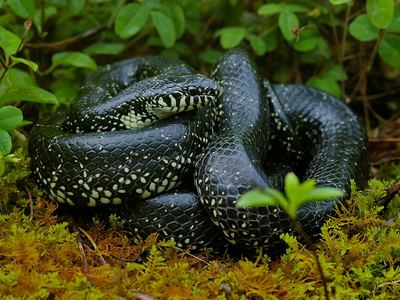
Mole kingsnake (Lampropeltis rhombomaculata)
The mole kingsnake is a non-venomous snake in the family Colubridae. GBIF holds 483 licensed U.S. records of it; it reaches our listing threshold in 7 states, most of all North Carolina (229), Virginia (153) and Alabama (41). Its observation records peak in May.
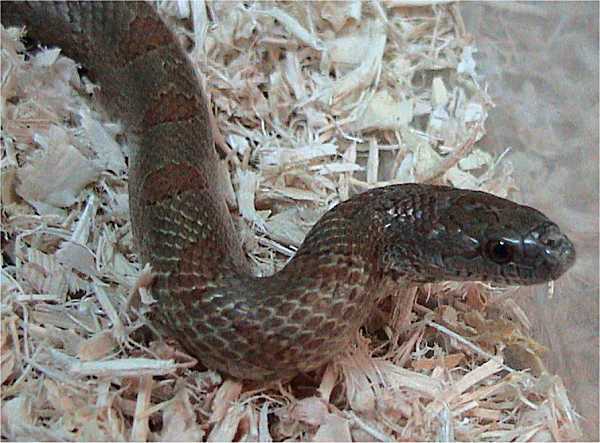

Is the mole kingsnake poisonous or venomous?
No. The mole kingsnake is non-venomous: it belongs to the family Colubridae, not to the pit vipers or coral snakes, the only U.S. land snakes with medically dangerous venom. It may bite if handled; clean the bite like any small wound.
Which states have the mole kingsnake?
Records are spread over 7 states; the top three, North Carolina, Virginia and Alabama, hold 88% of them.
| # | State | Records | Share of state snakes | Rank in state |
|---|---|---|---|---|
| 1 | North Carolina | 229 | 1.1% | 25th of 39 |
| 2 | Virginia | 153 | 1.4% | 20th of 30 |
| 3 | Alabama | 41 | 0.7% | 32nd of 44 |
| 4 | Maryland | 37 | 1.0% | 16th of 20 |
| 5 | South Carolina | 15 | 0.4% | 37th of 40 |
| 6 | Georgia | 5 | 0.1% | 40th of 44 |
| 7 | Tennessee | 1 | 0.0% | 30th of 32 |
When is the mole kingsnake seen?
Across the U.S., observation records of the mole kingsnake run mostly April through November, peaking in May with 22% of them. Winter (December to February) holds 8% of them.
Where the mole kingsnake is recorded in each state
North Carolina
North Carolina holds 229 licensed records, the 25th most recorded of 39 snakes listed there. Most of its licensed records in North Carolina come from Wake County, Moore County and Mecklenburg County. Next come Brunswick County (12) and Scotland County (12).
Virginia
Virginia holds 153 licensed records, the 20th most recorded of 30 snakes listed there. Most of its licensed records in Virginia come from Fairfax County, James City County and Bedford County. Next come Fauquier County (6) and Goochland County (6).
Alabama
Alabama holds 41 licensed records, the 32nd most recorded of 44 snakes listed there. Most of its licensed records in Alabama come from Madison County, Russell County and Lee County. Next come Mobile County (4) and Marshall County (3).
Maryland
Maryland holds 37 licensed records, the joint 16th most recorded of 20 snakes listed there. Most of its licensed records in Maryland come from Prince George's County, Montgomery County and Anne Arundel County. Next come Howard County (1) and Charles County (1).
Top counties in the U.S.
| # | County | State | Records | Share of U.S. |
|---|---|---|---|---|
| 1 | Wake County | North Carolina | 45 | 9.3% |
| 2 | Fairfax County | Virginia | 27 | 5.6% |
| 3 | Prince George's County | Maryland | 23 | 4.8% |
| 4 | Moore County | North Carolina | 20 | 4.1% |
| 5 | Mecklenburg County | North Carolina | 17 | 3.5% |
| 6 | Brunswick County | North Carolina | 12 | 2.5% |
| 7 | Scotland County | North Carolina | 12 | 2.5% |
| 8 | Randolph County | North Carolina | 11 | 2.3% |
| 9 | Madison County | Alabama | 8 | 1.7% |
| 10 | Montgomery County | Maryland | 8 | 1.7% |
| 11 | Richmond County | North Carolina | 8 | 1.7% |
| 12 | James City County | Virginia | 8 | 1.7% |
| 13 | Russell County | Alabama | 7 | 1.4% |
| 14 | Montgomery County | North Carolina | 7 | 1.4% |
| 15 | New Hanover County | North Carolina | 7 | 1.4% |
How recent are the mole kingsnake records?
The mole kingsnake record leans on older material: only 8% of dated U.S. records come from 2017–2026, and the median record is from 1973. The oldest dated record is from 1879; the busiest year was 1972, with 18 records.
| Decade | Records | Share |
|---|---|---|
| 1870s | 1 | 0.2% |
| 1880s | 2 | 0.4% |
| 1890s | 16 | 3.4% |
| 1900s | 5 | 1.0% |
| 1910s | 5 | 1.0% |
| 1920s | 5 | 1.0% |
| 1930s | 37 | 7.8% |
| 1940s | 27 | 5.7% |
| 1950s | 35 | 7.3% |
| 1960s | 61 | 12.8% |
| 1970s | 112 | 23.5% |
| 1980s | 51 | 10.7% |
| 1990s | 32 | 6.7% |
| 2000s | 39 | 8.2% |
| 2010s | 16 | 3.4% |
| 2020s | 33 | 6.9% |
Species recorded in the same counties
Of the 50 counties where the mole kingsnake is most recorded, 41 are also top counties for the eastern rat snake, more than for any other snake. Venomous species among its neighbors: the eastern copperhead.
| Species | Shared counties |
|---|---|
| Eastern rat snake | 41 |
| Rough greensnake | 28 |
| DeKay's brown snake | 27 |
| Eastern racer | 27 |
| Eastern copperhead venomous | 26 |
| Red-bellied snake | 26 |
| Eastern hog-nosed snake | 25 |
| Smooth earth snake | 25 |
Related species in the U.S.
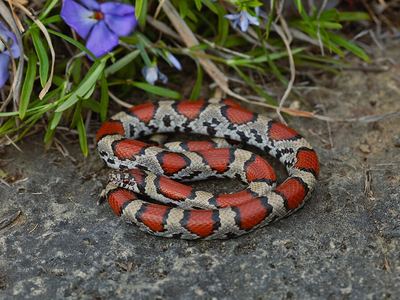
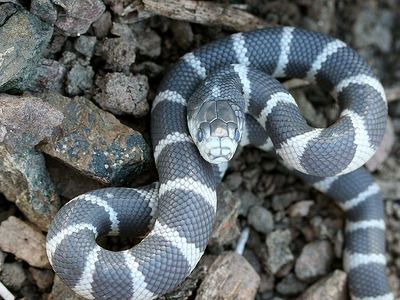
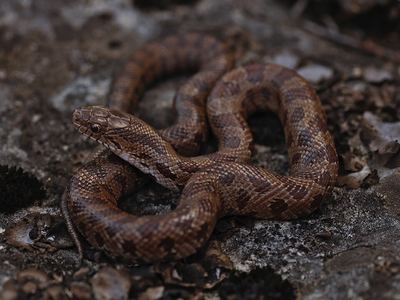
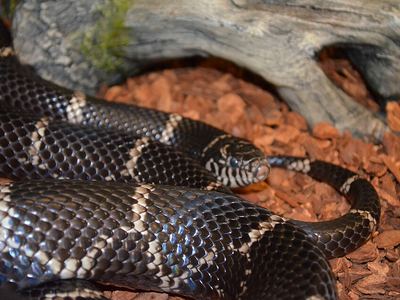
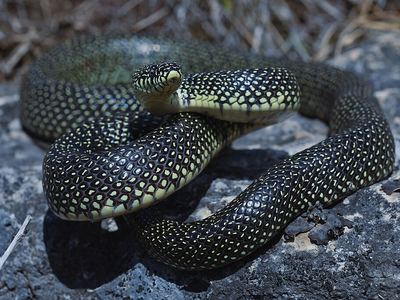
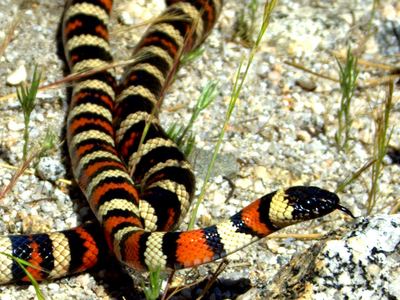
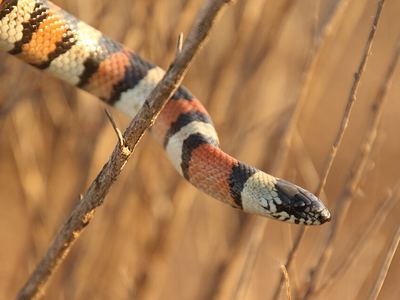
Other species of the genus Lampropeltis with profiles here: Eastern milksnake, California kingsnake, Prairie kingsnake, Eastern kingsnake, Speckled kingsnake, California mountain kingsnake, Central plains milksnake and Eastern black kingsnake.
GBIF records read 2026-09-29. Listed: any license. Counted: CC0/CC BY only. How we count.