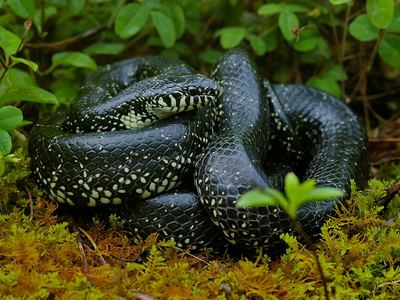
Central plains milksnake (Lampropeltis gentilis)
The central plains milksnake is a non-venomous snake in the family Colubridae. GBIF holds 433 licensed U.S. records of it; it reaches our listing threshold in 12 states, most of all Kansas (195), Texas (65) and Oklahoma (64). Its observation records peak in May.
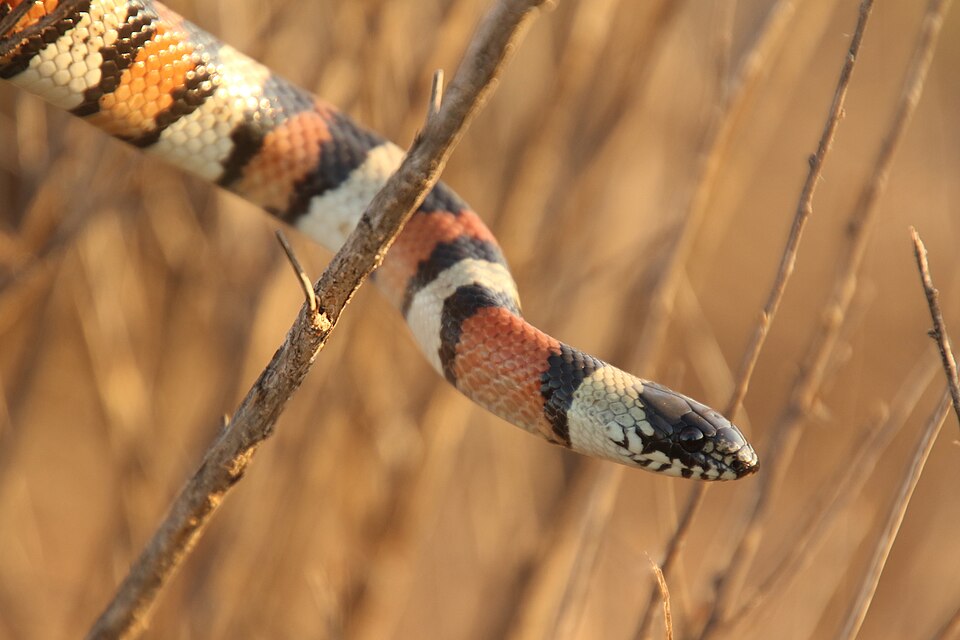

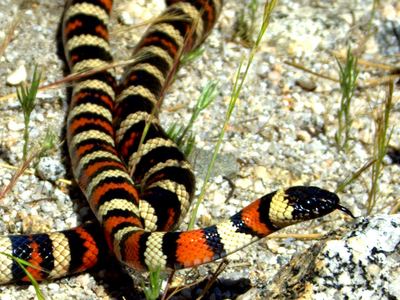
Lampropeltis gentilis, commonly known as the western milksnake, Central Plains milksnake, pale milksnake, Utah milksnake, or New Mexico milksnake, is a species of nonvenomous snake in the family Colubridae. It is found in the United States.
From Wikipedia: Lampropeltis gentilis, text under CC BY-SA 4.0.
Is the central plains milksnake poisonous or venomous?
No. The central plains milksnake is non-venomous: it belongs to the family Colubridae, not to the pit vipers or coral snakes, the only U.S. land snakes with medically dangerous venom. It may bite if handled; clean the bite like any small wound.
Often mistaken for
The central plains milksnake is non-venomous, but people often take it for copperheads (both are recorded in 6 of its 12 states) and coral snakes (both are recorded in 3 of its 12 states).
Which states have the central plains milksnake?
Records are spread over 12 states; the top three, Kansas, Texas and Oklahoma, hold 75% of them.
| # | State | Records | Share of state snakes | Rank in state |
|---|---|---|---|---|
| 1 | Kansas | 195 | 1.3% | 25th of 44 |
| 2 | Texas | 65 | 0.2% | 62nd of 86 |
| 3 | Oklahoma | 64 | 0.5% | 41st of 50 |
| 4 | Colorado | 29 | 0.8% | 13th of 26 |
| 5 | Arkansas | 14 | 0.3% | 27th of 36 |
| 6 | Louisiana | 13 | 0.3% | 35th of 41 |
| 7 | Montana | 12 | 0.9% | 9th of 9 |
| 8 | Nebraska | 11 | 0.5% | 25th of 31 |
| 9 | New Mexico | 8 | 0.1% | 45th of 56 |
| 10 | Utah | 8 | 0.2% | 23rd of 28 |
| 11 | Wyoming | 5 | 0.5% | 9th of 11 |
| 12 | South Dakota | 4 | 0.1% | 16th of 16 |
When is the central plains milksnake seen?
Across the U.S., observation records of the central plains milksnake run mostly April through September, peaking in May with 36% of them. Almost none are from December to February.
Where the central plains milksnake is recorded in each state
Kansas
Kansas holds 195 licensed records, the 25th most recorded of 44 snakes listed there. Its observation records in Kansas run mostly April through September, peaking in May; most licensed records come from Russell County, Ellis County and Bourbon County. Next come Chase County (8) and Wabaunsee County (7).
Texas
Texas holds 65 licensed records, the 62nd most recorded of 86 snakes listed there. Most of its licensed records in Texas come from Brazos County, Bosque County and Jeff Davis County. Next come Brewster County (4) and Jefferson County (2).
Oklahoma
Oklahoma holds 64 licensed records, the 41st most recorded of 50 snakes listed there. Most of its licensed records in Oklahoma come from LeFlore County, Atoka County and Pushmataha County. Next come Cherokee County (6) and Comanche County (3).
Top counties in the U.S.
| # | County | State | Records | Share of U.S. |
|---|---|---|---|---|
| 1 | Russell County | Kansas | 42 | 9.7% |
| 2 | Ellis County | Kansas | 24 | 5.5% |
| 3 | Bourbon County | Kansas | 15 | 3.5% |
| 4 | Brazos County | Texas | 15 | 3.5% |
| 5 | Bosque County | Texas | 14 | 3.2% |
| 6 | LeFlore County | Oklahoma | 11 | 2.5% |
| 7 | Atoka County | Oklahoma | 10 | 2.3% |
| 8 | Chase County | Kansas | 8 | 1.8% |
| 9 | Pushmataha County | Oklahoma | 8 | 1.8% |
| 10 | Wabaunsee County | Kansas | 7 | 1.6% |
| 11 | Jeff Davis County | Texas | 7 | 1.6% |
| 12 | Douglas County | Kansas | 6 | 1.4% |
| 13 | Riley County | Kansas | 6 | 1.4% |
| 14 | Rush County | Kansas | 6 | 1.4% |
| 15 | Cherokee County | Oklahoma | 6 | 1.4% |
How recent are the central plains milksnake records?
The central plains milksnake record leans on older material: only 19% of dated U.S. records come from 2017–2026, and the median record is from 2004. The oldest dated record is from 1852; the busiest year was 2005, with 48 records.
| Decade | Records | Share |
|---|---|---|
| 1850s | 2 | 0.5% |
| 1900s | 21 | 5.0% |
| 1910s | 1 | 0.2% |
| 1920s | 3 | 0.7% |
| 1930s | 11 | 2.6% |
| 1940s | 9 | 2.2% |
| 1950s | 8 | 1.9% |
| 1960s | 67 | 16.1% |
| 1970s | 11 | 2.6% |
| 1980s | 24 | 5.8% |
| 1990s | 18 | 4.3% |
| 2000s | 128 | 30.8% |
| 2010s | 45 | 10.8% |
| 2020s | 68 | 16.3% |
Species recorded in the same counties
Of the 44 counties where the central plains milksnake is most recorded, 26 are also top counties for the speckled kingsnake, more than for any other snake. Venomous species among its neighbors: the timber rattlesnake and the eastern copperhead.
| Species | Shared counties |
|---|---|
| Speckled kingsnake | 26 |
| Eastern racer | 21 |
| Timber rattlesnake venomous | 19 |
| Eastern copperhead venomous | 17 |
| DeKay's brown snake | 16 |
| Ring-necked snake | 16 |
| Western worm snake | 16 |
| Great Plains rat snake | 15 |
Related species in the U.S.
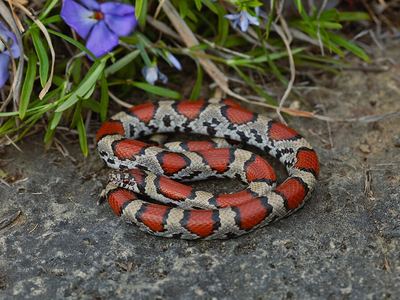
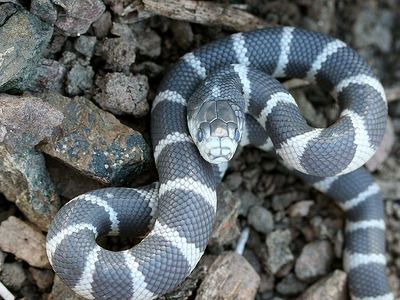
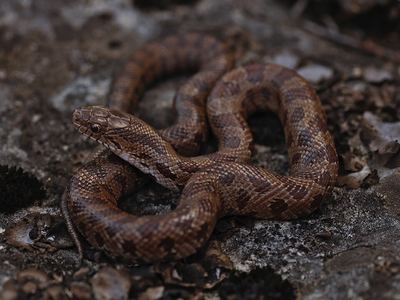
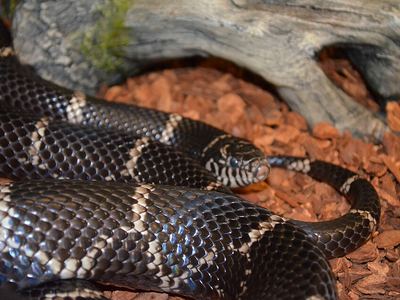
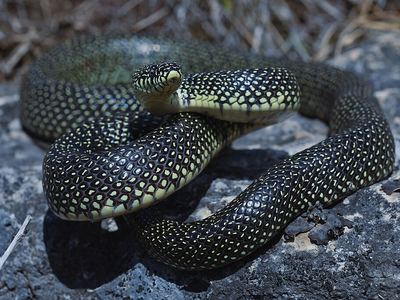
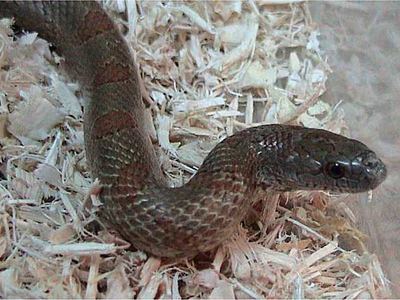
Other species of the genus Lampropeltis with profiles here: Eastern milksnake, California kingsnake, Prairie kingsnake, Eastern kingsnake, Speckled kingsnake, California mountain kingsnake, Mole kingsnake and Eastern black kingsnake.
GBIF records read 2026-09-29. Listed: any license. Counted: CC0/CC BY only. How we count.