Snakes and spiders in Warren County, Pennsylvania
Warren County, home of Warren, has 10 snake and 2 spider species on record, from 695 licensed snake and 21 spider records. Venomous species here: the timber rattlesnake.
Are there venomous snakes or spiders in Warren County?
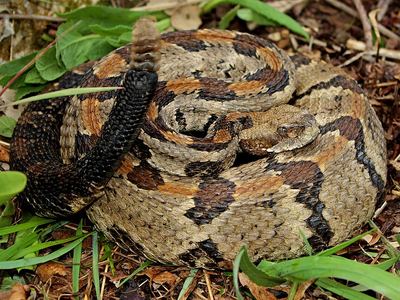
Yes. The timber rattlesnake: 16 licensed records, 3% of all Pennsylvania records of it.
What snakes are in Warren County?
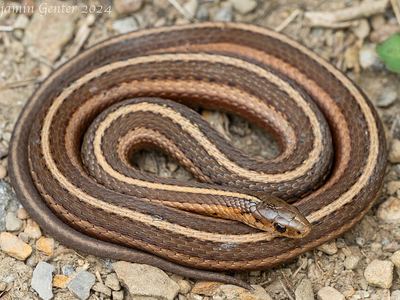
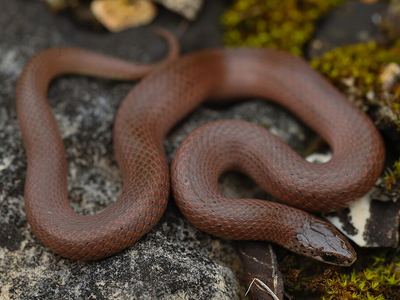
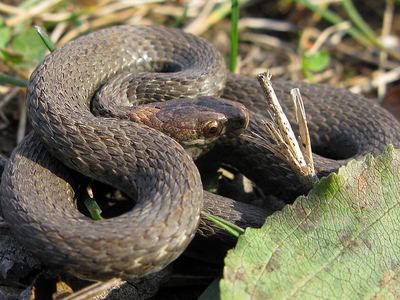
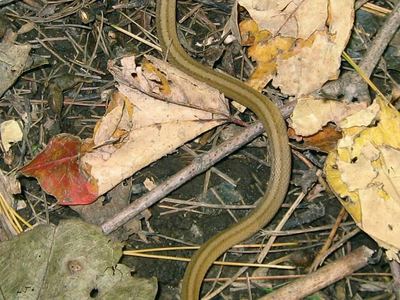
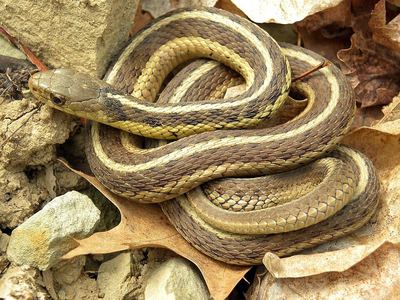
In all, 10 snake species are on the Warren County list. The most recorded are the shorthead garter snake (208), the smooth earth snake (184) and the red-bellied snake (86). Warren County holds more than half of all Pennsylvania records of the smooth earth snake.
| # | Species | Records | Share of Pennsylvania records |
|---|---|---|---|
| 1 | Shorthead garter snake Thamnophis brachystoma | 208 | 40% |
| 2 | Smooth earth snake Virginia valeriae | 184 | 50% |
| 3 | Red-bellied snake Storeria occipitomaculata | 86 | 18% |
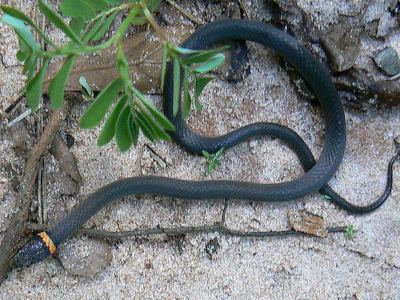
| 4 | Ring-necked snake Diadophis punctatus | 80 | 9% |
| 5 | DeKay's brown snake Storeria dekayi | 41 | 8% |
| 6 | Common garter snake Thamnophis sirtalis | 37 | 2% |
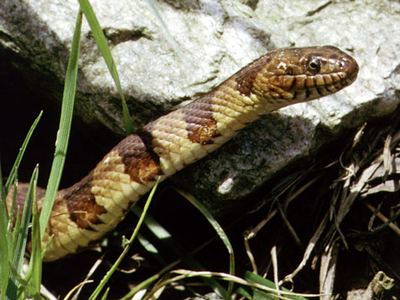
| 7 | Northern water snake Nerodia sipedon | 18 | 2% |
| 8 | Timber rattlesnake venomous Crotalus horridus | 16 | 3% |
| 9 | Smooth green snake Opheodrys vernalis | 11 | 5% |
| 10 | Eastern milksnake Lampropeltis triangulum | 6 | 1% |
What stands out in Warren County
Species for which Warren County holds a large share of all Pennsylvania records: the smooth earth snake, 50% (184 of 368); the shorthead garter snake, 40% (208 of 523); the red-bellied snake, 18% (86 of 465).
Common in Pennsylvania, not on the Warren County list
Among the snakes most recorded across Pennsylvania, these do not reach the county list: the queen snake (566 statewide), the eastern rat snake (358 statewide) and the eastern copperhead (261 statewide). Few records here can mean the species is rare in the county, or that few people have looked.
Harmless lookalikes in Warren County
No copperheads reach the county list, but the eastern copperhead is on the Pennsylvania list: treat any snake like it as venomous until identified. Harmless species often taken for them here: the northern water snake and the eastern milksnake. No cottonmouths reach the county list, and GBIF holds no cottonmouth record for Pennsylvania under any license, so one reported here is most likely a harmless lookalike: the northern water snake. No coral snakes reach the county list, and GBIF holds no coral snake record for Pennsylvania under any license, so one reported here is most likely a harmless lookalike: the eastern milksnake.
Warren County among Pennsylvania counties
By licensed snake records Warren County ranks 2nd of 67 Pennsylvania counties with any.
Other Pennsylvania counties with their own page: Allegheny County, Westmoreland County, Erie County, Centre County, Montgomery County, Bucks County, Philadelphia County and Dauphin County.
The whole state: venomous species in Pennsylvania, all snakes, all spiders.
GBIF records read 2026-09-29. Listed: any license. Counted: CC0/CC BY only. How we count.