Salt marsh snake (Nerodia clarkii)
The salt marsh snake is a non-venomous snake in the family Colubridae. GBIF holds 648 licensed U.S. records of it; it reaches our listing threshold in 5 states, most of all Texas (299), Florida (293) and Alabama (34). Its observation records peak in April.
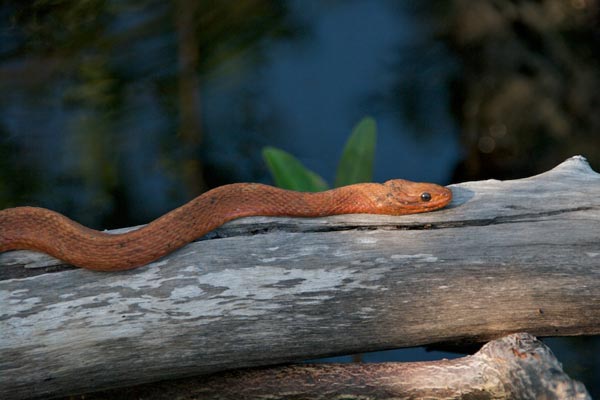

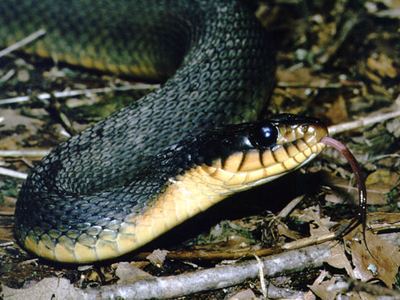
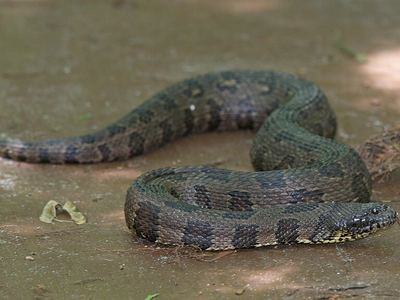
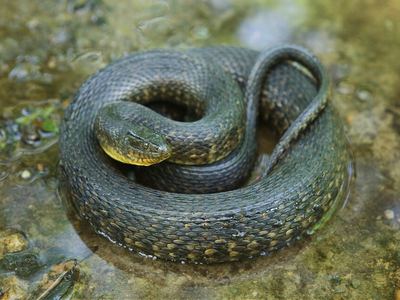
Nerodia clarkii, commonly known as the salt marsh snake or the saltmarsh watersnake, is a species of semi-aquatic, nonvenomous, colubrid snake found in the southeastern United States. Their range extends along the tidal salt marshes of the Gulf of Mexico and the Atlantic Coast from Texas to Florida, with an additional population in northern Cuba. The three subspecies of this snake are primarily distinguished by color pattern and geographic range.
From Wikipedia: Nerodia clarkii, text under CC BY-SA 4.0.
Is the salt marsh snake poisonous or venomous?
No. The salt marsh snake is non-venomous: it belongs to the family Colubridae, not to the pit vipers or coral snakes, the only U.S. land snakes with medically dangerous venom. It may bite if handled; clean the bite like any small wound.
Which states have the salt marsh snake?
Records are spread over 5 states; the top three, Texas, Florida and Alabama, hold 97% of them.
| # | State | Records | Share of state snakes | Rank in state |
|---|---|---|---|---|
| 1 | Texas | 299 | 0.7% | 34th of 86 |
| 2 | Florida | 293 | 1.4% | 15th of 49 |
| 3 | Alabama | 34 | 0.6% | 33rd of 44 |
| 4 | Louisiana | 18 | 0.4% | 31st of 41 |
| 5 | Mississippi | 4 | 0.2% | 37th of 38 |
When is the salt marsh snake seen?
Across the U.S., observation records of the salt marsh snake run through most of the year, peaking in April with 21% of them. Winter (December to February) holds 18% of them.
Season by state
Observation records run through most of the year in Florida. Each of these states peaks in a different month: April in Texas and July in Florida.
| State | Main season | Peak month | Observation records |
|---|---|---|---|
| Florida | most of the year | July | 53 |
| Texas | February through July | April | 31 |
Where the salt marsh snake is recorded in each state
Texas
Texas holds 299 licensed records, the 34th most recorded of 86 snakes listed there. Its observation records in Texas run mostly February through July, peaking in April; most licensed records come from Harris County, Galveston County and Calhoun County. Next come Aransas County (26) and Nueces County (19).
Florida
Florida holds 293 licensed records, the 15th most recorded of 49 snakes listed there. Its observation records in Florida run through most of the year, peaking in July; most licensed records come from Collier County, Monroe County and Volusia County. Next come Citrus County (39) and Miami-Dade County (13).
Alabama
Alabama holds 34 licensed records, the 33rd most recorded of 44 snakes listed there. Most of its licensed records in Alabama come from Mobile County and Baldwin County.
Top counties in the U.S.
| # | County | State | Records | Share of U.S. |
|---|---|---|---|---|
| 1 | Harris County | Texas | 113 | 17.4% |
| 2 | Collier County | Florida | 76 | 11.7% |
| 3 | Monroe County | Florida | 72 | 11.1% |
| 4 | Galveston County | Texas | 70 | 10.8% |
| 5 | Volusia County | Florida | 46 | 7.1% |
| 6 | Citrus County | Florida | 39 | 6.0% |
| 7 | Calhoun County | Texas | 32 | 4.9% |
| 8 | Mobile County | Alabama | 31 | 4.8% |
| 9 | Aransas County | Texas | 26 | 4.0% |
| 10 | Nueces County | Texas | 19 | 2.9% |
| 11 | Chambers County | Texas | 18 | 2.8% |
| 12 | Miami-Dade County | Florida | 13 | 2.0% |
| 13 | Wakulla County | Florida | 11 | 1.7% |
| 14 | Brazoria County | Texas | 7 | 1.1% |
| 15 | Indian River County | Florida | 6 | 0.9% |
How recent are the salt marsh snake records?
The salt marsh snake record leans on older material: only 18% of dated U.S. records come from 2017–2026, and the median record is from 1976. The oldest dated record is from 1892; the busiest year was 1955, with 169 records.
| Decade | Records | Share |
|---|---|---|
| 1890s | 3 | 0.4% |
| 1910s | 4 | 0.6% |
| 1920s | 5 | 0.7% |
| 1930s | 2 | 0.3% |
| 1940s | 24 | 3.4% |
| 1950s | 259 | 36.3% |
| 1960s | 47 | 6.6% |
| 1970s | 53 | 7.4% |
| 1980s | 111 | 15.5% |
| 1990s | 18 | 2.5% |
| 2000s | 27 | 3.8% |
| 2010s | 65 | 9.1% |
| 2020s | 96 | 13.4% |
Species recorded in the same counties
Of the 28 counties where the salt marsh snake is most recorded, 16 are also top counties for the green water snake, more than for any other snake. Venomous species among its neighbors: the northern cottonmouth and the pygmy rattlesnake.
| Species | Shared counties |
|---|---|
| Green water snake | 16 |
| Northern cottonmouth venomous | 13 |
| Rough greensnake | 12 |
| Common garter snake | 11 |
| Mud snake | 11 |
| Southern watersnake | 11 |
| DeKay's brown snake | 10 |
| Pygmy rattlesnake venomous | 10 |
Related species in the U.S.
Other species of the genus Nerodia with profiles here: Northern water snake, Diamondback water snake, Southern watersnake, Plain-bellied watersnake, Brown water snake, Green water snake and Florida green water snake.
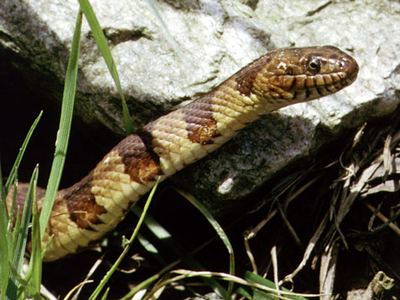
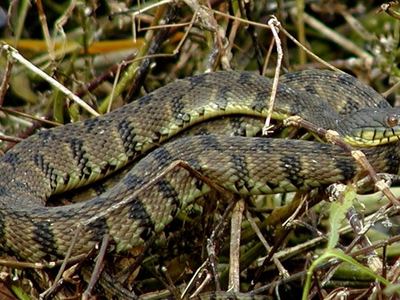
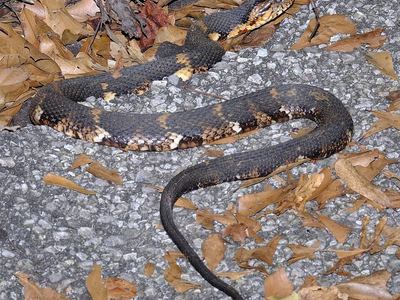
GBIF records read 2026-09-29. Listed: any license. Counted: CC0/CC BY only. How we count.