Snakes and spiders in Yukon-Koyukuk Census Area, Alaska
Yukon-Koyukuk Census Area has 0 snake and 11 spider species on record, from 0 licensed snake and 1,155 spider records. No venomous snake or spider reaches the county list.
What spiders are in Yukon-Koyukuk Census Area?
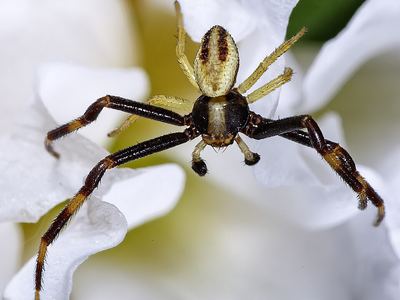
In all, 11 spider species are on the Yukon-Koyukuk Census Area list. The most recorded are the goldenrod crab spider (16), Dictyna major (15) and Emblyna annulipes (15).
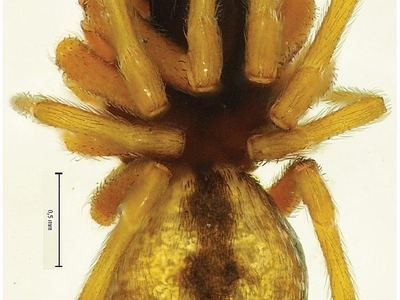
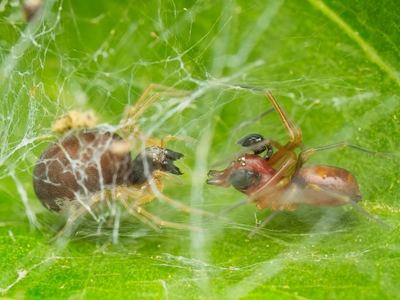 Related species: Emblyna sublata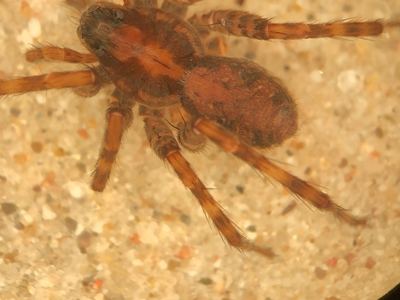
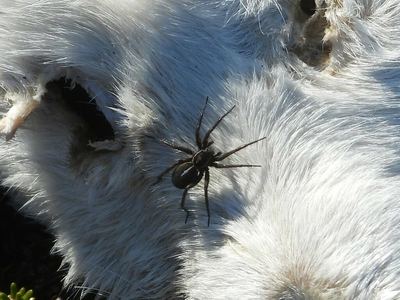
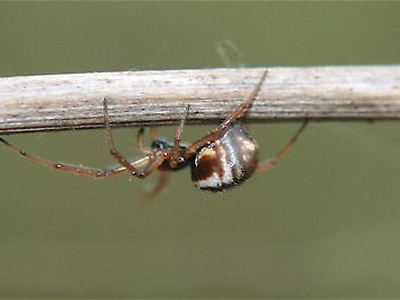 Same family (Linyphiidae): Frontinella pyramitela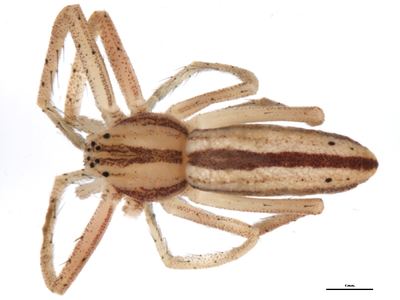
| # | Species | Records | Share of Alaska records |
|---|---|---|---|
| 1 | Goldenrod crab spider Misumena vatia | 16 | 16% |
| 2 | Dictyna major | 15 | 29% |
| 3 | Emblyna annulipes | 15 | 11% |
| 4 | Pardosa uintana | 13 | 8% |
| 5 | Groenland wolf spider Pardosa groenlandica | 12 | 22% |
| 6 | Estrandia grandaeva | 11 | 8% |
| 7 | Gnathonarium taczanowskii | 11 | 10% |
| 8 | Grooved running crab spider Tibellus maritimus | 11 | 35% |
| 9 | Nearctic white-striped running crab spider Philodromus rufus | 11 | 15% |
| 10 | Bronze jumper Eris militaris | 10 | 33% |
| 11 | Pelegrina montana | 10 | 24% |
When are spiders out in Yukon-Koyukuk Census Area?
Observation records of spiders in Yukon-Koyukuk Census Area are concentrated in June (93% of them).
What stands out in Yukon-Koyukuk Census Area
Species for which Yukon-Koyukuk Census Area holds a large share of all Alaska records: the grooved running crab spider, 35% (11 of 31); the bronze jumper, 33% (10 of 30); Dictyna major, 29% (15 of 52); Pelegrina montana, 24% (10 of 42); the Groenland wolf spider, 22% (12 of 55); the goldenrod crab spider, 16% (16 of 98); the Nearctic white-striped running crab spider, 15% (11 of 71).
Common in Alaska, not on the Yukon-Koyukuk Census Area list
Among the spiders most recorded across Alaska, these do not reach the county list: the common west coast woodland spider (1,213 statewide), Ceratinops inflatus (736 statewide), Sisicottus nesides (528 statewide), Tenuiphantes zelatus (508 statewide), the common six-spotted cobweaver (464 statewide) and Symmigma minimum (398 statewide). Few records here can mean the species is rare in the county, or that few people have looked.
Yukon-Koyukuk Census Area among Alaska counties
Other Alaska counties with their own page: Haines Borough, Juneau City and Borough, Kenai Peninsula Borough, Matanuska-Susitna Borough, North Slope Borough, Prince of Wales-Outer Ketchikan Census Area, Skagway-Yakutat-Angoon Census Area and Southeast Fairbanks Census Area.
The whole state: venomous species in Alaska, all spiders.
GBIF records read 2026-09-29. Listed: any license. Counted: CC0/CC BY only. How we count.