Mouse spider (Scotophaeus blackwalli)
The mouse spider is a spider in the family Gnaphosidae that is not dangerous to people. GBIF holds 343 licensed U.S. records of it; it reaches our listing threshold in 3 states, most of all California (273), Washington (56) and Oregon (14). Its observation records peak in July.
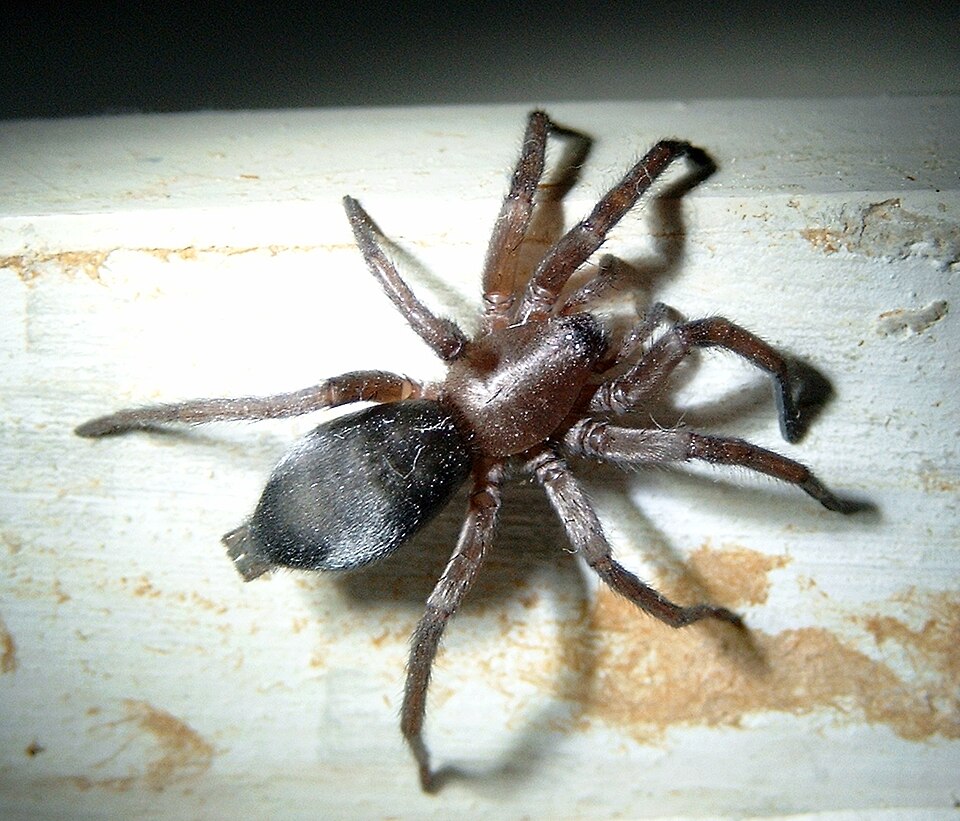
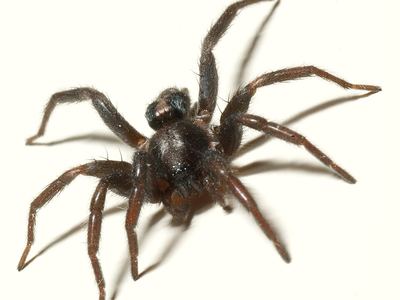
Scotophaeus blackwalli, also known as the mouse spider, is a species of spider belonging to the family Gnaphosidae. It is a ground spider and does not create webs. Instead it hunts for insects and other spiders at night and uses its enlarged spinnerets to produce a sticky silk to subdue its prey.
From Wikipedia: Scotophaeus blackwalli, text under CC BY-SA 4.0.
Is the mouse spider poisonous or venomous?
Not in any medically significant way. Like almost all spiders the mouse spider (family Gnaphosidae) has venom for its prey, but it is not a widow or recluse, the two U.S. groups whose bites need medical attention.
Which states have the mouse spider?
The mouse spider's U.S. record is concentrated: California alone holds 80% of licensed records. It is listed in 3 states in all; the next are Washington (56) and Oregon (14).
| # | State | Records | Share of state spiders | Rank in state |
|---|---|---|---|---|
| 1 | California | 273 | 0.6% | 31st of 309 |
| 2 | Washington | 56 | 1.4% | 12th of 157 |
| 3 | Oregon | 14 | 0.5% | 34th of 88 |
When is the mouse spider seen?
Across the U.S., observation records of the mouse spider run mostly February through October, peaking in July with 22% of them. Winter (December to February) holds 8% of them.
Season by state
Among states whose main season falls within one calendar year, it starts earliest in March (California) and latest in April (Washington). Each of these states peaks in a different month: June in California and July in Washington.
| State | Main season | Peak month | Observation records |
|---|---|---|---|
| Washington | April through November | July | 52 |
| California | March through October | June | 40 |
Where the mouse spider is recorded in each state
California
California holds 273 licensed records, the 31st most recorded of 309 spiders listed there. Its observation records in California run mostly March through October, peaking in June; most licensed records come from Los Angeles County, Alameda County and San Francisco County. Next come Contra Costa County (13) and Orange County (9).
Washington
Washington holds 56 licensed records, the 12th most recorded of 157 spiders listed there. Its observation records in Washington run mostly April through November, peaking in July; most licensed records come from King County, Kitsap County and Snohomish County. Next come Pierce County (3) and Thurston County (3).
Top counties in the U.S.
| # | County | State | Records | Share of U.S. |
|---|---|---|---|---|
| 1 | Los Angeles County | California | 168 | 49.0% |
| 2 | King County | Washington | 37 | 10.8% |
| 3 | Alameda County | California | 24 | 7.0% |
| 4 | San Francisco County | California | 20 | 5.8% |
| 5 | Contra Costa County | California | 13 | 3.8% |
| 6 | Orange County | California | 9 | 2.6% |
| 7 | San Mateo County | California | 8 | 2.3% |
| 8 | Marin County | California | 5 | 1.5% |
| 9 | Santa Clara County | California | 4 | 1.2% |
| 10 | Kitsap County | Washington | 4 | 1.2% |
| 11 | Snohomish County | Washington | 4 | 1.2% |
| 12 | San Diego County | California | 3 | 0.9% |
| 13 | Sonoma County | California | 3 | 0.9% |
| 14 | Ventura County | California | 3 | 0.9% |
| 15 | Pierce County | Washington | 3 | 0.9% |
How recent are the mouse spider records?
The mouse spider record leans on older material: only 37% of dated U.S. records come from 2017–2026, and the median record is from 2003. The oldest dated record is from 1933; the busiest year was 2002, with 94 records.
| Decade | Records | Share |
|---|---|---|
| 1930s | 1 | 0.3% |
| 1950s | 2 | 0.6% |
| 1960s | 18 | 5.5% |
| 1970s | 6 | 1.8% |
| 1980s | 4 | 1.2% |
| 1990s | 7 | 2.1% |
| 2000s | 156 | 47.4% |
| 2010s | 25 | 7.6% |
| 2020s | 110 | 33.4% |
Species recorded in the same counties
Of the 23 counties where the mouse spider is most recorded, 19 are also top counties for both the false black widow and the garden spider; no other spider shares more. None of its closest neighbors is venomous.
| Species | Shared counties |
|---|---|
| False black widow | 19 |
| Garden spider | 19 |
| Longbodied cellar spider | 17 |
| Zebra spider | 16 |
| Bold jumper | 14 |
| Goldenrod crab spider | 14 |
| Johnson jumper | 14 |
| Pelegrina aeneola | 14 |
Related species in the U.S.
Other members of the family Gnaphosidae with profiles here: Parson spider.

GBIF records read 2026-09-29. Listed: any license. Counted: CC0/CC BY only. How we count.