Banana spider (Argiope appensa)
The banana spider is a spider in the family Araneidae that is not dangerous to people. GBIF holds 412 licensed U.S. records of it; it reaches our listing threshold in 1 state, most of all Hawaii (412). Its observation records peak in March.
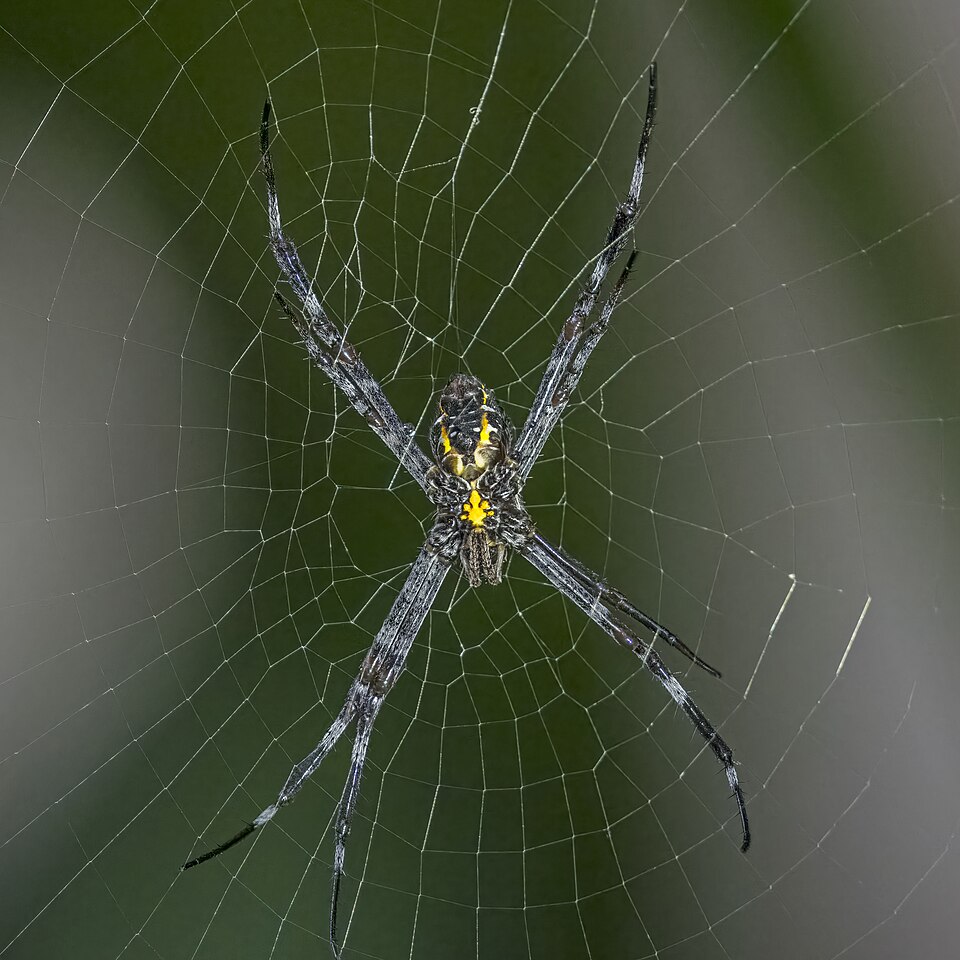
_female_ventral_Koror.jpg)
Argiope appensa, also referred to as the Hawaiian garden spider or banana spider, is an orb-weaving spider belonging to the family Araneidae.
From Wikipedia: Argiope appensa, text under CC BY-SA 4.0.
Is the banana spider poisonous or venomous?
Not in any medically significant way. Like almost all spiders the banana spider (family Araneidae) has venom for its prey, but it is not a widow or recluse, the two U.S. groups whose bites need medical attention.
Which states have the banana spider?
All listed records come from a single state, Hawaii, with 412 records.
| # | State | Records | Share of state spiders | Rank in state |
|---|---|---|---|---|
| 1 | Hawaii | 412 | 7.8% | 2nd of 57 |
When is the banana spider seen?
Across the U.S., observation records of the banana spider run through most of the year, peaking in March with 17% of them. Winter (December to February) holds 35% of them.
How recent are the banana spider records?
Most of what is known about the banana spider is recent: 89% of dated U.S. records were made in 2017–2026, and half date from 2023 or later. The oldest dated record is from 1989; the busiest year was 2023, with 75 records.
| Decade | Records | Share |
|---|---|---|
| 1980s | 1 | 0.2% |
| 2000s | 8 | 1.8% |
| 2010s | 110 | 25.3% |
| 2020s | 315 | 72.6% |
Related species in the U.S.
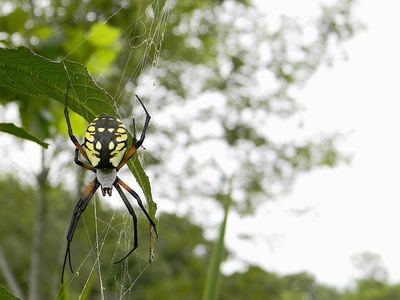
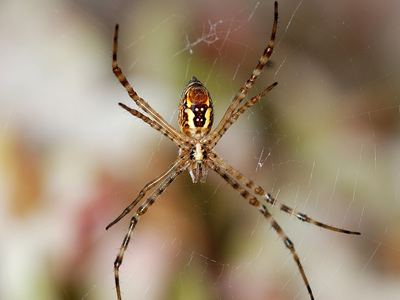
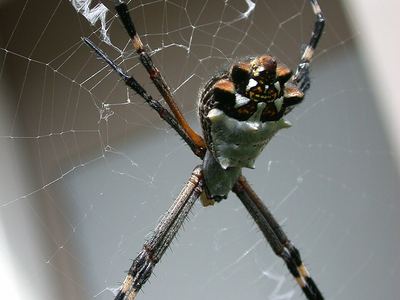
Other species of the genus Argiope with profiles here: Black-and-yellow argiope, Banded garden spider and Silver argiope.
GBIF records read 2026-09-29. Listed: any license. Counted: CC0/CC BY only. How we count.